

The Harmonious Campaigner: Malabar Baby's Musical Legacy in Kerala Politics
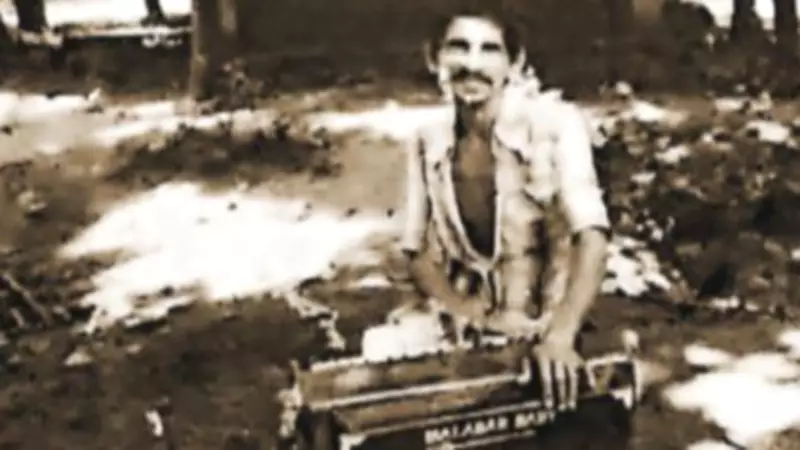
In the contemporary landscape of digital campaigns and data-driven political outreach, older residents of Thiruvananthapuram fondly recall a distinctly different kind of campaigner—a man who carried a harmonium on his shoulder and the fervor of the Left movement in his heart. ET Baby, affectionately known as Malabar Baby, emerged as a unique cultural-political figure during the charged atmosphere of 1960s and 1970s Kerala, transforming dusty street corners into impromptu stages and ordinary passersby into captivated audiences.
From Palarivattom to Political Stages
Born in Palarivattom, Kochi, Baby came of age during a period of intense political awakening across Kerala. His journey into southern Kerala became particularly memorable during the pivotal 1967 assembly elections, when he arrived in Kovalam and drew substantial crowds across the extensive stretch from Parassala to Thiruvananthapuram city. With his harmonium slung across his shoulder, he moved systematically from town to town, lending his powerful voice exclusively to the Left movement's cause.
The Simple Life of a Revolutionary Balladeer
Baby lived with remarkable simplicity, often sleeping in waiting sheds and public spaces during his travels. In the evenings, people would gather across party lines to listen to his repertoire of theatre songs and revolutionary ballads. His performances were unmistakable—portraits of Communist leaders EMS Namboodiripad, AK Gopalan, and Krishna Pillai pasted prominently on his harmonium, singing with unrestrained passion, often with his shirt unbuttoned and drenched in sweat under Kerala's scorching sun.

Coins would gather at his feet as he performed, and a simple cup of black tea sustained him through his travels. He sang popular theatre favorites like "Balikudeerangale..." alongside his original political compositions, creating a unique blend of cultural entertainment and political messaging that resonated deeply with rural audiences.
Confrontation During the Emergency Years
During the politically turbulent Emergency years, Baby's songs took on a more confrontational tone, openly questioning authority and speaking against governmental excesses. This bold stance came at a personal cost—political rivals attacked him on multiple occasions, with one particularly devastating incident resulting in his harmonium being smashed to pieces.
In a gesture that remains etched in family memory, former Kerala Chief Minister E K Nayanar personally intervened to help, purchasing Baby a new harmonium. The first song performed on this replacement instrument was an emotional tribute to AKG and EMS, delivered before Nayanar himself—a moment that remains one of the family's most treasured memories.
Unwavering Commitment and Family Memories
Despite receiving offers from rival political parties, Baby never wavered in his allegiance to the Left movement. He raised six children with his wife Kamalamma while maintaining his singular focus on political campaigning through music. His youngest daughter Minimol remembers accompanying him as a child to meet EMS Namboodiripad, recalling the thrill of those encounters with vivid clarity.
"He personally knew those leaders," she says quietly. "But I sometimes wonder if any of them remember him at all." This poignant reflection highlights the transient nature of political memory and the often-unrecognized contributions of grassroots campaigners.
The Fading of a Political Tradition
As political campaigning evolved with technological advancements, voices like Baby's were gradually drowned out by modern methods of outreach. He spent his later years singing songs in schools to make ends meet, a testament to both his enduring passion for performance and the changing political landscape that had less room for his particular brand of campaigning.
On August 19, 2007, at the age of 72, Malabar Baby passed away after a brief illness, slipping into the obscurity that often claims grassroots political figures. His harmonium, left behind at a shop in Marthandam shortly before his death, was never recovered—a symbolic loss of the instrument that had been central to his political and artistic identity.

Legacy of a Musical Campaigner
Malabar Baby's story represents more than just individual biography—it encapsulates a disappearing tradition of political engagement in Kerala, where cultural performance and grassroots connection once played central roles in political mobilization. His life reminds us of the human dimension of political movements, the personal sacrifices made by campaigners, and the ways in which political messaging has transformed from personal, artistic expression to technologically mediated communication.
While modern politics continues to evolve with digital tools and data analytics, the memory of campaigners like Baby serves as an important historical counterpoint—a reminder of when political connection happened through shared cultural experience, personal presence, and the simple power of a voice raised in song against the backdrop of social change.





