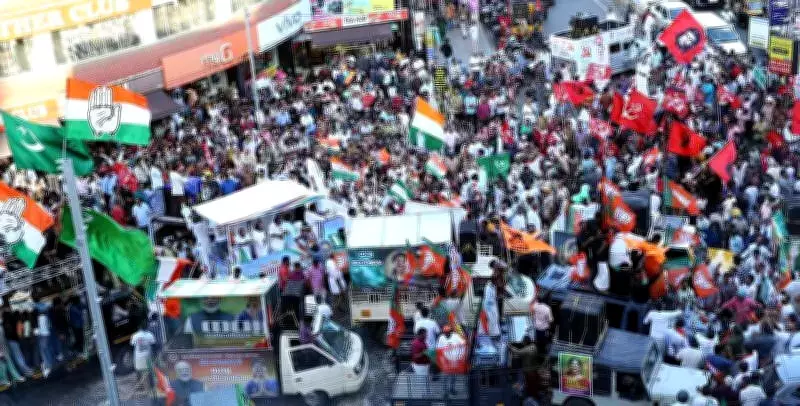
Campaigning Concludes in Malabar with High-Stakes Battles
Campaigning officially ended on Tuesday across the five districts of Malabar—Kozhikode, Malappuram, Wayanad, Kannur, and Kasaragod—setting the stage for a fiercely contested election. With several constituencies poised on a knife-edge, the Left Democratic Front (LDF) is confronting unexpected challenges in many of its traditional bastions, regions that were until recently considered relatively secure terrain.
The Electoral Arithmetic of 48 Seats
The 48 assembly seats in these districts remain central to LDF's poll strategy. In the 2016 elections, LDF secured 28 seats, while the United Democratic Front (UDF) won 20, including 15 captured by the Indian Union Muslim League (IUML). Historically, this region has often been instrumental in helping LDF gain power. This time, however, UDF is aggressively working to rebalance the equation, making the electoral landscape more competitive than in previous cycles.
Factors Tightening the Race
The region is witnessing an exceptionally close contest, with multiple seats turning into cliffhangers. Several key factors have contributed to this tightened race in constituencies once seen as comfortable for LDF:

- Minority Sentiment: Sections of the Muslim electorate have expressed anxieties over perceived majoritarian positions and the alleged proximity of the Left to SNDP leader Vellappally Natesan.
- Public Rebellion: In two Communist Party of India (Marxist) strongholds in Kannur, internal dissent has fueled volatility.
- Issue-Based Campaigning: Both fronts have focused on specific local issues, amplifying the competitiveness.
Allegations of a tacit understanding between CPM and the Bharatiya Janata Party (BJP) have also shaped campaign narratives, with UDF attempting to consolidate these concerns to its advantage.
Campaign Strategies and Narratives
LDF based its campaign on welfare and development, projecting continuity and governance stability as key strengths. It launched attacks on UDF for accepting support from Jamaat-e-Islami and for its ambivalent stance on backing from the Social Democratic Party of India (SDPI). Additionally, LDF highlighted what it described as the Congress' failure to fulfill promises regarding housing for Wayanad landslide victims and raised allegations of misappropriation of rehabilitation funds.
District-Wide Analysis of Key Battlegrounds
Signs of a Breach in Kozhikode
Kozhikode, which has traditionally leaned towards LDF, is showing some of the clearest signs of an undercurrent shift. The Congress has not won a seat here in over 25 years. In 2021, UDF was limited to Koduvally and Vadakara, held by the Revolutionary Marxist Party (RMP). This time, contests have become tight in over six constituencies. Kuttiady, Nadapuram, and Kozhikode South have turned competitive for UDF, which has mounted strong challenges in Koyilandy and Kunnamangalam. LDF still holds an advantage in Beypore, Elathur, and Balussery.
UDF Aims for a Sweep in Malappuram
In Malappuram, IUML's stronghold, UDF appears well-placed to retain dominance and aim for a near sweep. It holds the advantage in most constituencies, with close contests only in Ponnani and Thavanur. Notably, Tanur MLA V Abdurahiman did not campaign for three days after LDF's candidate list was released, as he preferred to contest from Tirur. The party is also facing internal issues in Ponnani, where CPM replaced sitting MLA P Nandakumar with MK Sakeer.
Rehabilitation Narrative Holds Key in Wayanad
In Wayanad, the election has largely centered on the rehabilitation of landslide-affected families. UDF is trying to retain Kalpetta and Mananthavady, while LDF is seeking to win by highlighting its relief and rebuilding efforts, making this a critical issue for voters.

Internal Rebellion Fuels Volatility in Kannur
Kannur has become unusually volatile due to rebellion within CPM. District secretariat member T K Govindan and senior leader V Kunhikrishnan are contesting as UDF-backed independents, potentially flipping LDF's seats in Kannur and Azhikode. UDF's only sitting seat in Peravoor has turned into a high-profile contest between KPCC chief Sunny Joseph and CPM leader K K Shailaja. However, Left strongholds of Dharmadom, Kalliassery, Thalassery, and Mattannur remain intact.
Manjeshwar Remains an Outlier in Kasaragod
In Kasaragod, voting patterns remain largely unchanged, though two constituencies are witnessing triangular contests. Manjeshwar is seeing a particularly close fight between BJP's K Surendran and IUML MLA AKM Ashraf, with both sides investing significant political capital, making it a key battleground.
Overall Competitive Picture
Overall, the Malabar districts present a more competitive picture than in previous elections. UDF's push, especially in minority-dominated areas, has made many seats too close to call. While LDF retains structural advantages in several constituencies in Kannur, the shifting political ground rather than fixed loyalties is shaping the contest. With elections just two days away, Malabar is set to play a pivotal role once again in determining the political outcome, highlighting the dynamic and unpredictable nature of this electoral battle.