

Mamata Banerjee's Stark Warning on BJP's Alleged Food Restrictions in Bengal
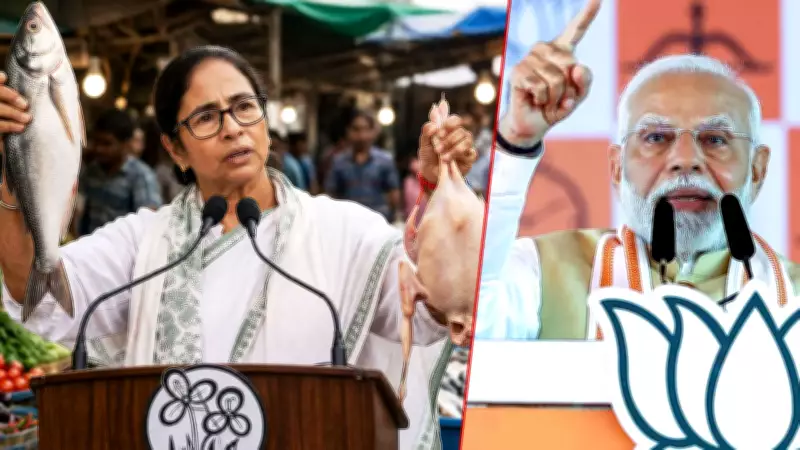
West Bengal Chief Minister Mamata Banerjee launched a fiery political offensive against the Bharatiya Janata Party (BJP) during a significant election rally held in Purulia on Sunday. In a speech that has ignited controversy across the state, Banerjee made a bold claim that if the BJP were to gain power in West Bengal, it would impose severe restrictions on traditional Bengali dietary practices.
Allegations of Cultural Interference and Dietary Bans
Addressing a large crowd of supporters, the Trinamool Congress (TMC) leader specifically alleged that the BJP "says you can't eat fish, meat, eggs." This statement directly targets the core of Bengali culinary identity, where fish and meat consumption are deeply ingrained cultural traditions. Banerjee framed this as part of a broader pattern of cultural imposition, suggesting the BJP's policies would undermine the state's unique heritage.
Her remarks are strategically timed as part of the TMC's campaign narrative for the upcoming 2026 West Bengal assembly elections. The party is actively portraying the BJP as an outsider force that is fundamentally out of touch with Bengal's rich cultural and social fabric. By focusing on food habits, Banerjee aims to connect with voters on an emotional and personal level, emphasizing what she presents as a threat to everyday life.

Broader Accusations Against the BJP's Governance
Beyond the food restrictions, Banerjee leveled several serious accusations against the BJP during her rally speech. She claimed the party does not respect any religion, a charge that resonates in Bengal's diverse religious landscape. Additionally, she accused the BJP of resorting to riots, exploiting Adivasi communities, and allowing attacks on women in states where it currently governs.
These allegations form a comprehensive critique of the BJP's approach to governance and social harmony. Banerjee's strategy appears to be painting the BJP as a divisive force that would disrupt Bengal's social equilibrium if elected. The mention of Adivasi exploitation and women's safety issues broadens the appeal of her message to various demographic groups within the state.
Political Context and Electoral Implications
The 2026 West Bengal assembly elections are shaping up to be a crucial battleground between the ruling TMC and the opposition BJP. Banerjee's Purulia rally represents a key moment in the early campaign phase, where she is setting the tone for the TMC's electoral strategy. By focusing on cultural preservation and local identity, she aims to counter the BJP's national narrative and appeal to Bengali pride.
Political analysts suggest that food and cultural issues could become significant electoral factors in Bengal, where regional identity plays a strong role in politics. Banerjee's comments about fish, meat, and eggs specifically target staples of Bengali cuisine, making the issue relatable to millions of households across the state. This approach contrasts with more abstract political debates, potentially giving the TMC an edge in connecting with ordinary voters.
The BJP has yet to issue a formal response to these specific allegations about food restrictions, but the party has previously denied similar claims in other contexts. As the election campaign intensifies, these cultural and dietary issues are likely to remain at the forefront of political discourse in West Bengal, reflecting deeper tensions between regional autonomy and national political agendas.






