

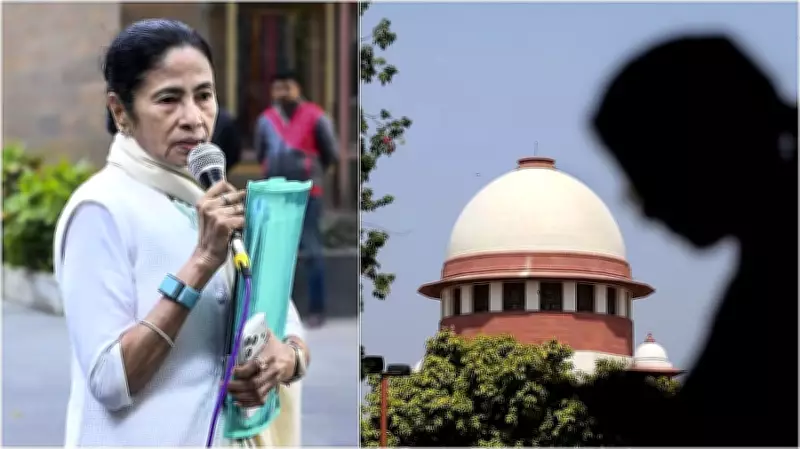
Mamata Banerjee Temporarily Suspends Dharna Following Supreme Court Directive on SIR Appellate Mechanism
In a significant political development, West Bengal Chief Minister Mamata Banerjee announced on Tuesday that she is temporarily lifting her ongoing dharna (sit-in protest) against what she termed as "flaws" in the Special Intensive Revision (SIR) process. This decision comes in response to a recent Supreme Court order that mandates the formation of an appellate body to address grievances related to the SIR.
Supreme Court Intervention Spurs Temporary Halt to Protest
The Chief Minister, while addressing supporters and media personnel, stated that her protest is being called off "temporarily" in light of the judicial intervention. She emphasized that the Trinamool Congress (TMC) will maintain vigilant oversight on future developments concerning the SIR implementation. "We welcome the Supreme Court's order for establishing an appellate mechanism. This is a step toward ensuring fairness and transparency," Mamata remarked during her announcement.
Background and Context of the Dharna
The dharna was initiated by Mamata Banerjee to highlight alleged irregularities and procedural deficiencies in the Special Intensive Revision, a critical administrative process in West Bengal. Key concerns raised by the TMC leadership included:

- Alleged discrepancies in voter list updates during the SIR.
- Claims of administrative bias affecting the revision's outcomes.
- Demands for greater accountability and corrective measures from authorities.
These issues had sparked widespread political debate, with the dharna serving as a focal point for opposition against the perceived flaws.
Implications of the Supreme Court Order
The Supreme Court's directive to form an appellate body is seen as a pivotal move to address the contentious aspects of the SIR. This body is expected to:
- Review complaints and appeals related to the SIR process.
- Provide a legal framework for resolving disputes impartially.
- Enhance public confidence in the administrative revisions.
Mamata Banerjee hailed this order as a victory for democratic principles, stating that it aligns with her party's demands for a more equitable system.
Future Monitoring and Political Ramifications
While the dharna has been suspended, Mamata made it clear that the TMC will keep tabs on future developments. She warned that if the appellate body fails to deliver justice or if further issues arise, the protest could be reinstated. This stance underscores the ongoing political tensions in West Bengal, where the SIR has become a flashpoint between the ruling party and opposition forces.
The temporary cessation of the dharna may ease immediate political unrest, but it sets the stage for continued scrutiny of the SIR's implementation. Observers note that this development could influence upcoming electoral dynamics and administrative reforms in the state.
As of March 10, 2026, the situation remains fluid, with all eyes on the formation and functioning of the appellate body as mandated by the Supreme Court.






