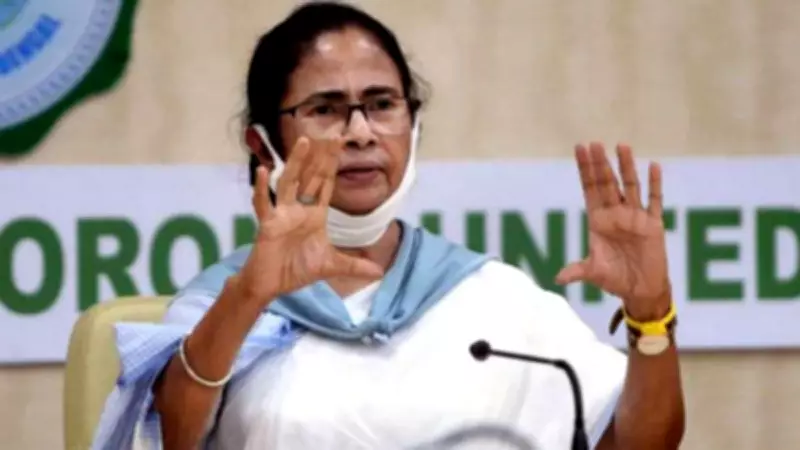
West Bengal Chief Minister Mamata Banerjee Escalates Poll Irregularity Concerns to Supreme Court
In a significant political development, West Bengal Chief Minister Mamata Banerjee has taken her grievances regarding alleged electoral irregularities directly to the highest judicial authority in the country. The Trinamool Congress supremo has filed a formal petition in the Supreme Court of India, seeking judicial intervention and scrutiny into what she describes as serious lapses and malpractices in the state's electoral process.
Swift Judicial Move Follows Formal Communication to Election Commission
This decisive legal action comes merely a day after Chief Minister Banerjee dispatched a detailed letter to Chief Election Commissioner Gyanesh Kumar, outlining her concerns and demanding immediate corrective measures. The sequence of events underscores the urgency and gravity with which the state government views these alleged irregularities, which they claim threaten the fundamental principles of free and fair elections in West Bengal.
The petition, filed through her legal representatives, is expected to request the Supreme Court to direct the Election Commission of India to investigate the complaints thoroughly and ensure transparency in the ongoing and future electoral exercises in the state. Legal experts suggest that this move could set a precedent for how state governments interact with constitutional bodies over electoral disputes, potentially invoking the court's powers under Article 32 of the Constitution for enforcement of fundamental rights.

Allegations Center on Administrative and Procedural Lapses
While the specific contents of the Supreme Court petition remain confidential at this stage, sources close to the development indicate that the allegations mirror those raised in her letter to the CEC. These reportedly include concerns over:
- Inconsistencies in voter list revisions and alleged omissions of eligible voters.
- Questions regarding the deployment and conduct of polling personnel and security forces.
- Alleged procedural violations during recent by-elections or local body polls.
- Apprehensions about the impartiality of certain electoral officials at the district level.
The Chief Minister's office has maintained that these are not mere political allegations but are backed by specific instances and evidence collected from the ground, which they believe warrant judicial oversight to uphold democratic integrity.
Political and Constitutional Implications of the Move
This escalation to the Supreme Court marks a critical juncture in the ongoing tussle between the West Bengal state government and the central election authority. It brings the debate over electoral management and federal principles into the legal domain, moving beyond political rhetoric. Constitutional analysts are watching closely, as the court's response could influence the balance of power between state administrations and independent constitutional bodies like the Election Commission.
The timing of the petition is also politically sensitive, coming amidst a charged atmosphere in Bengal's political landscape. Opposition parties have been quick to react, with some dismissing the move as a political stunt, while others have expressed support for any action that ensures electoral purity. The Election Commission of India is yet to issue an official statement regarding the Supreme Court petition, though it had acknowledged receipt of the Chief Minister's letter earlier.
As the legal process unfolds, all eyes will be on the Supreme Court's registry for the listing of the case and any interim orders that might be passed. The outcome of this petition could have far-reaching consequences not just for West Bengal, but for the conduct of elections across India, reinforcing or redefining the mechanisms for addressing electoral grievances at the highest levels.