

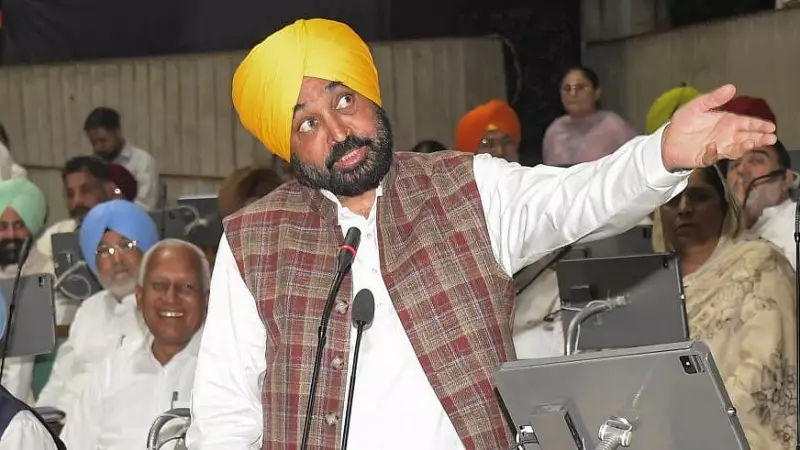
Punjab Chief Minister Bhagwant Mann has publicly questioned the rationale behind blaming his state for the ongoing air pollution crisis in the national capital, Delhi. His remarks come at a time when the seasonal practice of stubble burning by farmers in Punjab has reportedly seen a significant decline.
A Direct Challenge to Delhi's Ministers
In a pointed video message released on 16 December 2025, the Aam Aadmi Party (AAP) leader took a clear dig at political opponents, indirectly referencing the Bharatiya Janata Party (BJP). Mann highlighted that despite the current absence of widespread stubble burning activities, ministers in Delhi had already begun pointing fingers at Punjab for the deteriorating air quality.
He emphasized that this premature blame game was unfounded. The Chief Minister's statement introduces a new dimension to the perennial political tussle over the sources of north India's severe winter pollution.

Floods Disrupted the Agricultural Calendar
The core of Mann's argument rests on the extraordinary climatic conditions faced by Punjab earlier in the year. He detailed that the state witnessed severe floods, which critically disrupted the agricultural schedule.
This natural disaster led to a substantial delay in paddy harvesting. The implication is clear: with the harvest itself pushed back, the subsequent activity of clearing fields by burning crop residue (stubble) would also occur later than usual, if at all. Therefore, according to Mann's logic, Punjab could not be the primary contributor to Delhi's pollution crisis at this specific time.
The Political Undertones of the Pollution Debate
This exchange underscores how the issue of air pollution often transforms into a political conflict between the ruling parties in Delhi and Punjab. Mann's message is framed as a defense of Punjab's farmers and a rebuttal to what he suggests is a habitual and misplaced accusation.
By stating that Delhi ministers "had already started blaming Punjab," he positions his government as responding to unjust criticism. The narrative shifts from an environmental discussion to one of regional accountability and political one-upmanship.
The development raises critical questions about the other major contributors to Delhi's toxic air, including local vehicle emissions, industrial pollution, construction dust, and meteorological factors like low wind speed. The Chief Minister's intervention forces a re-examination of the pollution pie chart and the political narratives built around it.






