

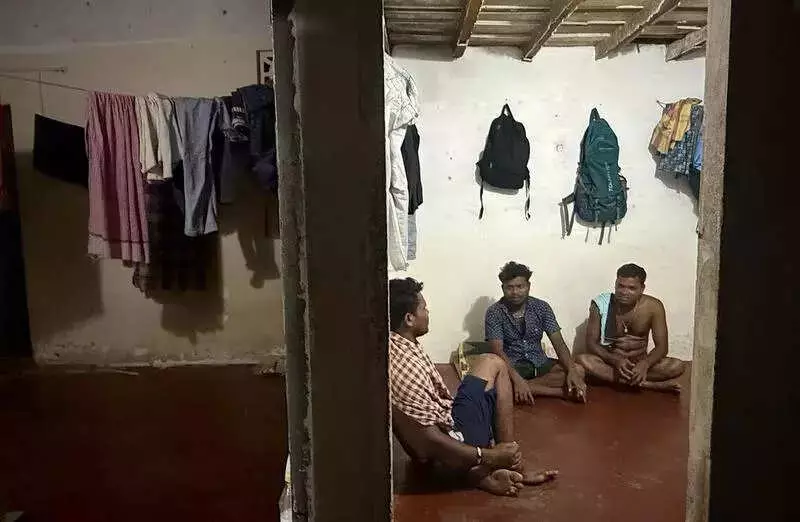
Kerala, a state celebrated for its high literacy, social development, and egalitarian ethos, faces a stark contradiction. A recent brutal incident in Palakkad district has laid bare a grim reality that challenges its progressive image. A 31-year-old man from Bilaspur, Chhattisgarh, was beaten to death by a mob in Attappallam on mere suspicion of theft. The Walayar police later confirmed no robbery occurred and arrested five local men for murder.
The Rising Tide of Violence Against Migrant Labour
This killing is not an isolated event but part of a disturbing trend of violent mob attacks targeting interstate migrant workers in Kerala. These workers, often called athidhi thozhilali (guest workers), form the backbone of the state's economy. They sustain crucial sectors like construction, factories, hospitality, sanitation, and care work, where local labour is scarce.
Despite their economic centrality, migrants from states like West Bengal, Assam, Odisha, Bihar, Jharkhand, and Uttar Pradesh frequently face social exclusion and lack legal protection. The tragic death in Palakkad underscores the gap between Kerala's acclaimed human development indicators and its practical ability to safeguard those who power its economy.

From Symbolic Inclusion to Enforceable Rights
While Kerala has acknowledged migrant workers and launched welfare schemes like the Athidhi portal, Jyothi education scheme, and Awaz health insurance, these initiatives remain fragmented. The symbolic vocabulary of 'guest' workers, while implying care, also reinforces temporariness and conditional acceptance. Experts argue that true inclusion requires moving beyond rhetoric to institutionalise enforceable laws.
In practice, migrants encounter significant barriers:
- Linguistic hurdles in accessing healthcare, education, and police services.
- Overcrowded, segregated housing often controlled by employers.
- Welfare schemes dependent on employer compliance, with complex registration systems many migrants cannot navigate.
- Weak labour inspections and unpunished violations like wage theft and unsafe conditions.
- Ineffective grievance redressal mechanisms, compounded by fear of police and language barriers.
Migrants often become easy targets for rumours on social media, deepening social suspicion and 'othering' in public spaces and workplaces.
A Constitutional Imperative for Protection
Addressing this vulnerability is not merely an act of benevolence but a constitutional obligation and democratic imperative. Currently, policies are scattered across departments, allowing responsibility to be deferred. Mob violence is often treated as isolated crimes rather than systemic failures.
There is an urgent call to strengthen legal frameworks, including Section 103(2) of the Bharatiya Nyaya Sanhita, 2023, regarding mob lynching. Firm state-level measures are needed to prevent, respond to, and document violence against migrants. This would establish clear preventive duties for district administrations and mandate police accountability.
Ultimately, protecting migrants from mob violence is about affirming that all lives hold equal value, irrespective of origin. It requires recognising interstate migrants not as a disposable labour force but as rights-bearing members of society with aspirations and families. The path forward demands structural interventions: transparent data systems, community engagement, portable social security, and, crucially, including migrants themselves in policy conversations to build a genuinely inclusive Kerala.






