

Mixed Emotions as 139 Voters Regain Rights in West Bengal
For the 139 extremely fortunate individuals who were reinstated on the voter list this Wednesday, the day brought a complex mix of emotions ranging from profound relief and happiness to, ironically, significant tension and worry. This development occurred just ahead of crucial elections in the state, highlighting ongoing issues with electoral rolls.
Political Controversy in Samsherganj Constituency
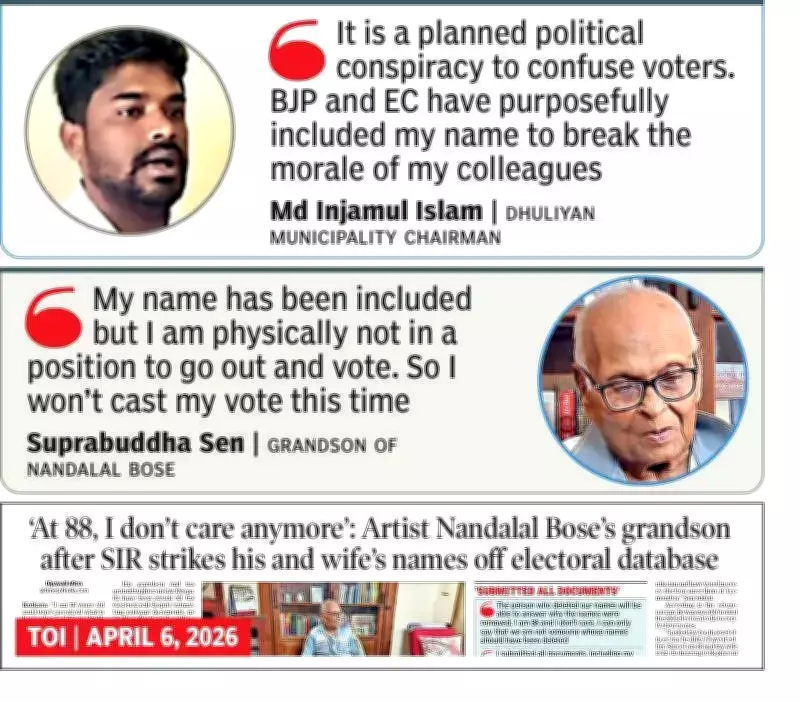
In the minority-dominated Samsherganj constituency, the situation is particularly contentious. The name of Dhuliyan Municipality chairman Md Injamul Islam, also known as Raja, appeared as the sole entry on the supplementary list published Wednesday after the tribunal cleared his case. This occurred while more than 74,000 names remain pending before the tribunal, with Samsherganj alone recording 74,775 deletions following judicial scrutiny.
Instead of feeling relieved, Islam expressed deep concern as opposition parties have been spreading rumors and maligning him, alleging that he used his political power to secure his place on the voter roll. "According to Election Commission rules, I was supposed to apply to the tribunal within 15 days of being deleted. I applied after 17 days, and I have proof of that. I don't know what is happening or how my name appeared," he told reporters.

Later, he elaborated further, stating, "This is a planned political conspiracy by the BJP to confuse voters. I had openly said during campaigning that my name would be the last to get cleared in the tribunal. The BJP and Election Commission have purposefully included my name to break the morale of my colleagues. I have all the proof that no rule was changed for me."
Elderly Voter Unable to Exercise Restored Right
In another poignant case, the name of Suprabuddha Sen, 88, appeared on the supplementary list after the appellate tribunal cleared his case following intervention by the apex court. Sen is the maternal grandson of Nandalal Bose, the artist who illustrated the original manuscript of India's Constitution. Despite this restoration, Sen will not be able to cast his vote on Thursday due to physical limitations.
"I am 88 years old. I am physically not in a position to go out and vote. So I will not be going to cast my vote," said Sen, highlighting how age and health can prevent citizens from exercising their democratic rights even when administrative hurdles are overcome.
However, there is some consolation in his household. The names of Sen's wife Deepa, 82, and their caretaker Chakradhar Nayek have also been cleared by the tribunal and will be able to vote on Thursday. "My wife and Chakradhar will go to the Visva Bharati Staff Club to cast their vote," he added. They are registered electors of Ward 2 under the Bolpur constituency.
Last-Minute Inclusion and Community Concerns
Dhananjay Sardar, a 30-year-old resident of a small village in Murshidabad, experienced a dramatic last-minute restoration. His name, which was under adjudication and subsequently deleted, was finally included just hours before the first phase of the election. While relieved personally, Sardar expressed concern for his community.
"I am happy that I could cast my vote on Thursday, but in our village several other eligible voters' names remained deleted and should be included," he stated, pointing to the uneven nature of the restoration process that leaves many legitimate voters disenfranchised.
Relief and Uncertainty in Bankura
In Bankura, 25-year-old Rojina Khatun experienced pure relief when her voting rights were restored. "I never thought that my name would be restored and that I would be able to vote, but finding out that my name was included again on the voter list gave me great relief. I will go and cast my vote early in the morning," she shared.
However, her family's situation remains partially unresolved. "My father-in-law's name was also deleted, but we do not know the fate of his case. We cannot access the list, so we are waiting to get a call from the Booth Level Officer," Khatun explained, illustrating how technological and administrative barriers continue to affect electoral participation.

The restoration of these 139 names represents both success and ongoing challenge in India's electoral system, with political allegations, personal limitations, and systemic issues creating a complex landscape as citizens prepare to exercise their democratic rights.





