

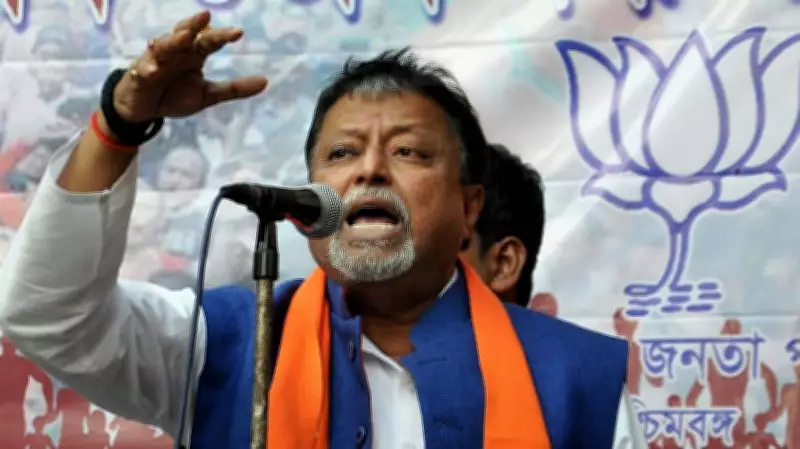
Mukul Roy: The Enduring Strategist of West Bengal's Political Arena
Mukul Roy, often hailed as West Bengal's 'Chanakya' for his astute political maneuvers, has carved a unique legacy through his mastery of defections and ability to navigate shifting alliances. Born in 1954 in Kanchrapara, located in the North 24 Parganas district, Roy embarked on his political journey in the 1980s as a member of the Youth Congress. His early involvement laid the groundwork for a career marked by strategic flexibility and resilience.
From Congress Roots to Trinamool Trailblazer
Roy's political trajectory took a pivotal turn in 1998 when Mamata Banerjee, a prominent leader, broke away from the Indian National Congress to establish the Trinamool Congress (TMC). Demonstrating keen foresight, Roy was among the earliest supporters to join Banerjee's new party, aligning himself with a movement that would later dominate West Bengal's political landscape. This move showcased his knack for identifying emerging opportunities and positioning himself at the forefront of change.
Mastering the Art of Defections and Alliances
Over the decades, Mukul Roy became renowned for his expertise in orchestrating defections, a skill that allowed him to influence electoral outcomes and party dynamics significantly. His strategic acumen enabled him to:

- Build and dismantle alliances with precision, often shifting loyalties to maximize political advantage.
- Outlast numerous political partnerships, surviving through various administrations and coalition governments in West Bengal.
- Navigate the turbulent waters of state politics, where his maneuvers have been both praised and criticized for their impact on governance and party stability.
Roy's ability to adapt and thrive in an environment of constant flux has cemented his reputation as a durable and influential figure. His career reflects the broader complexities of Indian politics, where personal loyalty, party ideology, and pragmatic calculations often intersect.
Legacy and Impact on West Bengal's Political Fabric
As a key architect in shaping West Bengal's contemporary political scene, Mukul Roy's contributions extend beyond mere party affiliations. His strategies have:
- Influenced electoral strategies, particularly in how parties approach defections and coalition-building.
- Highlighted the role of individual agency in a system often dominated by larger party structures and ideologies.
- Sparked debates on political ethics, with his tactics raising questions about stability and integrity in democratic processes.
Despite controversies, Roy's enduring presence underscores his significance as a strategist who has weathered storms and outlived many of his contemporaries. His story is a testament to the dynamic and often unpredictable nature of politics in West Bengal and India at large.






