

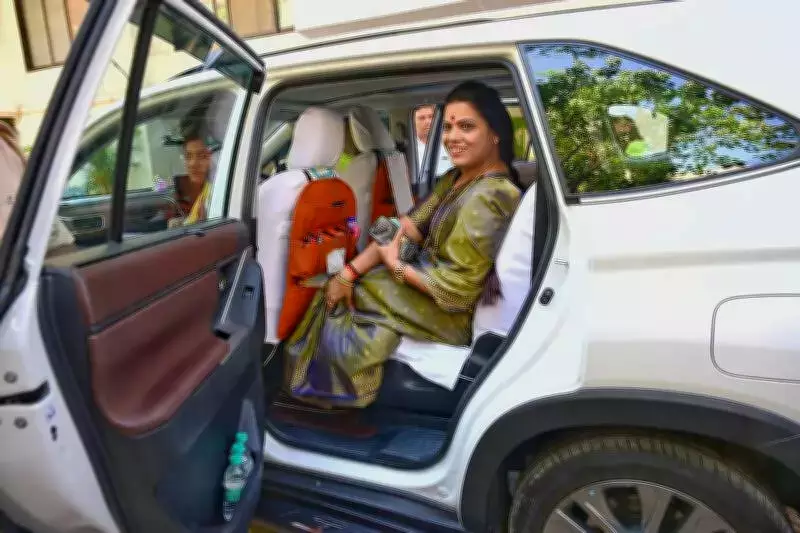
Mumbai's Grand Entry Gates to Feature Civic Amenity Complexes, Says Mayor
Mumbai Mayor Ritu Tawde has clarified that the proposed grand entrances and clock towers at various entry points to the city will not be limited to mere arches. Instead, they will be accompanied by comprehensive civic amenity complexes designed to enhance the urban experience for residents and visitors alike.
Inspection and Vision for Entry Gateways
On Tuesday, Mayor Tawde conducted an inspection of sites at Vashi, Airoli, and Mulund nakas to accelerate the construction of concept-based entry gateways and clock towers. These structures are intended to represent Mumbai's identity at key entry routes into the metropolis. The mayor emphasized that the concept extends beyond architectural elements to include all-inclusive civic amenity complexes.
The objective is to develop facilities that provide comprehensive amenities to citizens and tourists while generating permanent revenue for the civic body. Tawde stated that the administration should commence work through time-bound planning, with a joint meeting of officials from all concerned departments to be organized soon to expedite the project. An earlier inspection tour had been conducted at Dahisar naka, with the remaining three locations inspected on Tuesday.

Features of the Civic Amenity Complexes
The planned complexes will include a wide range of facilities to serve the public and promote local culture and economy. According to Mayor Tawde, the grand entrances will be based on social, cultural, economic, and other concepts related to Mumbai, ensuring that citizens, visitors, and tourists feel the city's identity upon entry.
The all-inclusive complexes around these gateways will comprise:
- Green zones and gardens for environmental sustainability and recreation.
- Parking facilities to accommodate vehicles and reduce congestion.
- Separate air-conditioned restrooms for women and men for enhanced comfort.
- Spaces for Koli community members, women's self-help groups, and other entrepreneurs to set up stalls, supporting local livelihoods.
- Digital hoardings for information and advertising.
- Solar energy projects to promote renewable energy use.
These facilities aim to provide all necessary amenities while creating revenue streams for the Brihanmumbai Municipal Corporation (BMC).
Transportation and Commercial Hub Development
In a related development, the BMC is also working on a transportation and commercial hub at Dahisar, where the octroi naka was previously located. This hub will accommodate interstate buses entering the city, integrating with other transport modes like BEST and Metro.
The hub will feature:
- Entertainment and recreational spaces for public use.
- Retail areas to boost commercial activity.
- Banquet halls and hotels to cater to events and tourism.
The main objective of this project is to provide an integrated bus terminus and enhance connectivity within Mumbai's transport network. This initiative aligns with the broader goal of improving urban infrastructure and services in the city.
Mayor Tawde's announcements highlight a forward-thinking approach to urban planning, focusing on both aesthetic and functional improvements to Mumbai's entry points and transportation hubs.






