

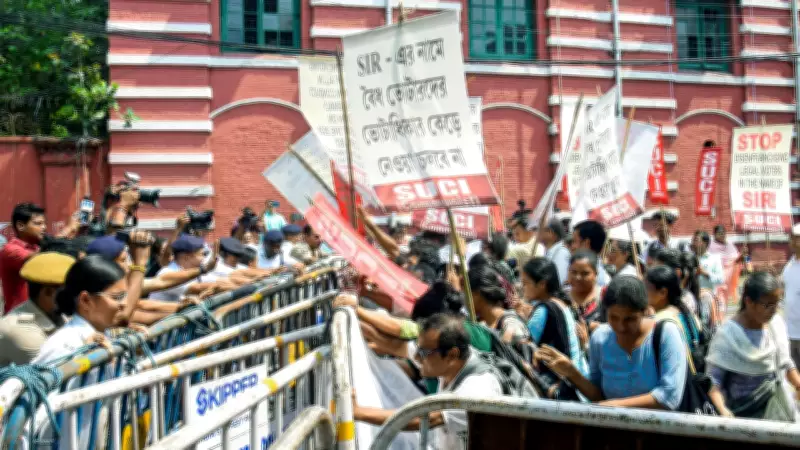
BEHRAMPORE/SHAMSHERGANJ: Around midnight on the eve of polling in Murshidabad, police visited the homes of many voters whose names were struck off under the Systematic Irregularities Report (SIR), warning them not to go near booths on Thursday. On polling day, many defied those warnings and turned up to protest their exclusion from the electoral rolls.
Voters Left Disenfranchised Despite Compliance
Clutching his voter ID, Aadhaar card and other documents, Behrampore toto driver Imtiaz Khan (41) stood outside a booth, pleading with central forces to let him meet officials. "I submitted my documents and attended hearings five times. I have been voting for 20 years. My family is voting, but I can't," he said, expressing his frustration. Somnath Kangsabanik, a cook, reported that five of the 13 members in his family had been deleted from the rolls. "Still, I have come — this is my protest," he added.
Businessman Encourages Others to Vote
At Qutubpur, businessman Waquar Ali Mirza, whose name was missing from the voters' list, urged others to cast their ballots. "I submitted all my documents. Now, I want to ensure others vote against SIR," he said, highlighting the widespread sense of disenfranchisement.

Exclusion Across Generations
The feeling of exclusion cut across generations. Syed Reza Ali Meerza (82), who traces his lineage to Mir Jafar, planned a protest but stayed back after advice from the police. In Shamsherganj, where over 90,000 voters were deleted, similar scenes unfolded. Outside a booth in Digri, nearly 300 people stood silently holding voter cards they could not use. Ironically, the constituency recorded close to 95% polling.
Revenge Through the Ballot in Jafrabad
In Jafrabad, a Hindu-majority pocket surrounded by Muslim-dominated neighbourhoods, kin of victims of last year's violence voted, calling it "revenge through the ballot." "We want justice," said Parul Das, whose husband and son were killed in the violence.
About the Author: Tamaghna Banerjee, a reporter from Kolkata, covers crime, aviation, human rights and politics. He has a keen interest in human interest and rural reporting. He has done his postgraduation in journalism and mass communication and has a total of 14 years in journalism.






