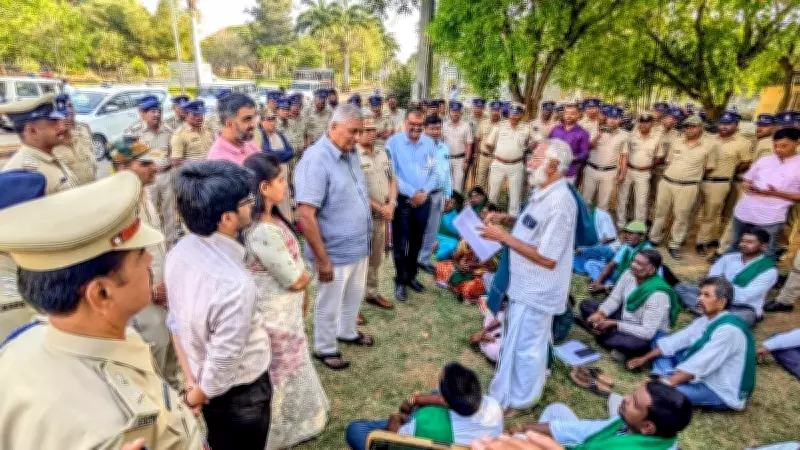
Mysuru Farmers Stage Sustained Protest at Regional Commissioner's Office Over Wildlife Safari Suspension
In a significant escalation of their ongoing demonstration, farmers in Mysuru have taken their protest directly to the office of the Regional Commissioner. The action, which began on Thursday, marks a new phase in the dispute surrounding the suspension of wildlife safaris in the region.
Protesters Establish Makeshift Camp at Government Office
The protesting farmers arrived at the Regional Commissioner's office equipped with essential supplies, demonstrating their resolve for a prolonged sit-in. They brought beds to ensure overnight stays and vessels for preparing food on-site, effectively transforming the government premises into a temporary protest camp. This move underscores the depth of their frustration and their determination to secure immediate attention to their demands.
Background of the Wildlife Safari Suspension Issue
The protest stems from the controversial decision to suspend wildlife safaris, which has severely impacted local communities dependent on tourism and related activities. Farmers argue that this suspension has led to substantial economic losses and threatens their livelihoods. The suspension has disrupted not only tourism revenue but also ancillary businesses that rely on safari operations.
The farmers' primary demand is the immediate reinstatement of the wildlife safaris, coupled with compensation for the financial hardships endured during the suspension period. They emphasize that the safaris are crucial for both conservation efforts and local economic stability.
Government Response and Future Implications
As the protest continues, authorities are under increasing pressure to address the farmers' concerns. The Regional Commissioner's office has yet to issue an official statement regarding the protest or the safari suspension. However, the presence of protesters at such a high-profile government location is likely to prompt urgent discussions and potential policy reviews.
This protest highlights broader issues of rural distress and governance in Karnataka, where agricultural and tourism sectors often intersect. The outcome could set a precedent for how similar disputes are handled in the future, affecting both wildlife management and community relations.
Local residents and stakeholders are closely monitoring the situation, hoping for a swift resolution that balances environmental conservation with economic needs. The protest's duration and intensity will depend largely on the government's willingness to engage in meaningful dialogue and implement concrete solutions.