

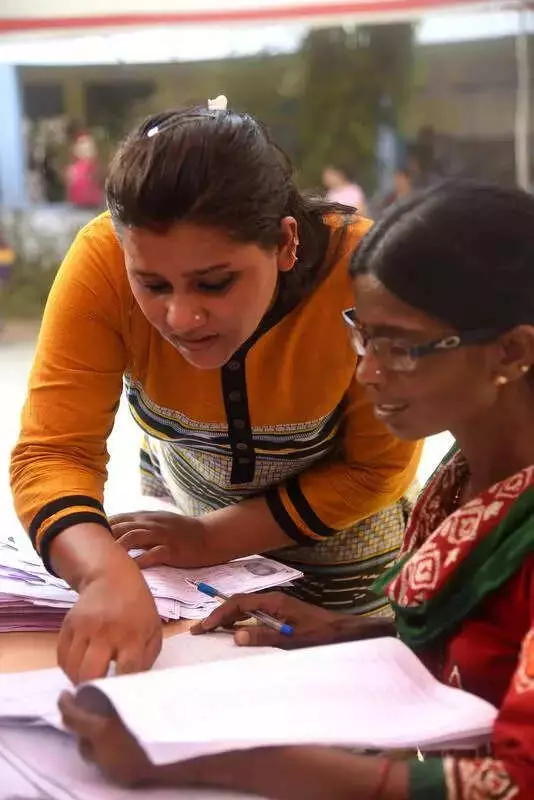
For the past twenty years, the story of Nagpur's municipal elections has been one of consistent public disengagement. Regardless of which political party has held the reins of the Nagpur Municipal Corporation (NMC), voter enthusiasm has remained muted, with turnout stubbornly hovering around the 50% mark.
A Persistent Pattern of Low Participation
The trend of tepid voter interest is deeply entrenched. In the 2002 NMC elections, when the Congress party governed the civic body, the city recorded a turnout of just 49.07%. Out of a total of 13.04 lakh registered voters, fewer than half exercised their franchise. The change in administration in 2007 sparked a flicker of hope. With the Bharatiya Janata Party (BJP) coming to power, the turnout saw a modest rise to 56.28%, as 8.05 lakh of the 14.31 lakh electorate voted.
However, this optimism proved fleeting. By the 2012 polls, after a ward reorganization that expanded the electorate to 19.86 lakh, participation fell back to 52%. Only 10.32 lakh citizens cast their votes, underscoring the persistent apathy. The 2017 elections continued the pattern, with an overall city turnout of 53.72%.

Zone-Wise Data Reveals Localized Variations
A closer look at the 2017 polling data reveals significant disparities across different zones of Nagpur, though the overall picture remains bleak. Gandhibagh zone led with a turnout of 65.12%, while Dhantoli trailed at 49.35%. Other zones reported figures such as Laxmi Nagar (53.92%), Dharampeth (51.06%), Hanuman Nagar (51.82%), Nehru Nagar (56.17%), Satranjipura (56.90%), Lakadganj (57.89%), Ashi Nagar (53.48%), and Mangalwari (53.10%).
Interestingly, the gap between male and female voter participation was narrow across most zones, indicating that gender disparity is not a primary driver of the low turnout. Officials and analysts frequently point to other factors: urban migration, voter fatigue, demanding work schedules, and a widespread perception that local civic elections are less consequential than state (Assembly) or national (Lok Sabha) polls.
Administration's Push and Political Stakes
Facing this enduring challenge, the civic administration is mounting a fresh effort to boost engagement. Under the leadership of Municipal Commissioner Abhijeet Chaudhari, the NMC has planned a series of voter awareness activities. Deputy Municipal Commissioner Ranjana Lade, who is in-charge of the Systematic Voters' Education and Electoral Participation (SVEEP) program, confirmed these initiatives.
The political backdrop adds weight to the turnout debate. The BJP has controlled the NMC for three consecutive terms since 2007, consolidating its hold on urban governance. Proponents view this continuity as a sign of stability and organizational strength. Critics, however, argue that when nearly half the electorate abstains, election outcomes inevitably favour parties with robust grassroots machinery over those relying on broad-based citizen mobilization.
As Nagpur approaches another municipal election, all eyes will be on voter turnout trends. For many observers, the core issue is no longer logistical but psychological: convincing residents that the municipal corporation is the tier of government most directly responsible for the roads they drive on, the water they drink, the sanitation systems they use, and the public transport they rely on.
Unless citizens make a stronger connection between their vote and these daily quality-of-life issues, Nagpur seems destined to repeat its familiar cycle: intense political campaigning, high public expectations from the civic body, and only about half of the eligible voters showing up at the polling booth.
Nagpur Municipal Corporation — Voting Percentage (Year-wise):

- 2002: 49.07%
- 2007: 56.28%
- 2012: 52.00%
- 2017: 53.72%





