The political landscape in Nashik is heating up as a key alliance faces potential collapse ahead of the crucial January 15 municipal corporation elections. The Shiv Sena faction led by Uddhav Thackeray (UBT) and the Maharashtra Navnirman Sena (MNS), alongside the Communist Party of India (Marxist), are preparing to contest the polls without their proposed partners, the Congress and the Sharad Pawar-led NCP (SP), if a consensus on seat allocation is not reached promptly.
Seat-Sharing Demands Create Stalemate
According to insiders from the Sena (UBT) camp, the deadlock stems from the demands of the other Maha Vikas Aghadi (MVA) constituents. The Congress has reportedly demanded 40 seats, while the NCP (SP) is seeking 30 seats out of the total 122 seats in the Nashik Municipal Corporation (NMC). This impasse has forced the Uddhav Thackeray-led party and the Raj Thackeray-led MNS to begin charting a separate electoral strategy in conjunction with the CPM.
A New Three-Party Formula Emerges
Sources indicate that Sena (UBT) and MNS have nearly finalized their internal seat-sharing arrangement, sidelining Congress and NCP (SP). Under the emerging formula, Shiv Sena (UBT) is likely to contest approximately 70 seats, while MNS may field candidates in about 45 seats. A smaller share of three to five seats is expected to be allotted to the CPM as part of this new understanding. This move signifies a major shift in the opposition's strategy for the civic polls.

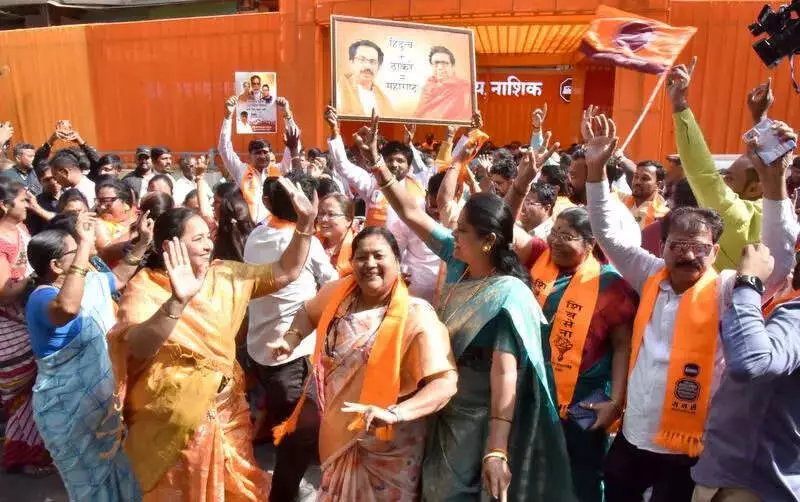
The alliance between UBT and MNS for civic polls in Nashik and other municipal corporations was officially declared during a joint press conference by Sena (UBT) chief Uddhav Thackeray and MNS chief Raj Thackeray this past Wednesday. Following the announcement, party workers and office-bearers from both sides celebrated together at the MNS city office in Nashik.
Historical Context and Political Calculus
The stakes are high, given the historical performance of these parties. In the 2017 civic elections, the undivided Shiv Sena won 35 seats, while the MNS secured five. However, MNS held power in the Nashik Municipal Corporation during the 2012-17 term with a strong tally of 40 seats. The Bharatiya Janata Party (BJP) came to power in the last polls by winning 66 seats. Independents won three seats, and the Republican Party of India (Athawale) won one. Both the undivided NCP and Congress won six seats each during the last civic polls.
Meanwhile, the Congress's Nashik city chief, when contacted, avoided direct commentary on the ongoing rift but confirmed that talks with MVA partners are still in progress. The reluctance of Congress and NCP (SP) to reduce their seat demands appears to be the primary obstacle to a grand opposition alliance.
The January 15 election is now poised to become a multi-cornered contest, potentially splitting the anti-BJP vote. The move by UBT and MNS to forge ahead independently underscores the complex negotiations and high ambitions defining Maharashtra's local body politics. All eyes are now on Nashik as the deadline for finalizing alliances draws near.