

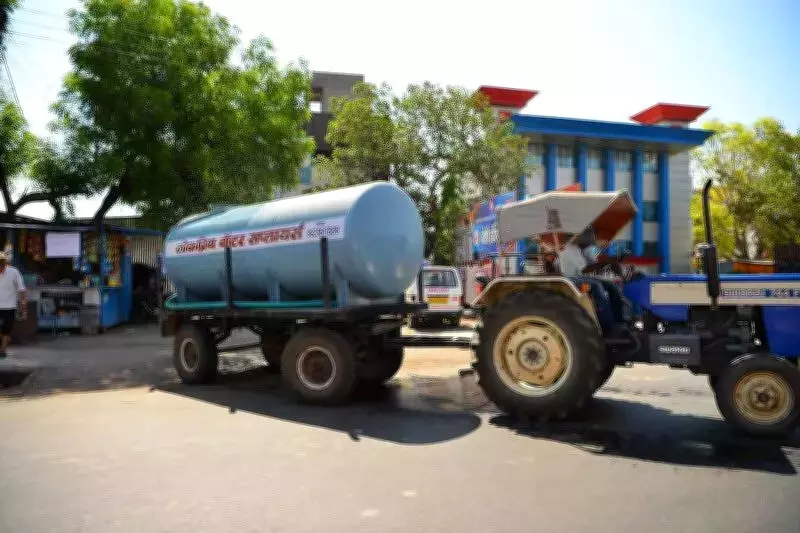
Nashik Villages Formally Request Tanker Water as Levels Decline
As water levels begin to recede in Nashik district, at least 10 villages in the rural belts have formally submitted requests for drinking water supplies through tankers. The demand has emerged from parched areas within the talukas of Sinnar, Deola, Yeola, and Chandwad. Interestingly, the request also comes from one village in Igatpuri taluka, which typically witnesses the heaviest rainfall but faces shortages in higher altitude areas as water levels dip.
Reliance on Wells Shifts to Tanker Dependence
According to a senior official from the district administration, these rural communities traditionally rely on local wells for their daily water needs. However, with these primary sources drying up, villages are becoming increasingly dependent on water supply schemes and tankers. "Water is supplied by tankers only to those villages that do not have any regional water supply schemes, or even a well that can be acquired to supply drinking water to the villagers," the official explained.
Administrative Process for Tanker Verification
The responsibility for verifying these demands and initiating tanker services lies with the respective tehsildar offices. "These offices have to verify and sanction the tankers as of now. When the intensity increases, these powers are then transferred to sub-divisional officers as part of monitoring the water situation closely," the official added, outlining the escalation protocol.

Current Dam Storage Levels Across Nashik
District administration data reveals that the 26 major and medium dams across Nashik currently hold 54% of their total 70.6 TMC capacity. This represents an improvement from last year during the same period, when the stock was around 45%.
Key storage updates for major complexes include:
- Gangapur Complex: Currently at 66% (9.4 TMC capacity) compared to 61% last year. This complex, comprising the Gangapur, Kashyapi, and Gautami Godavari dams, serves as the primary water source for the Nashik Municipal Corporation (NMC).
- Darna Complex: Holding 56% (13.4 TMC capacity), up significantly from last year's 42%. This network supplies drinking water to Nashik, Ahilyanagar, and Chhatrapati Sambhajinagar districts.
- Palkhed and Ozarkhed Complexes: The Palkhed complex has 46% (8.3 TMC), while Ozarkhed stands at 61% (3.2 TMC).
- Girna Complex: Serving parts of Nashik and Jalgaon, it holds 47% of its 23 TMC capacity, an improvement from last year's 38%.
The situation highlights the ongoing challenges in water management as rural communities adapt to changing availability, with administrative mechanisms in place to address escalating needs through verified tanker supplies.






