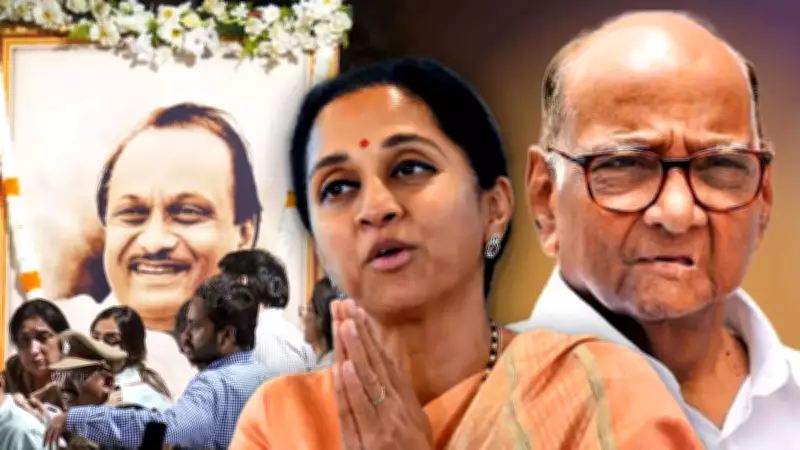
In a stunning revelation from Maharashtra's political landscape, leaders from both factions of the Nationalist Congress Party have confirmed that reunification talks were not merely active but had reached an advanced stage just before the tragic death of Ajit Pawar. The senior leader's passing in a plane crash at Baramati airport has cast a shadow over what could have been a transformative moment for state politics.
Merger Discussions Were Months in the Making
Senior NCP leader Eknath Khadse has disclosed that detailed discussions about merging the two factions had been ongoing for several months. According to Khadse, the negotiations had progressed to the point where electoral strategy had been completely finalized. The plan included contesting upcoming local body elections together under the party's traditional 'clock' symbol, signaling a return to unified political action.
Only Formal Announcement Remained
Ajit Pawar's close associate Kiran Gujar provided even more specific details about the merger's status. Gujar revealed that Pawar himself had stated the merger process was essentially complete, with only the formal public announcement remaining. This confirmation suggests the reunification was imminent and would have significantly reshaped Maharashtra's political equations ahead of crucial electoral battles.

Tragedy Freezes Political Realignment
The sudden tragedy that claimed Ajit Pawar's life has effectively frozen this carefully negotiated political realignment. What appeared to be a strategic calculation for electoral advantage has now transformed into a more complex situation. Within the NCP, voices are emerging arguing that unity must proceed in Pawar's memory, turning what began as political pragmatism into what some describe as a moral responsibility to honor his legacy.
Future of Merger Now Uncertain
The coming days and weeks will prove decisive in determining whether the NCP merger moves forward despite the tragic circumstances or becomes a missed opportunity in Maharashtra's political history. The advanced stage of negotiations means the framework for unity exists, but Pawar's absence creates leadership and implementation challenges that were not anticipated when talks were nearing completion.
Political observers note that the revelation of how close the factions were to reunification adds a poignant dimension to the tragedy. The merger, which could have redefined opposition politics in Maharashtra, now hangs in balance between honoring a leader's vision and navigating the practical realities of his absence.