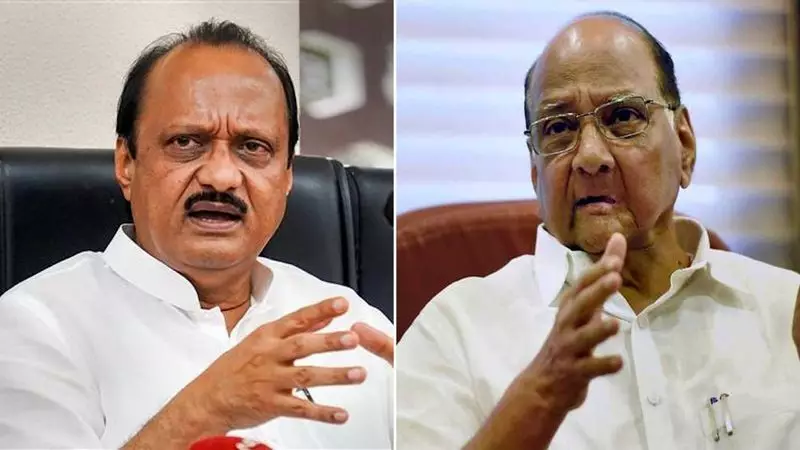
In a significant political development ahead of the crucial civic elections, Deputy Chief Minister Ajit Pawar has announced an electoral alliance between his faction of the Nationalist Congress Party (NCP) and the rival faction led by his uncle, Sharad Pawar, officially known as the NCP(Sharadchandra Pawar) or NCP(SP). The pact is specifically for the upcoming polls to the Pimpri-Chinchwad Municipal Corporation (PCMC).
A Strategic Reunion for Civic Power
The announcement was made by Ajit Pawar himself during a party meeting in Pimpri on Sunday, September 15. This move marks a dramatic shift, as the two factions have been fiercely opposed since Ajit Pawar's rebellion and split from the original party in July 2023. The alliance is strategically aimed at consolidating the Maratha vote bank and presenting a united front in the important industrial township adjoining Pune.
The core of the agreement involves a seat-sharing formula where the Ajit Pawar-led NCP will contest 77 seats, and the Sharad Pawar-led NCP(SP) will fight on 17 seats out of the total 128 wards in the PCMC. This arrangement underscores the dominant position of Ajit Pawar's faction in the region while accommodating the older faction. The remaining seats are reportedly left for other allies within the ruling Mahayuti coalition at the state level.

Driving Factors and Political Calculations
Several key factors have driven this unexpected alliance. Firstly, Pimpri-Chinchwad is considered a stronghold of the Pawar family, and a divided fight could have benefitted opponents like the Bharatiya Janata Party (BJP) or the Shiv Sena. By joining forces, both NCP groups aim to protect their traditional turf. Secondly, the alliance helps avoid a split in the Maratha community's votes, which is crucial for electoral success in the area.
Thirdly, this local-level understanding indicates a pragmatic approach to politics, where state-level rivalries can be set aside for local administrative control. The PCMC, with its substantial budget and influence in the Pune metropolitan region, is a prized political asset. Leaders from both sides emphasized that this partnership is for the "larger interest of the party workers and citizens" of the industrial city.
Implications and the Road Ahead
This alliance has sent ripples through Maharashtra's political landscape. It raises questions about the cohesion of the state's ruling Mahayuti alliance, as the BJP, a major partner, now faces an adjusted equation in Pimpri-Chinchwad. Furthermore, it demonstrates the fluid and complex nature of Maharashtra's politics, where alliances can be highly situational and driven by local electoral arithmetic.
While the partnership is currently limited to the Pimpri-Chinchwad civic polls, its success or failure will be closely watched. A victorious outcome could potentially inspire similar local understandings in other municipal bodies across the state, even as the two factions remain opponents at the state and national levels. For the voters of Pimpri-Chinchwad, this alliance presents a reunited front of the party they have traditionally supported, setting the stage for a direct contest with other major political players in the forthcoming election.
The final candidate lists and the campaign dynamics will now be the focal point, as this reunited 'Parivar' (family) seeks to reclaim its dominance in one of Maharashtra's most significant urban civic bodies.