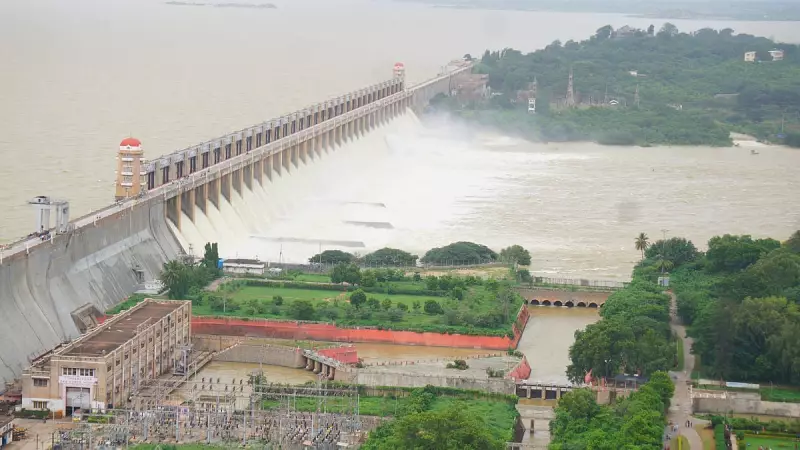
Karnataka Chief Minister Siddaramaiah has set a clear deadline for a crucial infrastructure upgrade at a major reservoir, promising that new crest gates for the Tungabhadra Dam will be installed by June this year. The announcement underscores the state government's focused approach to water management and irrigation development.
Announcement at Ambadevi Maharathotsava
The Chief Minister made this significant declaration while addressing the public after inaugurating the Ambadevi Maharathotsava and the Jamboo Savari. This event was held on the premises of the Ambamath in Sindhanur taluk. Speaking on the occasion, Siddaramaiah emphasized his administration's unwavering dedication to advancing irrigation projects across Karnataka.
Government's Firm Commitment to Irrigation
Siddaramaiah stated that the government is firmly committed to implementing irrigation projects, viewing them as vital for agricultural prosperity and regional water security. The replacement of the crest gates at the Tungabhadra Dam is a key part of this broader strategy. The Tungabhadra Dam, a critical water source for several districts in both Karnataka and Andhra Pradesh, requires these upgrades to ensure its operational efficiency and safety for the long term.

The installation of new crest gates is a technical necessity for the aging dam structure. Crest gates are the movable barriers at the top of a dam spillway that control the release of water. The project, slated for completion by June 2026, aims to modernize the dam's water discharge mechanisms, potentially improving water regulation for irrigation and mitigating flood risks during heavy monsoon seasons.
Significance for the Region
This infrastructure promise holds substantial importance for the farmers and communities dependent on the Tungabhadra river basin. A well-maintained dam with efficient gates ensures reliable water supply for the extensive canal networks that irrigate vast tracts of agricultural land in the arid regions of the state. The Chief Minister's announcement, made at a cultural and religious gathering in Sindhanur, directly connects governance priorities with the needs of the local populace.
The move is seen as a step towards strengthening water conservation and distribution infrastructure, which is a perennial issue in the state. By setting a specific timeline, the government aims to demonstrate accountability and a results-oriented approach in its public works agenda.