Nitish Kumar's Transition to Rajya Sabha Marks Historic Shift in Bihar Politics
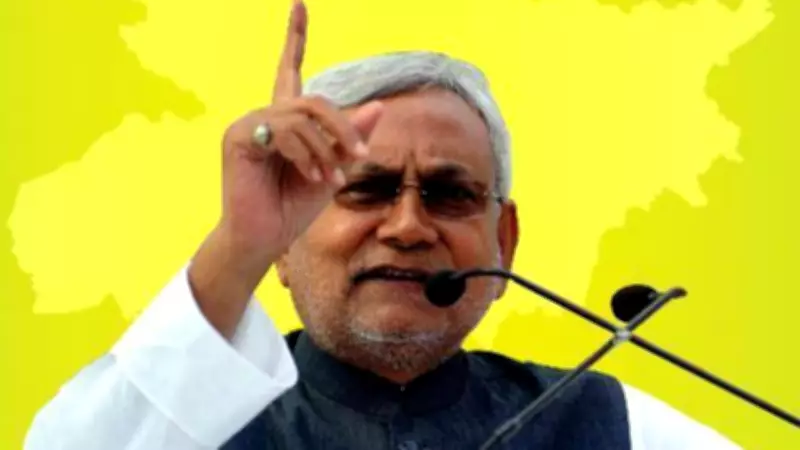
In a significant political development, Bihar Chief Minister Nitish Kumar is poised to transition to the Rajya Sabha, a move that will enable the Bharatiya Janata Party (BJP) to appoint its own chief minister in the state for the very first time. This strategic shift comes less than four months after Nitish Kumar, alongside Prime Minister Narendra Modi, led the National Democratic Alliance (NDA) to a resounding victory in the Bihar assembly elections in November. Following that win, Nitish Kumar took oath as chief minister for a record tenth term, solidifying his long-standing dominance in Bihar's political landscape.
Nomination Process and NDA Dynamics
Sources indicate that Nitish Kumar will file his nomination for the Rajya Sabha in Patna on Thursday, with key NDA members, including Union Home Minister Amit Shah, expected to be present. This event underscores the alliance's coordinated approach. Alongside Nitish, four other NDA nominees are set to file their nominations: BJP president Nitin Nabin, Union Minister Ram Nath Thakur, and Rashtriya Lok Samata Party leader Upendra Kushwaha. This collective action highlights the NDA's unified front as it navigates this transitional phase.
The BJP has historically played a supporting role to Nitish Kumar since their initial alliance in 1996, often deferring to his seniority despite having more MLAs than Nitish's Janata Dal (United) in both the 2020 and 2025 assembly elections. This longstanding dynamic is now set to change, marking a pivotal moment in Bihar's governance.
Health Concerns and Timing of Transition
Amid ongoing concerns about Nitish Kumar's health, his eventual stepdown was widely anticipated, though the timing has arrived sooner than many expected. Within NDA circles, this early transition is viewed as appropriate, as it provides the incoming leadership team ample time to settle into their roles and stabilize the administration. Nitish Kumar, who recently turned 75 and is often referred to as 'sushashan babu' for his governance reputation, will not be replaced immediately. His Rajya Sabha tenure will commence after he takes oath following April 9, the retirement date of outgoing members.
Nishant Kumar's Political Entry and JD(U) Strategy
Concurrently, Nitish Kumar's son, Nishant Kumar, is set to enter politics by joining the government. While speculation abounds that he might be appointed deputy chief minister, details regarding his specific position or portfolio remain unclear at this juncture. Nishant's entry is strategically aimed at energizing JD(U)'s rank-and-file during these uncertain times and at retaining the party's support base among critical sections of backwards and Dalits, which have been integral to its electoral success.
Potential Successors and BJP's Ascendancy
With Nitish Kumar's move, attention turns to potential successors within the BJP. Samrat Choudhary, a deputy chief minister who hails from the Kushwaha caste—the second largest OBC community after Yadavs—is seen as a front-runner. His rapid ascent in the BJP, including his previous role as state unit president and his current charge of the home portfolio, positions him favorably. Choudhary's social profile and political acumen further bolster his candidacy.
Another contender is Nityanand Rai, a deputy to Amit Shah in the Union Home Ministry. Rai, a Yadav, offers BJP an opportunity to reach out to the influential Yadav caste, traditionally loyal to Lalu Yadav's Rashtriya Janata Dal (RJD). His seasoned organizational skills contrast with Choudhary's background, having cycled through various parties before joining the BJP.
Broader Implications for BJP's Governance Footprint
This transition will significantly expand BJP's jurisdictional imprint across India. With Bihar set to join the states under BJP-led governments, the party will now head administrations across nearly the entire Hindi-speaking belt, with the exceptions of Jharkhand and Himachal Pradesh. This consolidation marks a strategic enhancement of BJP's influence in north and central India, reinforcing its political dominance in the region.
Nitish Kumar's Political Legacy and Internal Party Dynamics
Nitish Kumar has been at the helm of Bihar's government since 2005, barring a brief period after the 2014 Lok Sabha polls when he passed leadership to Jitan Ram Manjhi following his party's poor performance. Throughout his tenure, he has adeptly switched alliances, embracing the RJD twice before returning to the BJP, thereby maintaining his role as a swing factor in Bihar's fractured politics despite JD(U)'s recent decline.
As rumors of his Rajya Sabha move circulated, JD(U) issued a statement affirming, "Nitish Kumar Ji is the most accepted leader of Bihar. His popularity is clearly evident today in every sector. It is this affection and immense support from the people that is his true identity." However, internal dissent exists, with a section of the party strongly opposing his shift to national politics. A JD(U) member expressed concern, stating, "If Nitish goes to Delhi, this will convey a message that he was removed as Bihar CM. And, if BJP appoints its own CM, message will only be confirmed." This internal opposition highlights the challenges JD(U) faces in navigating this transition while preserving its political relevance.
In summary, Nitish Kumar's move to the Rajya Sabha represents a historic realignment in Bihar's political arena, setting the stage for BJP's unprecedented leadership in the state and reshaping the broader political landscape of northern and central India.