

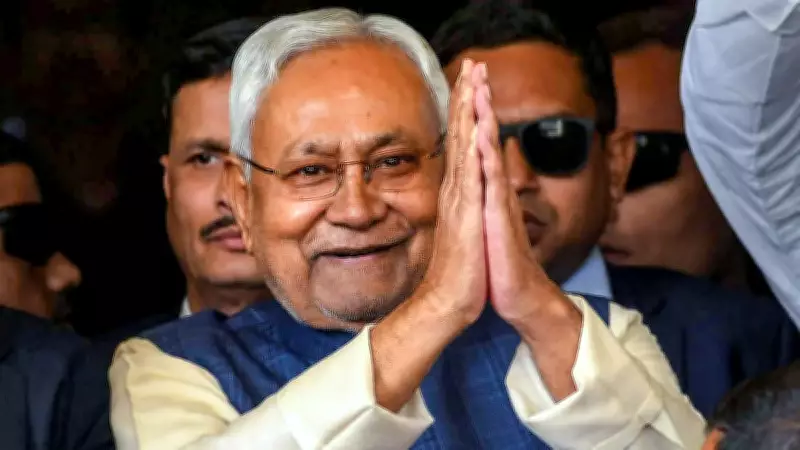
Nitish Kumar Set to Assume JD(U) Presidency Unopposed in Patna
Bihar Chief Minister Nitish Kumar is poised to be elected unopposed as the national president of the Janata Dal (United) (JD(U)) at the party's national executive meeting scheduled for Saturday in Patna. This move solidifies his leadership within the party as it navigates recent political realignments in Bihar.
Unanimous Support and Nomination Process
The nomination process for the JD(U) presidency concluded on Friday, with Nitish Kumar emerging as the sole candidate. Party leaders have expressed unanimous support for his candidacy, highlighting his pivotal role in steering the JD(U) through various political challenges. The election is expected to be a formality, with no opposition candidates in the fray.
This development comes at a critical juncture for the JD(U), which recently ended its alliance with the Rashtriya Janata Dal (RJD) and rejoined the National Democratic Alliance (NDA) led by the Bharatiya Janata Party (BJP). The party's national executive meeting will not only ratify Kumar's presidency but also discuss strategies for upcoming elections and organizational matters.

Political Implications and Future Directions
Nitish Kumar's elevation to the JD(U) presidency is seen as a consolidation of his authority within the party, ensuring a unified front as it prepares for future political battles. Analysts note that this move could strengthen the JD(U)'s position in Bihar's coalition politics, particularly within the NDA framework.
The election underscores Kumar's enduring influence in Bihar politics, where he has served multiple terms as chief minister. It also reflects the party's efforts to maintain stability and cohesion amid shifting alliances. The JD(U) has emphasized that this leadership transition is aimed at bolstering its grassroots connect and electoral prospects.
In summary, Nitish Kumar's unopposed election as JD(U) national president marks a significant moment in Bihar's political landscape, reinforcing his leadership as the party charts its course in the evolving dynamics of Indian politics.






