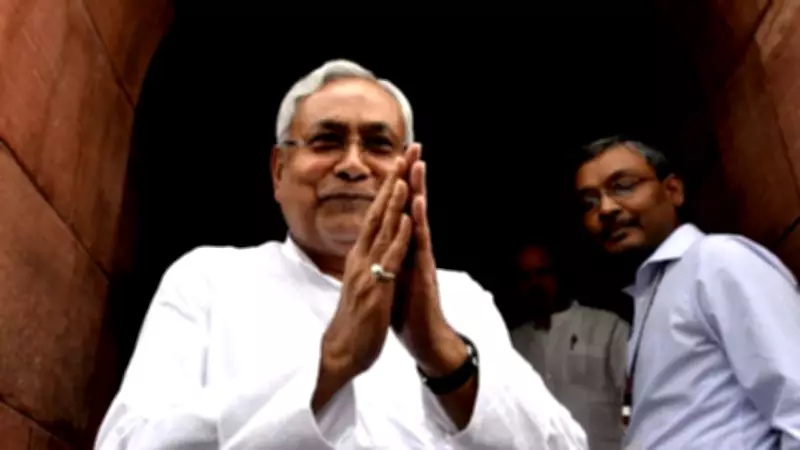
Nitish Kumar Poised for Rajya Sabha Transition, Marking End of Bihar Political Era
NEW DELHI/PATNA: After dominating Bihar's political landscape for nearly two decades and taking oath as chief minister a record ten times, Nitish Kumar now appears set for a significant transition to the Rajya Sabha. This move could effectively mark the closing chapter of an extraordinary state-level career that has defined Bihar politics since 2005.
From Lohia Disciple to Bihar's Longest-Serving CM
A disciple of socialist stalwart Ram Manohar Lohia, Nitish Kumar cut his political teeth in the JP movement and was among the young leaders jailed during the Emergency period. He was first elected as an MLA in 1985, which interestingly marked the last time he contested an assembly election directly. Since that pivotal moment, he has functioned either as an MLC or a Member of Parliament through various political phases.
Nitish Kumar entered the Lok Sabha from Barh constituency in 1989 and represented this constituency consistently for fifteen years. In 1999, he served as railway minister in the Atal Bihari Vajpayee government before becoming Bihar chief minister for the first time in 2000. What followed was nothing short of remarkable: nine more stints as chief minister, navigating shifting alliances between the NDA and the RJD-Congress combine, while retaining his centrality in Bihar's perpetually fractured political landscape.
Nomination Process and Political Implications
The 75-year-old JD(U) leader is expected to file his nomination in Patna on Thursday in the presence of Union home minister Amit Shah and other senior NDA leaders. His strategic shift to the Upper House is widely interpreted as paving the way for the BJP to install its own chief minister in Bihar for the very first time, representing a significant power realignment.
Political sources have indicated that Nitish Kumar's son, Nishant Kumar, is likely to formally enter politics by joining the state government apparatus. While speculation is particularly rife that he could be accommodated as deputy chief minister, there remains no official clarity yet regarding his specific role or portfolio allocation. Alongside Nitish Kumar, four other NDA nominees including BJP state president Nitin Nabin, Union minister Ram Nath Thakur, and RLSP leader Upendra Kushwaha are also set to file their nominations simultaneously.
BJP's Long-Awaited Moment in Bihar Politics
The BJP has played junior partner to Nitish Kumar since initially aligning with him in 1996 and continued backing him for the top post even in 2020 and 2025, despite emerging stronger in terms of MLA numbers. Party leaders have consistently cited his seniority and broad acceptability as key reasons for this arrangement. However, concerns over Nitish Kumar's health and advancing age had sparked persistent speculation about an inevitable transition.
While the timing has arrived somewhat earlier than many anticipated, NDA insiders believe this move will allow the new leadership sufficient time to settle into their roles before the next crucial electoral cycle. Nitish Kumar's Rajya Sabha tenure will formally begin after April 9, once the outgoing members retire, meaning he may technically continue as chief minister until that administrative transition completes.
Frontrunners for the Chief Minister Position
Deputy CM Samrat Choudhary is widely seen as the leading contender for the top position. A prominent Kushwaha leader representing the second-largest OBC community after Yadavs, Choudhary rose rapidly within BJP ranks, serving as state unit president before being appointed deputy CM and entrusted with the critical home portfolio.
Union minister of state for home Nityanand Rai represents another serious contender. A seasoned organisational figure and a Yadav community leader, his potential elevation could help BJP make deeper inroads into a community traditionally aligned with Lalu Prasad's RJD. If BJP successfully appoints its own chief minister, this would mark a symbolic milestone, effectively placing the party at the helm across the entire Hindi-speaking belt, with the notable exception of Himachal Pradesh.
JD(U)'s Strategic Recalibration and Future
Within JD(U), the leadership appears to have reconciled to a diminished role within the alliance framework. Signals of an impending shift became visible when Nitish Kumar ceded the home portfolio to BJP earlier this term, marking a significant first in his long political tenure. Nishant Kumar's likely induction is viewed as a strategic attempt to energize JD(U)'s cadre and consolidate support among backward and Dalit communities amid growing uncertainty about the party's future trajectory.
Nitish Kumar has dominated Bihar politics since 2005, with only a brief interlude following the 2014 Lok Sabha elections when he handed over charge to Jitan Ram Manjhi after JD(U)'s disappointing electoral performance. Over these transformative years, he strategically shifted alliances, breaking with BJP, aligning with RJD, and eventually returning to the NDA fold, while consistently retaining his position as the pivotal figure in Bihar's fragmented political landscape.
Even as the party publicly reiterated that "Nitish Kumar is the most accepted leader of Bihar," certain sections within JD(U) are said to be experiencing unease. Some fear his move to Delhi could be interpreted as a forced exit, particularly if BJP installs its own chief minister without significant JD(U) representation in key positions. The coming days are expected to formally mark the end of an era in Bihar politics and the beginning of a fundamentally new power equation within the state.