The Political Evolution of Nitish Kumar: A Bihar Chronicle
The political journey of Nitish Kumar stands as a voluminous and intricate chapter in the annals of Bihar's history. Emerging from a Congress-dominated landscape where opposition primarily flowed from socialist stalwarts like Jayaprakash Narayan, Ram Manohar Lohia, Madhu Limaye, George Fernandes, and Karpoori Thakur, Kumar's path has been anything but linear.
Early Beginnings and Socialist Foundations
Among the recruits from Patna University's student politics during the turbulent years of 1974-75 were two figures destined to shape Bihar's future: Lalu Prasad Yadav and Nitish Kumar. Both were deeply inspired by Lohia's brand of socialism, which emphasized social justice and empowerment of backward classes.
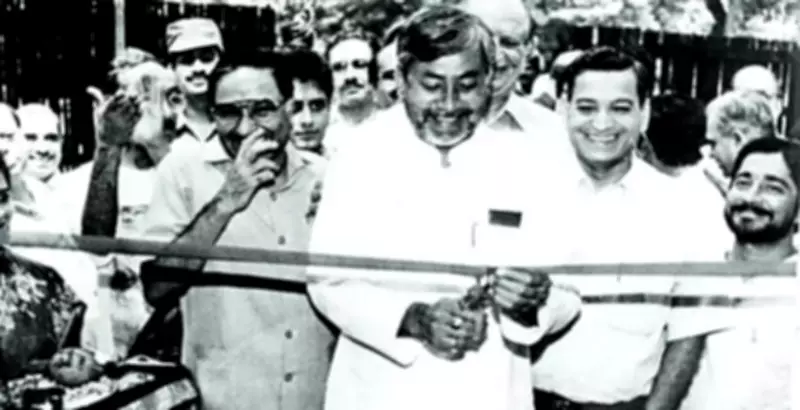
Their electoral debuts came after the Emergency, in 1977. While Lalu Prasad Yadav emerged as a new Young Turk entering Parliament, Nitish Kumar faced initial setbacks, losing assembly polls from Harnaut in both 1977 and 1980. Persistence paid off when he became third-time lucky in 1985, securing his first electoral victory. After a stint in the Bihar Legislative Assembly, he reached the Lok Sabha in 1989 from the Barh constituency.
The Mandal Revolution and Brotherhood Fractured
The implementation of the Mandal Commission's recommendations by Prime Minister VP Singh in 1990 proved transformative. It catapulted both Lalu and Nitish as 'Brothers Mandal' in Bihar's political firmament, championing Other Backward Classes (OBC) empowerment. However, this brotherhood soon fractured as Lalu Prasad Yadav stamped his authority as the undisputed autocrat, thriving on the substantial 15% Yadav vote bank—the largest chunk among OBCs.
Nitish Kumar's support base, primarily comprising Kurmis aligned with Koeris in what was termed the Luv-Kush combination, lagged significantly with approximately 7% of the vote share. Recognizing the need for a new political vehicle, Nitish joined forces with George Fernandes, Sharad Yadav, and Digvijay Singh to form the Samata Party in 1994. Yet, with Lalu's reign at its zenith, the Samata Party managed to win only seven of the 310 seats it contested in the 1995 Bihar elections.
Strategic Shifts and Alliance Politics
Nitish Kumar then charted a different course by aligning with the National Democratic Alliance (NDA). His stints in the Atal Bihari Vajpayee government helped him hone skills in managing political extremes—a strategy that would later prove crucial in helming Bihar for nearly two decades. However, his first stint as Chief Minister in 2000 lasted merely one week, highlighting the instability of early coalition politics.
During this period, Nitish began to distance himself from his Samata Party colleagues George Fernandes, Sharad Yadav, and Digvijay Singh, leading critics to label him as self-serving in his political maneuvers. Yet, his partnership with the Bharatiya Janata Party (BJP) eventually paid dividends in toppling the Lalu-Rabri regime in 2005. The road to this victory was paved by a statewide Nyaya Yatra (Justice March), which helped build momentum against the incumbent government.
Governing Bihar: Peace, Development, and Social Engineering
Reaching out to a pan-Bihar constituency across caste, creed, and gender in the Vajpayee model, Nitish Kumar did not take kindly to the Gujarat riots of 2002, when Narendra Modi was Chief Minister of Gujarat. Understanding that Bihar—scarred by decades of caste wars, massacres, and kidnappings—desperately needed peace, Kumar sought support across divides. He publicly thanked Atal Bihari Vajpayee for his blessings upon becoming Chief Minister in 2005.
Modi soon began touring outside Gujarat, and at a NDA rally in Ludhiana orchestrated by Arun Jaitley through his aide Sanjay Jha, a pivotal moment occurred. Narendra Modi unexpectedly grabbed Nitish Kumar's hand and held their joint hands aloft from the dais, with cameras capturing what would become a front-page visual. Kumar was aghast, fearing his secular image was at stake, and made it clear to BJP leadership that the Gujarat CM was not welcome to campaign in Bihar.
Meanwhile, Kumar applied himself to rebuilding Bihar. Yatras across the state became his textbook for learning about problems through direct contact with people. Law and order improved dramatically, and infrastructure development began in earnest. He launched the groundbreaking Jeevika scheme with World Bank support, building self-help women's groups that struck a blow to caste-based vote banks by creating a caste/creed-neutral gender vote. This ensured his uninterrupted electoral success regardless of which alliance he contested with.
Further denting Lalu's hold on backward-Dalit votes, Nitish implemented reservations within these groups for Extremely Backward Classes (EBCs) and Mahadalits. An engineer by training, he resorted to sophisticated social engineering to secure his political longevity.
Tensions with Modi and Alliance Fluctuations
After the United Progressive Alliance (UPA) retained power in the 2009 general elections, the BJP began preparing to launch a fresh face as Prime Minister. The party scheduled its national executive meeting in Patna, with Bihar under Nitish having just emerged from the devastating Kosi deluge. The Chief Minister invited BJP leaders for an at-home dinner, but full-page advertisements suddenly appeared in newspapers thanking Gujarat CM Narendra Modi for his financial contribution to Bihar's flood victims. Incensed, Kumar withdrew the dinner invitation and returned the cheque.
Modi's projection as the BJP's prime ministerial face in 2013 made Nitish increasingly uneasy. He rejoined forces with Lalu Prasad Yadav's Rashtriya Janata Dal (RJD) to secure victory in the 2015 Bihar assembly elections. However, in a characteristic turnaround, he returned to the NDA fold in 2017. The 2020 assembly polls saw him face his fiercest electoral battle yet, with anti-incumbency sentiments running high. Nitish declared it would be his last election, ultimately swimming ashore with the BJP's support, their campaign bolstered by Modi's charisma.
The Survivalist Turns and Unspoken Ambitions
In August 2022, Nitish Kumar again ditched the BJP to form yet another Mahagathbandhan government, increasingly perceived as obsessed with his own political survival. His unspoken prime ministerial ambitions gained ground when he joined the INDIA bloc, only to soon become miffed and somersault back to the NDA.
The journey from being angered when Narendra Modi clutched his hand in 2009 to touching the Prime Minister's feet after the recent assembly polls in November 2023 marks a profound transformation. The defiance that once defined him appears dead, replaced by what many see as complete capitulation. Nitish Kumar's political odyssey—from socialist roots to survivalist maneuvers—remains a testament to the complex, ever-shifting sands of Bihar's political landscape.