

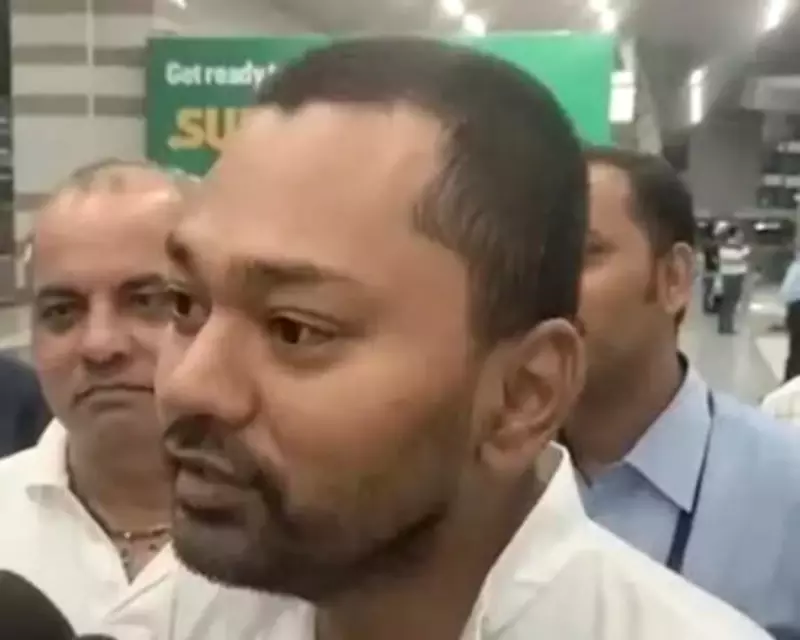
Nitish Kumar's Son Nishant Joins JD(U), Sparking Mixed Reactions in Bihar
In a significant political development in Bihar, Senior JD(U) leader and Transport Minister Shravan Kumar officially welcomed Nishant Kumar, the son of Chief Minister Nitish Kumar, into the Janata Dal (United) party on Monday. The move has been described as fulfilling long-standing aspirations within the party and among the youth of the state.
Shravan Kumar Hails Nishant's Entry as a Fulfillment of Party Demands
Shravan Kumar expressed immense excitement over Nishant Kumar's decision to join the JD(U), stating that party leaders and workers had been urging him to take this step for an extended period. According to the senior minister, this entry marks a pivotal moment of enthusiasm for the entire organization.
"We are very excited by his joining. The aspiration of the state's youth and the continuous demand of JD(U) leaders have now been fulfilled," Shravan Kumar emphasized. He highlighted that Nishant's move answers a persistent internal demand from the party while simultaneously meeting the expectations of numerous young people in Bihar who were eagerly anticipating his involvement in public life.

Prashant Kishor Extends Good Wishes but Criticizes Dynastic Politics
The development also drew a response from Jan Suraaj founder and political strategist Prashant Kishor, who shared his views while speaking to reporters in Bhabua. Kishor acknowledged that since JD(U) is led by Nishant's father, beginning his political journey there was a natural choice, and he extended his best wishes to the new entrant.
"JD(U) is the party of his father, and if he is beginning his political career, he has our best wishes. The decision to enter politics is his personal choice," Kishor stated. However, he did not hold back from criticizing the broader trend of dynastic politics prevalent in Bihar.
Kishor alleged that political leaders in the state have consistently secured positions of power and influence for their own children while failing to create similar opportunities for ordinary families. He pointed out that this system has resulted in detrimental outcomes for the common people, including widespread illiteracy, high unemployment rates, and significant migration from the state.
"The system has instead produced illiteracy, unemployment, and migration for common people," Kishor remarked, underscoring the disparity between political dynasties and the general populace. His comments highlight a critical perspective on the entry of political heirs into active politics, contrasting with the celebratory tone within the JD(U).
This event marks Nishant Kumar's formal foray into active politics, setting the stage for potential future roles within the JD(U) and Bihar's political landscape. The mixed reactions from Shravan Kumar's welcome and Prashant Kishor's critique reflect the ongoing debate around dynastic politics and youth representation in the state.






