

Nizam Club's 140-Year Legacy Threatened by Election Delay and Power Struggle
Hyderabad's prestigious Nizam Club, an institution with a storied 140-year history, has plunged into a bitter and unprecedented power struggle. The crisis stems from the postponement of club elections by more than four months, marking only the second such delay in its entire existence. This administrative impasse has not only raised serious governance concerns but has also deeply divided the club's influential membership, which includes prominent politicians, senior bureaucrats, business leaders, and descendants of the erstwhile royal family.
Chaotic EGM Sparks Legal Battles and Allegations
The turmoil began in June 2025, when an extraordinary general meeting (EGM) was convened to vote on critical governance reforms. Key proposals on the agenda included limiting leadership positions to a four-year term and preventing former presidents from contesting lower posts. However, the meeting descended into chaos and was abruptly adjourned before any resolutions could be put to a vote.
"The EGM was called to vote on crucial reforms essential for the club's future," explained Prasad Reddy, a businessman and member for over 43 years. "With nearly 600 members present, a secret ballot was the only practical option. However, the secretary and his supporters insisted on a show of hands. Amid the resulting ruckus, the meeting was adjourned, and the resolutions were never put to vote."

Following the aborted EGM, a faction of members turned to the courts, alleging significant procedural violations. Their primary contention centered on honorary secretary Amarendar Reddy, who they claim continued to function in his role for almost four months after his official tenure ended on September 24, 2025.
Controversy Over Secretary's Extended Tenure
The allegations against Amarendar Reddy have become the focal point of the conflict. Members accuse him of overstepping his authority by making administrative decisions, signing cheques, and even rejecting member-requisitioned meetings after his term had expired.
"He continued to take administrative decisions, sign cheques, and reject member-requisitioned meetings even after his tenure ended," alleged Zafar Javeed, the club's current president. He highlighted that a formal requisition signed by over 200 members seeking another EGM was rejected without adequate justification. "Members followed due process. Rejecting the request only deepened the impasse. Vendors have stopped supplies, and banks temporarily restricted transactions due to the absence of updated authorised signatories."
Amarendar Reddy has vehemently refuted these charges, maintaining that his actions were in strict accordance with the club's by-laws. "Elections are held every alternate year. Since elections are still due, I am permitted to function on an election-to-election basis. This is a procedural delay, not an intentional act," he stated.
However, his opponents cite a recent civil court order that contradicts this position. The order explicitly stated that the bylaws do not permit an outgoing secretary to continue if elections are not conducted. "In the present case, since terms of the general secretary are expired and no elections are conducted and no general secretary is elected, as per the Rule 26 the joint secretary is the authorised person to represent the Club," the court order clarified.
A Legacy Institution Facing Modern Challenges
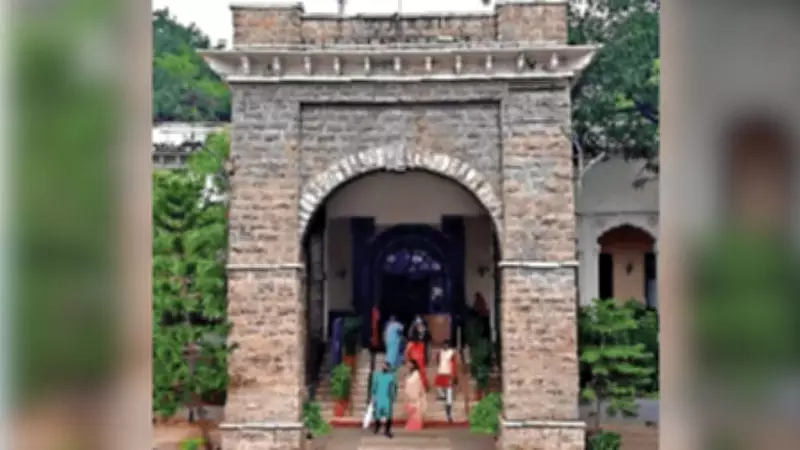
Founded in 1884, the Nizam Club was established on land gifted by Mehboob Ali Pasha, the sixth Nizam of Hyderabad, to serve as an exclusive recreational space for the city's elite. Over the decades, its membership has included prime ministers to the Nizam, their descendants, senior IAS and IPS officers inducted under special tenure-based categories, and corporate members from prestigious public sector undertakings like the State Bank of India and NMDC. Today, the club boasts over 6,200 members.
Beyond the immediate governance crisis, long-standing members express concern over a steady decline in the club's infrastructure and facilities. "Large sums are spent every year, but the results are disappointing," noted Ashfaq Ahmed, a businessman and club member.

The current deadlock has effectively paralyzed the club's routine operations, with vendor supplies halted and banking transactions restricted. The delay in conducting elections—a fundamental democratic process for any member-based institution—has exposed deep fissures within this historic establishment, threatening its legacy and future functionality.





