

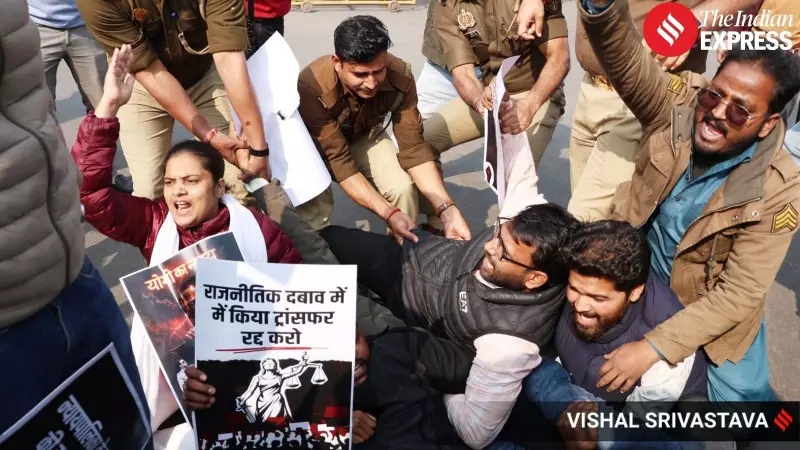
NSUI Workers Stage Protest in Sambhal Over Transfer of CJM Vibhanshu Sudheer
In a significant development in Sambhal, Uttar Pradesh, workers affiliated with the National Students' Union of India (NSUI) organized a protest to voice their opposition to the transfer of Chief Judicial Magistrate (CJM) Vibhanshu Sudheer. The demonstration, which took place recently, saw participants gathering in large numbers, highlighting growing tensions over judicial appointments and administrative decisions in the region.
Background of the Protest
The protest was sparked by the transfer order of CJM Vibhanshu Sudheer, a move that has raised eyebrows among local activists and student groups. NSUI workers, who are the student wing of the Indian National Congress, argue that the transfer could disrupt ongoing legal proceedings and undermine judicial independence. They claim that Sudheer's tenure was marked by fairness and efficiency, and his sudden removal is seen as politically motivated, potentially affecting the delivery of justice in Sambhal.
Demands and Concerns Raised
During the protest, NSUI workers presented a list of demands, primarily calling for the immediate revocation of the transfer order. They emphasized that such administrative changes should be based on merit and transparency, rather than external pressures. The protesters also expressed concerns about the broader implications for the judicial system in Uttar Pradesh, suggesting that frequent transfers of judicial officers could erode public trust and hinder the rule of law.

Key points raised by the protesters include:
- Allegations of political interference in judicial transfers.
- Worries about the impact on pending cases in Sambhal courts.
- Calls for greater accountability in the appointment and transfer of judicial officials.
Local and Political Context
Sambhal, a district in Uttar Pradesh, has been a focal point for various political and social movements, and this protest adds to the ongoing discourse on governance and justice in the state. The NSUI's involvement underscores the role of student organizations in advocating for administrative reforms and transparency. This incident reflects broader issues in India's judicial system, where transfers of judges and magistrates often become contentious, drawing attention from civil society and political groups alike.
Observers note that such protests can influence public opinion and potentially lead to reviews of transfer policies by higher authorities.
Potential Outcomes and Future Steps
As the protest gains attention, there is speculation about possible outcomes, including a review of the transfer order by judicial or administrative bodies. NSUI workers have indicated that they may escalate their agitation if their demands are not met, potentially organizing larger demonstrations or seeking legal recourse. This situation highlights the delicate balance between administrative prerogatives and public accountability in India's governance framework.
In summary, the NSUI protest in Sambhal over the transfer of CJM Vibhanshu Sudheer is a notable event that brings to light issues of judicial independence and administrative transparency. It serves as a reminder of the active role played by student and youth groups in shaping public discourse on critical matters of governance and justice.






