Odisha Unveils Ambitious Plan for Three New Industrial Corridors
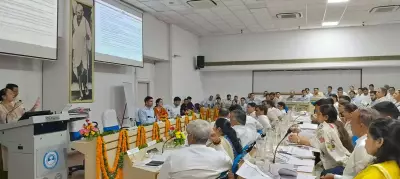
In a significant push for urban-led economic expansion, Odisha Chief Minister Mohan Charan Majhi announced on Friday that the state government will utilize the proposed Bhubaneswar-Cuttack-Puri-Paradip Economic Region (BCPPER) as a foundational template to establish three additional industrial corridors. This strategic move aims to catalyze regional development and attract substantial investment across the state.
Central Funding and New Economic Agglomerations
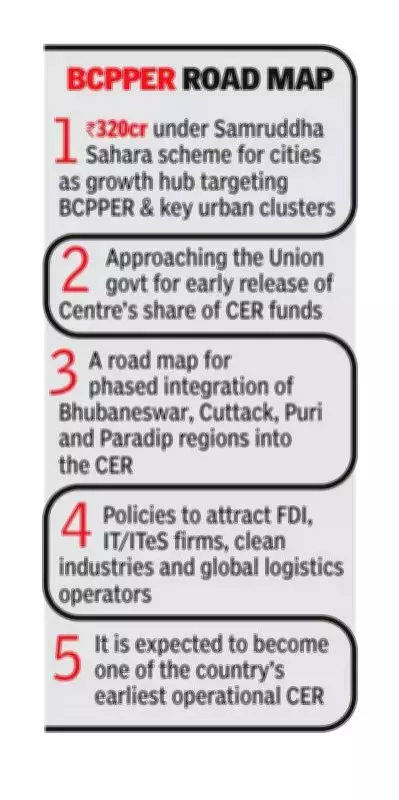
The Central Government has already committed a substantial Rs 5,000 crore for the BCPPER initiative under the innovative City Economic Regions (CER) framework. Building on this momentum, the Odisha administration plans to activate three new economic agglomerations: the Bargarh-Jharsuguda-Sambalpur (BJS) cluster, the Berhampur-Chhatrapur-Gopalpur (BCG) zone, and the Jeypore-Koraput-Sunabeda (JKS) corridor. These areas will be systematically developed into robust economic clusters to drive industrial growth and job creation.
Chief Minister Majhi emphasized that "the rollout will be executed in a carefully phased manner" to ensure optimal resource allocation and sustainable progress. This structured approach is designed to maximize the impact of both state and central investments.

Financial Allocations and Infrastructure Development
Under the Samruddha Sahara scheme, CM Majhi has allocated Rs 320 crore specifically for comprehensive town planning and new city development within the BCPPER and major clusters such as Sambalpur and Berhampur. These funds are earmarked to support critical urban infrastructure projects, including:
- Detailed area surveys and feasibility studies
- Expansion and modernization of road networks
- Advanced sewerage and sanitation systems
- Comprehensive electrification and utility upgrades
- Other essential urban amenities
A senior government official explained, "The state budget will outline the initial financial commitment for the BCPPER. The objective is to demonstrate readiness and preparedness so that central funds can be allocated and utilized immediately without delays."
Economic Impact and Strategic Advantages
Preliminary assessments and economic projections indicate that the BCPPER region alone could account for nearly one-third of Odisha's total economic output once fully operational. This potential is bolstered by the region's existing assets, which include major IT parks, bustling ports, established industrial corridors, efficient logistics hubs, prominent tourism centers, and the state administrative capital.
Urban policy expert Manas Rout highlighted the transformative potential of the BCPPER, stating that it could enable Odisha to attract "significantly higher foreign direct investment (FDI)." He elaborated, "FDI typically prefers dense, well-connected urban clusters. While Odisha possesses considerable industrial strength, its cities have never been strategically packaged as integrated investment destinations. This initiative changes that narrative."
Economist Biswas Ranjan added that creating a unified economic zone anchored in advanced urban infrastructure would help diversify investment beyond the traditional mining and mineral-based industries, fostering a more balanced and resilient economic ecosystem.
Alignment with Existing Urban Development Projects
The state government had previously allocated Rs 1,342 crore for the Bhubaneswar New City project, spanning areas like Gothapatna, Daspur, and Malipada, primarily for land acquisition and core infrastructure development. Urban planners and researchers note that this 'New City' initiative aligns seamlessly with the broader BCPPER vision.
Researcher Piyush Ranjan Rout commented, "The BCPPER will achieve its maximum potential if new townships, transit corridors, and industrial nodes are developed simultaneously and in a coordinated fashion. This integrated approach is crucial for creating synergistic growth and avoiding fragmented development."

This comprehensive strategy underscores Odisha's commitment to leveraging urban planning as a catalyst for sustained economic growth, industrial diversification, and enhanced global competitiveness.