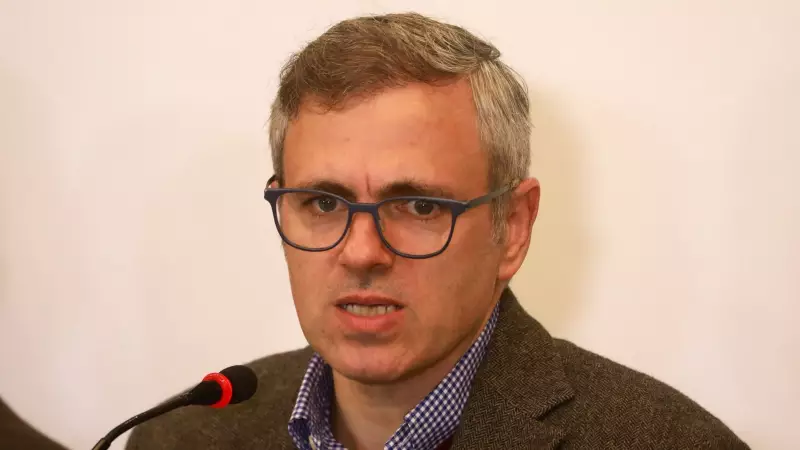
Chief Minister Omar Abdullah of Jammu and Kashmir finds himself navigating a complex political landscape, balancing significant administrative constraints against the weight of massive public expectation. Over a year into his second term, the leader acknowledges the reality of governing a region that has undergone profound constitutional and political changes.
The Crown of Thorns: Governing in a New Reality
When Omar Abdullah assumed the role of Chief Minister of Jammu and Kashmir a little over a year ago, he was aware of the formidable task ahead. Backed by a substantial mandate and hopeful for the restoration of statehood, he embarked on steering the region through its intricate political and developmental challenges.
However, the initial optimism has been tempered by the ground realities of a transformed Union Territory. Abdullah has openly admitted that the challenges, particularly those stemming from a dual power structure, have proven to be far more complex and demanding than he had initially anticipated.

Administrative Hurdles in a Dual Power Setup
The core of the challenge lies in the current administrative framework. The elected government, led by the Chief Minister, does not have control over the police department. Furthermore, the Raj Bhawan (Lok Bhawan) holds significant powers, including authority over the transfer and postings of IAS officers.
This arrangement creates a unique situation where the Chief Minister is caught between administrative limitations on one side and the huge public expectation for governance and development on the other. The public voted for a government whose executive powers are now shared with the central administration, leading to a nuanced and often challenging governance model.
A Political Scion's Journey and Upcoming Dialogue
Omar Abdullah, a third-generation leader from the prominent Abdullah family, brings a wealth of experience to this role. His political career includes several notable milestones:
- Elected to the Lok Sabha from Srinagar at 28, becoming the youngest parliamentarian at that time.
- Served as Minister of State for Commerce and Industry and later for External Affairs in Prime Minister Atal Bihari Vajpayee's government.
- First sworn in as Chief Minister of Jammu and Kashmir in 2008.
- Served as Leader of the Opposition during the PDP-BJP coalition government.
- Sworn in as Chief Minister for the second time in 2024.
The context of his current term is historically distinct. Jammu and Kashmir, which previously held special status, was reorganized into a Union Territory in 2019. This alteration of the political and geographical landscape fundamentally changes the dynamics of administration and public representation.
Abdullah is set to delve deeper into these issues as the guest at The Express Adda in New Delhi on Wednesday. The session will be moderated by Vandita Mishra, National Opinion Editor of The Indian Express, promising a candid discussion on the future of governance in the region.
As the dialogue continues, the focus remains on how a seasoned political leader manages the tightrope walk between limited administrative authority and the urgent developmental aspirations of the people of Jammu and Kashmir.