O Panneerselvam Joins DMK in Major Political Realignment
In a significant development, former Tamil Nadu chief minister O Panneerselvam, popularly known as OPS, officially joined the Dravida Munnetra Kazhagam (DMK) on Friday. This move represents a dramatic shift in the state's political dynamics as it gears up for the forthcoming assembly elections.
Family and Faction Follow Suit
Accompanying OPS in this transition is his son, P Ravindhranath Kumar, who also became a member of the DMK ahead of the crucial Tamil Nadu polls. Senior DMK leaders have confirmed that after months of behind-the-scenes communication and exchange of messages, OPS has been formally inducted into the party's leadership fold.
The decision by OPS to align with the DMK came after Edappadi K Palaniswami (EPS), the general secretary of the All India Anna Dravida Munnetra Kazhagam (AIADMK), welcomed AMMK chief TTV Dhinakaran into the National Democratic Alliance (NDA) fold. However, EPS remained firm on not reinducting OPS into the AIADMK, prompting this political crossover.
Rise Under Jayalalithaa and Subsequent Struggles
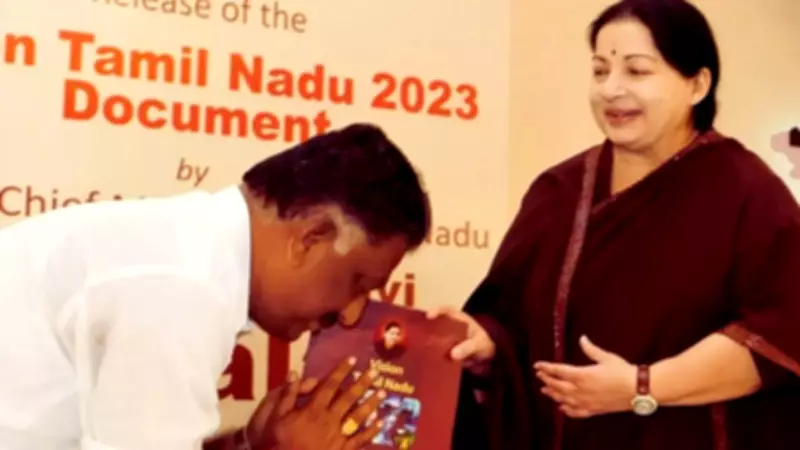
OPS rose to prominence under the leadership of former chief minister J. Jayalalithaa, who appointed him as stand-in chief minister twice—in 2001 and 2014—during periods when she was disqualified from holding office due to court verdicts. Following Jayalalithaa's death in December 2016, OPS was sworn in as chief minister once again. However, within months, he was replaced amid a fierce power struggle within the AIADMK.
In February 2017, EPS assumed the role of chief minister with the support of a majority of AIADMK MLAs. OPS later served as deputy chief minister, and the party operated under a dual leadership structure, with both leaders designated as coordinators. Despite this arrangement, tensions between the two factions persisted.
Expulsion and Legal Battles
In July 2022, the AIADMK general council amended the party bylaws, abolishing the dual leadership model and reinstating the post of general secretary. EPS was elected to this position, leading to the expulsion of OPS and his supporters from the party. The leadership dispute escalated to the Madras High Court and eventually reached the Supreme Court of India, which upheld the validity of the July 2022 general council resolutions. This legal outcome effectively recognized EPS's leadership and solidified OPS's expulsion from the AIADMK.
From NDA Exit to DMK Entry
In August 2025, OPS withdrew from the NDA, citing repeated "insults" from BJP leaders. Four months later, he met Union Home Minister Amit Shah and reportedly conveyed that he would not align with the NDA unless the AIADMK factions were unified. On February 20, 2026, OPS publicly congratulated Chief Minister M. K. Stalin on completing five years in office and remarked that the DMK stood a strong chance of returning to power—a statement widely interpreted as a political signal.
Supporters of OPS indicated that he concluded aligning with a "powerful force" like the DMK was the only viable route to politically counter EPS and regain influence in Tamil Nadu politics.
Electoral Performance and Shifting Base
In the 2024 Lok Sabha election, OPS contested as an independent candidate from Ramanathapuram as an NDA ally and finished second with 3.42 lakh votes. His loyalists, including R Vaithilingam and Paul Manoj Pandian, resigned their MLA posts and joined the DMK in recent months, signaling the gradual migration of his faction to the ruling party.
Regarding a possible assembly seat for OPS, DMK leaders have indicated that while Bodinayakkanur has strong internal claimants, he may be accommodated elsewhere in the region to ensure his integration into the party structure.
Loyalty vs Power: Broader Political Implications
OPS's political journey reflects a broader truth about Tamil Nadu politics. He built his reputation on loyalty and dependability during the personality-driven era under Jayalalithaa. However, after 2016, the political environment shifted, with control over organisational machinery and legislative numbers becoming decisive factors.
While OPS enjoyed moments of public sympathy and moral positioning during the 2017 rebellion phase, he was unable to convert that momentum into sustained organisational control. EPS consolidated district-level structures, secured legislative backing, and eventually gained legal validation, weakening the AIADMK and strengthening the DMK, enabling Stalin to consolidate authority.
With OPS now joining the DMK, Tamil Nadu politics has come full circle—from trusted stand-in chief minister to expelled faction leader, and now to a new political home in the rival camp. This realignment is expected to have significant implications for the upcoming assembly elections, potentially reshaping voter alignments and party strategies in the state.