

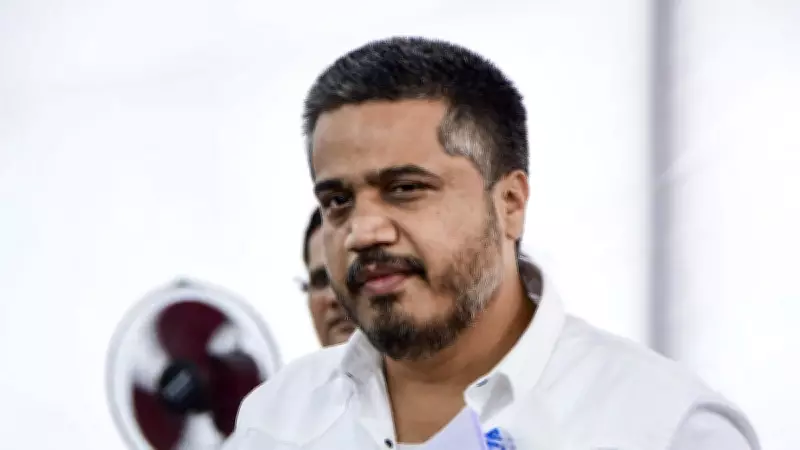
Rohit Pawar Alleges Leadership Grab Attempt in NCP Following Ajit Pawar's Death
In a significant development within the Nationalist Congress Party (NCP), Rohit Pawar has made serious allegations regarding an attempted leadership takeover following the death of senior leader Ajit Pawar. According to Rohit Pawar's claims, prominent party figures Praful Patel and Sunil Tatkare sought to assume control of the party by writing to the Election Commission of India (EC) immediately after Ajit Pawar's passing.
Sunetra Pawar's Intervention with Election Commission
In response to these alleged maneuvers, Sunetra Pawar has taken decisive action by submitting her own correspondence to the Election Commission. She has formally requested that the electoral body disregard any such communication that might have been sent during what she describes as the "transition period" following Ajit Pawar's death.
The timing of these alleged communications is particularly sensitive, as the NCP was navigating leadership uncertainties during a period of mourning and organizational adjustment. Rohit Pawar's revelations suggest internal power struggles within the party that could have significant implications for Maharashtra's political landscape.

Political Implications and Party Dynamics
This development highlights several critical aspects of contemporary Indian politics:
- The delicate balance of power within established political parties during leadership transitions
- The role of formal institutions like the Election Commission in mediating internal party disputes
- The ongoing significance of the Pawar family in Maharashtra's political ecosystem
- The potential for internal conflicts to surface during periods of organizational vulnerability
The allegations come at a time when political parties across India are increasingly facing questions about succession planning and internal democracy. The NCP, with its substantial influence in Maharashtra politics, finds itself at the center of attention regarding how political organizations manage leadership changes and maintain institutional stability.
Broader Context of Indian Political Transitions
This situation reflects broader patterns in Indian political parties where leadership transitions often become contentious. The involvement of the Election Commission adds an institutional dimension to what might otherwise remain internal party matters. The Commission's potential role in such disputes underscores the formal mechanisms available for resolving political organizational conflicts in India's democratic framework.
As the situation develops, political observers will be watching closely to see how the Election Commission responds to Sunetra Pawar's request and whether further details emerge about the alleged communications from Patel and Tatkare. The outcome could have lasting implications for the NCP's internal structure and its positioning within Maharashtra's competitive political environment.






