

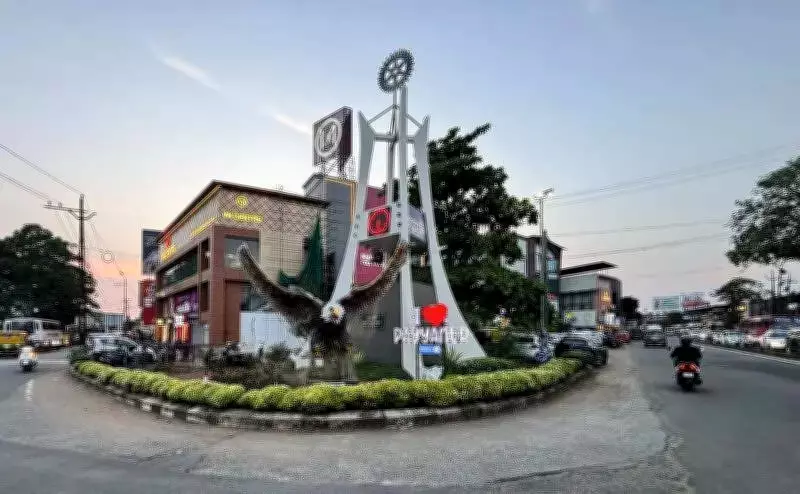
Payyannur's Political Evolution: A Stronghold Under Scrutiny
The political identity of Payyannur constituency in Kerala presents a striking historical contrast. Originally one of the most vibrant centers of the Congress-led freedom movement, this region has undergone a dramatic transformation over the decades. It has evolved into one of the most dependable strongholds of the Communist Party of India (Marxist), maintaining an uninterrupted record of electing party candidates since the constituency's formation. However, for the first time in its political history, the CPM is facing significant pressure that threatens its long-standing dominance.
Electoral Dominance and Emerging Undercurrents
The scale of CPM's control in Payyannur becomes evident through election data from the past decade, though these numbers also reveal subtle undercurrents of change. In the 2011 assembly elections, the Left Democratic Front secured 78,116 votes against the United Democratic Front's 45,992, achieving a commanding victory margin of 32,124 votes. During this period, the Bharatiya Janata Party remained largely irrelevant with just 5,019 votes.
The peak of Left's electoral strength materialized in the 2021 assembly elections. CPM candidate T I Madhusoodanan, who currently faces serious financial misappropriation charges, secured an impressive 93,695 votes against UDF's 43,915, stretching the victory margin to 49,780 votes. The BJP's vote share stood at 11,308, once again highlighting its limited political relevance in the constituency.

However, this trajectory did not remain linear. In the 2024 Lok Sabha elections, the Left's tally in the Payyannur assembly segment dropped significantly to 71,441 votes, while the UDF's count rose to 58,184. This development cut the victory margin to just 13,257 votes. Although parliamentary contests follow different political dynamics than assembly elections, this substantial dip in margin signaled that the electoral gap between the fronts is not beyond compression. The 2025 civic polls demonstrated that the Left's grassroots machinery remains intact, with the front securing a combined majority of 34,807 votes across local body elections.
Geographical Contrasts and Development Challenges
Geographically, Payyannur presents a stark contrast that significantly influences its development narrative. The constituency stretches from the coastal belt of Kunnaru-Ramanthali—home to the Indian Navy's prestigious academy INS Zamorin—to the hilly terrain of Pulingome along the Karnataka border. While the coastal region enjoys relatively good connectivity and infrastructure, the high-range areas continue to face persistent and long-standing connectivity issues that have hampered development for decades.
A particularly notable example is the decades-old proposal to construct a road linking the naval academy region to Bagamandala in Karnataka. This project promised to provide a significantly shorter route to Bengaluru, potentially boosting economic activity and connectivity. Despite its potential benefits, the proposal has seen minimal progress over the years, reflecting broader infrastructure challenges.
Key urban infrastructure projects within Payyannur town itself have remained stalled for extended periods. Suresh Manniath, a Payyannur town-based entrepreneur, highlighted specific examples: "The proposal for a new bus stand, for which land acquisition was completed as early as 1995, has not moved forward. This has left the town struggling with severe space constraints and worsening traffic congestion. Similarly, a theatre complex announced during the first LDF government with KIIFB support remains incomplete despite years of planning." These unresolved development projects have become central to local political conversations and growing public dissatisfaction.

Internal Dissent and Political Realignments
A new dimension has emerged in Payyannur's political landscape through significant dissent within the CPM itself. The allegation by former CPM district committee member V Kunhikrishnan that nearly Rs 1 crore was misappropriated from three area committee funds exposed serious internal fault lines within the party structure. His subsequent exit from the party and entry into the electoral fray as a UDF-backed independent candidate has created a major headache for the CPM leadership, transforming Payyannur into one of Kerala's most closely watched constituencies.
Kunhikrishnan's revolt is not an isolated incident. A more localized manifestation of this dissent appears in the case of Payyannur municipal councillor C Vysakh, once a committed Democratic Youth Federation of India worker who left the party ahead of the Lok Sabha elections. Vysakh explained that his exit was triggered by an incident in which two DYFI activists working under him were allegedly threatened by local CPM workers. According to his account, the issue was escalated up to the state leadership, but the outcome only deepened his disillusionment with the party's internal mechanisms.
"An inquiry commission was appointed to investigate the incident," Vysakh recounted, "but its final report was shocking. Imagine, something that almost a hundred people witnessed with their own eyes was completely manipulated in the official report. Despite clear evidence, no disciplinary action was taken against those responsible." Following this episode, Vysakh said he was gradually sidelined within the party structure before making his eventual departure.
Vysakh's experience echoes the broader criticism raised by Kunhikrishnan regarding the party's internal processes. "Inquiry commissions within the CPM have become a political ploy," he asserted. "They are strategically appointed to protect those whom the party leadership wants to save from accountability, regardless of the evidence against them." Despite leaving the CPM, Vysakh continues to command substantial support in his locality. Contesting as a rebel candidate in the Kara ward of the municipality during the last local body elections, he won by 458 votes, pushing the official CPM candidate to a disappointing third position.
Observations and Future Implications
Political observers interpret these developments as representing a subtle but significant shift within Payyannur's political dynamics. While the constituency may still remain within the Left's political orbit, the combination of fluctuating electoral margins, growing internal dissent, and unresolved development issues suggests that its status as an impregnable fortress may no longer be beyond question. The traditional assumptions about CPM's invincibility in this region are facing unprecedented challenges from multiple directions.
Vysakh believes that the emerging dissent among CPM cadres could potentially alter electoral outcomes in future contests. "Kunhikrishnan stands a strong chance of winning in Payyannur if current trends continue," he predicted. "The margins between political fronts keep fluctuating significantly from one election to another. That variability itself demonstrates that there isn't any real consistency or permanent loyalty among voters anymore."
The political narrative of Payyannur continues to evolve, blending its historical legacy as a freedom movement hub with contemporary challenges of governance, internal party democracy, and development delivery. As the constituency approaches future electoral battles, all political actors will need to address both the structural issues that have persisted for decades and the new dynamics of dissent and realignment that have emerged in recent years.





