

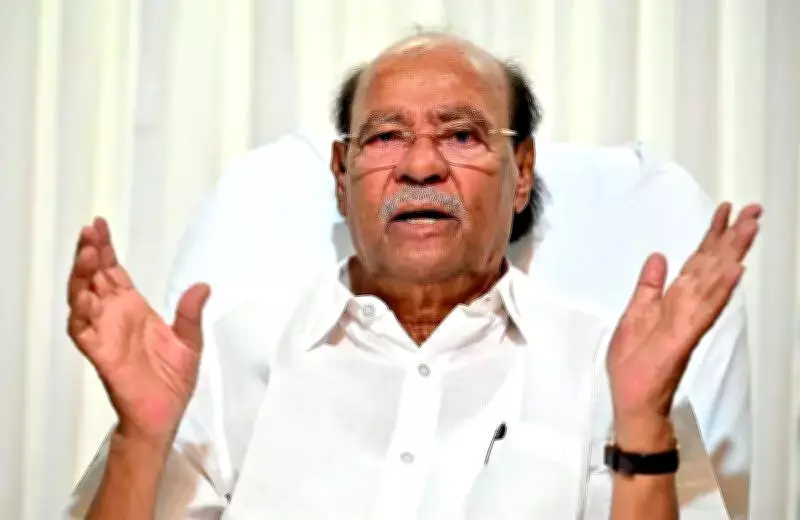
PMK Founder S Ramadoss Brands Son Anbumani a 'Traitor' in Explosive Video Appeal
In a stunning political development that has sent shockwaves through Tamil Nadu, Pattali Makkal Katchi (PMK) founder S Ramadoss has publicly labeled his own son and current party president, Anbumani Ramadoss, a 'traitor'. The dramatic accusation came in a video message released on Monday, where the senior Ramadoss made an emotional appeal to the public to not vote for the Anbumani-led PMK in upcoming elections.
Allegations of Indifference and Financial Exploitation
In his scathing video statement, S Ramadoss leveled serious allegations against his son's leadership, claiming that the current PMK leadership under Anbumani has become indifferent to people's welfare. The founder went further, asserting that what he described as the 'gang' surrounding Anbumani has 'mastered the art of making money', suggesting financial impropriety within the party ranks.
Questioning Political Strategy and Family Dynamics
One of the most pointed criticisms from the PMK founder focused on Anbumani Ramadoss's electoral strategy. S Ramadoss questioned why his son chose not to contest the election himself, instead fielding his wife, Sowmiya Anbumani, as the PMK candidate from Dharmapuri constituency. The founder accused Anbumani of 'operating from the shadows' while putting his wife forward as the public face of their political ambitions.

This extraordinary public denunciation represents one of the most dramatic family feuds in recent Indian political history. The PMK, traditionally known for its strong Vanniyar community base and advocacy for social justice, now faces an unprecedented internal crisis as its founder openly campaigns against his own son's leadership. The video appeal has created significant uncertainty about the party's future direction and electoral prospects, particularly in Tamil Nadu where family-based political dynasties have long dominated the landscape.
The timing of this revelation is particularly significant as it comes during a crucial election period, potentially impacting voter sentiment and party alliances. Political observers are closely watching how this public family rift will affect the PMK's standing among its traditional support base and whether it will lead to further defections or internal restructuring within the party organization.






