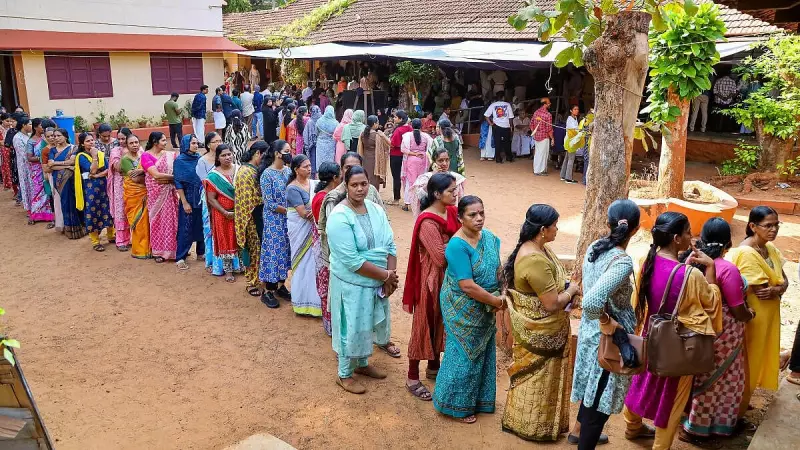
Political parties across Kerala are engaged in an unprecedented hunt for women candidates as the state prepares for local body elections in thousands of reserved wards. The scramble comes as parties face the challenge of filling approximately 13,000 seats specifically earmarked for women representatives.
The Great Candidate Hunt
Across Kerala's political landscape, party workers and leaders are working tirelessly to identify suitable women candidates for the reserved wards. The massive reservation of approximately 13,000 wards for women has created both an opportunity and a challenge for political organizations. Party offices have become hubs of activity as they screen potential candidates who can effectively represent their constituencies.
According to political observers, the reservation policy has forced parties to look beyond traditional political families and established networks. Many parties are now approaching educated women, professionals, and community leaders who previously had no political background but possess the capability to serve effectively in local governance.

Ground Reality in Kerala's Wards
The situation on the ground reflects the scale of this political transformation. In rural and urban areas alike, party workers are conducting door-to-door campaigns to identify potential candidates who can connect with voters and address local issues. The search extends across various demographics, with parties particularly interested in candidates who can bring fresh perspectives to local governance.
The reservation system has created unique dynamics in Kerala's political scene, with parties balancing the need for electable candidates against the requirement to promote genuine women's representation. This has led to interesting scenarios where multiple parties are competing for the same potential candidates in some areas, while struggling to find suitable representatives in others.
Impact on Grassroots Democracy
This massive inclusion of women in local governance is expected to have far-reaching consequences for Kerala's political landscape. Political analysts suggest that the large-scale reservation could fundamentally change how local bodies function and address community needs. Women representatives are likely to bring different priorities and approaches to local governance, potentially reshaping the development agenda at the grassroots level.
The current candidate selection process, while challenging for political parties, represents a significant step toward gender equality in Indian politics. As reported on November 10, 2025, the developments in Kerala are being closely watched as an indicator of how women's reservation can transform local democracy across India.
With the election process moving forward, the success of this initiative will depend on how effectively political parties can identify, train, and support women candidates to become capable representatives of their communities.