Understanding the Numbers in Assembly Elections 2026
The recently concluded Assembly elections in India have thrown up some intriguing numbers that reveal the scale and complexity of the democratic process. From minuscule vote shares to massive seizures of illicit liquor, these figures paint a vivid picture of the electoral landscape.
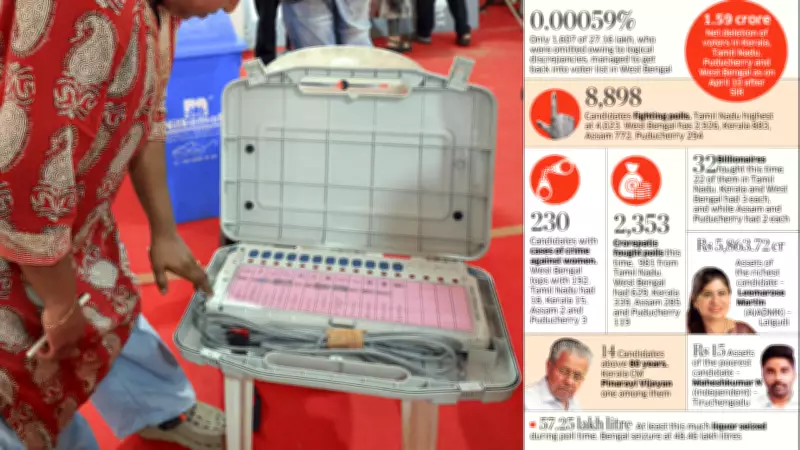
One of the most striking numbers is 0.00059%, which represents the vote share of a candidate who secured the lowest percentage of votes in these elections. This figure underscores the diversity of candidates and the fragmented nature of the electoral contest in certain constituencies.
Liquor Seizures: A Major Concern
Another significant statistic is the total quantity of liquor seized during the election period. At least 57.25 lakh litres of liquor were confiscated by authorities across the states that went to polls. This massive haul highlights the pervasive issue of illicit liquor distribution aimed at influencing voters.

Among the states, West Bengal accounted for the largest share, with 48.46 lakh litres seized. This staggering amount points to the challenges faced by law enforcement agencies in curbing the flow of alcohol during elections.
State-wise Breakdown
- Kerala: Known for its high consumption rates, the state saw significant seizures, though exact figures are yet to be fully compiled.
- Tamil Nadu: Authorities reported substantial seizures, reflecting the state's strict enforcement measures.
- Assam: The northeastern state also witnessed notable confiscations, contributing to the national total.
- Puducherry: The union territory had relatively lower seizures but still played a part in the overall numbers.
Implications for Electoral Integrity
The sheer volume of liquor seized raises questions about the effectiveness of current enforcement mechanisms. It also highlights the need for more stringent measures to prevent the use of alcohol as a tool for voter manipulation. Political parties and candidates have been urged to adhere to the Model Code of Conduct, but these numbers suggest that violations remain rampant.
As the Election Commission reviews the data, it is clear that such seizures are a critical indicator of the challenges in ensuring free and fair elections. The 0.00059% vote share, on the other hand, reminds us of the democratic principle that even the smallest voice has a place in the electoral process.