The Aam Aadmi Party (AAP) government in Punjab is facing a significant political challenge as strikes by employees of the Punjab State Power Corporation Limited (PSPCL), sanitation workers, and a threatened strike by contractual staff at Aam Aadmi Clinics unfold simultaneously. The unrest spans three critical sectors—power, healthcare, and sanitation—that directly affect citizens' daily lives and threaten the government's delivery of essential public services.
Nature of the Agitations
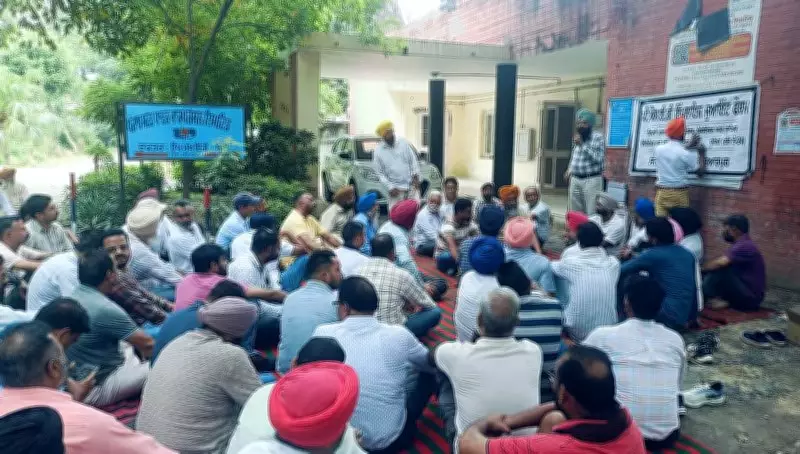
Each protest is driven by distinct demands. PSPCL employees are seeking regularisation of services and better wages, while sanitation workers are protesting poor service conditions. Contractual employees at Aam Aadmi Clinics have threatened to strike from Monday, raising concerns about the flagship healthcare initiative of the AAP government. The timing of these agitations is critical, as they come ahead of the 2027 Assembly elections, amplifying their political impact.
Political Significance
Political observers note that the unrest is particularly significant because government employees and their families form a powerful vote bank in Punjab. The state has nearly four lakh government employees and three lakh pensioners, including contractual and outsourced workers. Their issues not only influence their own voting decisions but also affect family members, making them a substantial voting constituency across urban and rural areas. Historically, employee unions in Punjab have maintained strong organisational strength and shaped public opinion beyond their membership.

Impact on Services
The ongoing protests have already disrupted services. PSPCL employees' agitation has hampered maintenance work and consumer services in several regions, with potential escalation threatening to disrupt power operations statewide. Sanitation workers' protests have led to garbage accumulation in towns, causing public inconvenience. Contractual staff at Aam Aadmi Clinics have not yet struck, but the threat alone has raised fears about the functioning of the government's premier health initiative. A prolonged strike, especially by power department employees, could turn public anger against the government.
Government Response
In response, the state government has assigned different ministers to hold immediate talks with the agitating unions to resolve the disputes. The government is keen to avoid a prolonged crisis that could damage its governance narrative.
Historical Context
The timing of these protests is not accidental. Employee unions in Punjab have historically intensified their movements in the run-up to elections, calculating that governments become more responsive when political stakes are high. Their objective is to maximise bargaining power before the Model Code of Conduct comes into force and fiscal decisions become politically sensitive. This pattern has repeated across successive governments, including the Congress and the previous Shiromani Akali Dal-BJP government.