

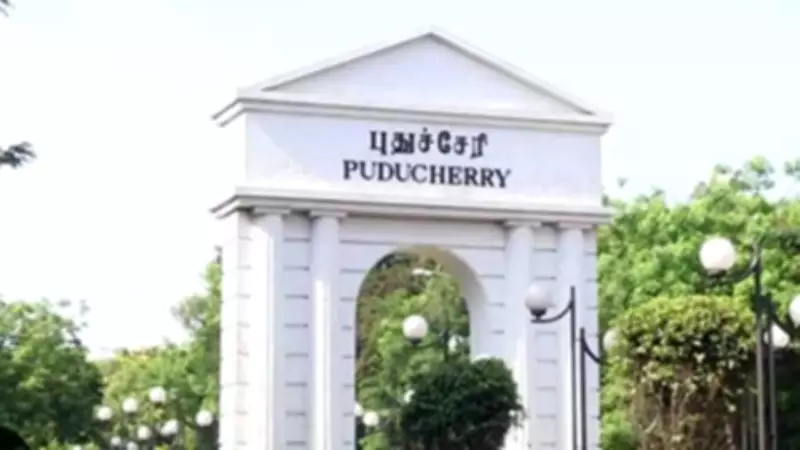
Puducherry's Statehood Demand Takes Center Stage Ahead of Crucial Assembly Elections
The persistent demand for statehood in Puducherry—a political issue that has simmered for decades—has now emerged as the most prominent and debated topic in the former French colony as it approaches upcoming assembly elections. This constitutional question has gained renewed urgency, potentially shaping voter sentiment and political alliances in the territory.
Historical Context: How Puducherry Became a Union Territory
Puducherry, comprising four geographically dispersed districts—Puducherry, Karaikal, Mahe, and Yanam—has maintained Union territory status since July 1963. Although France transferred these colonies to India on a de facto basis in November 1954, formal integration into the Indian Union occurred in August 1962. The Treaty of Cession signed between India and France in May 1956 specifically mandated special administrative status for these regions.
The unique geographical distribution of Puducherry's districts across three different states, combined with multiple languages and strong French cultural influences, made direct integration into any single state impractical. This necessitated administration by the central government through the Union territory framework.

Governance Challenges in the Current System
Under the current constitutional arrangement, Puducherry operates with both a legislative assembly and a council of ministers headed by a chief minister, similar to Delhi and Jammu & Kashmir. However, the lieutenant governor, who represents the President of India, wields substantial authority that often exceeds that of the elected chief minister.
This power imbalance has consistently resulted in clashes between successive lieutenant governors and elected political leadership. Chief Minister N. Rangasamy, like his predecessor V. Narayanasamy of the Congress party, has experienced significant tensions with the lieutenant governor. Most recently, in July of last year, Lieutenant Governor K. Kailashnathan appointed the director of the Health and Family Welfare department without consulting Chief Minister Rangasamy, who also held the health portfolio, leading to a serious stand-off that required BJP leadership intervention to resolve.
The Complex Politics of Statehood
While the All India NR Congress has maintained a clear position supporting statehood, the BJP's stance remains ambiguous. Although BJP MLAs have supported statehood resolutions in the assembly—with 16 such resolutions passed as of March 2025—the party's manifestos have consistently avoided committing to full statehood. The 2021 BJP manifesto promised only "special Union territory" status without mentioning statehood.
In contrast, the Congress party has openly supported the statehood demand and has promised to grant it if elected to govern Puducherry. The Dravidian allies—both DMK and AIADMK—have consistently advocated for statehood, while actor-turned-politician Vijay's Tamilaga Vettri Kazhagam has criticized the central government for not addressing the issue.
Arguments For and Against Statehood
Arguments supporting continued Union territory status include:
- Administrative practicality given Puducherry's geographically dispersed districts and unique cultural heritage
- Cultural preservation through central administration that can ensure equal recognition for Tamil, Malayalam, and Telugu languages
- Treaty obligations under the India-France Treaty of Cession requiring special administrative regions
- Efficient policy implementation with central government oversight
- Law and order management through direct central intervention capabilities
- Practical governance for a relatively small population of approximately 9.5 lakh
Arguments favoring statehood include:

- Improved governance by eliminating power clashes between lieutenant governor and elected government
- Greater accountability of elected representatives to their constituents
- Respect for democratic mandate without central interference perceived as undermining voters' choices
- Linguistic balance to prevent Tamil dominance from marginalizing Malayalam and Telugu speakers
Electoral Implications and Voter Behavior
Political observers note that Puducherry's voters often make strategic choices based on the territory's limited governmental powers. They tend to support either national parties like Congress or regional parties aligned with the ruling party at the Centre. However, historical voting patterns reveal that in three of the last five assembly elections since 2001, voters have chosen parties different from those ruling at the Centre.
While statehood remains the most significant constitutional issue, voters frequently prioritize hyperlocal concerns over broader constitutional status questions. The current ruling AINRC-BJP alliance faces particular vulnerability if the statehood issue resonates strongly with voters, especially given Puducherry's recent pattern of voting out governments after single terms in the past three assembly polls.
Election Countdown and Political Landscape
With voting scheduled for Thursday, political campaigns have intensified across Puducherry. The statehood demand features prominently on party agendas, with the National Democratic Alliance preparing for a direct contest against the Congress-DMK alliance. The emerging Tamilaga Vettri Kazhagam has attracted significant attention as a new political force in the territory.
The central government maintains that there are no plans to change Puducherry's status, with Minister of State for Home Nityanand Rai stating in Rajya Sabha that "Puducherry has a robust governance and administrative setup within the existing constitutional and legal framework to deliver public goods efficiently."
As the election approaches, the decades-old statehood question has transformed from a persistent constitutional issue into a potentially decisive electoral factor that could determine Puducherry's political future and governance structure for years to come.





