

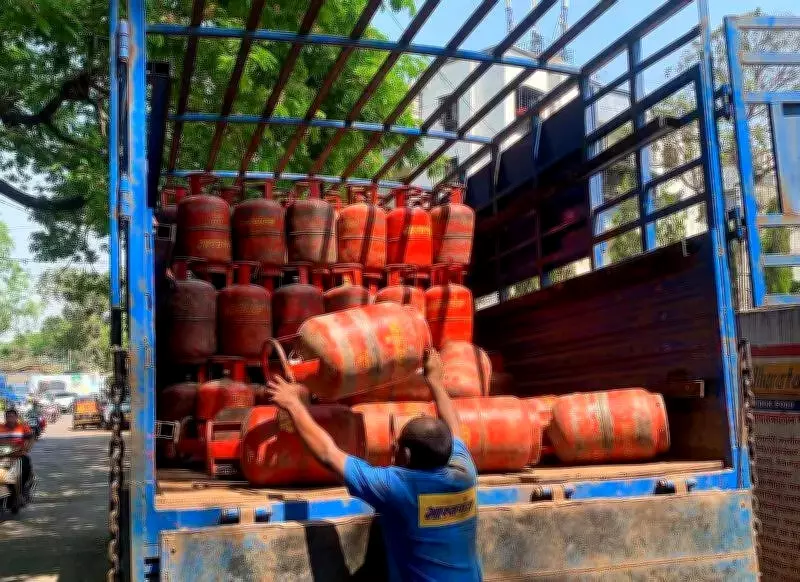
Pune Faces Ongoing LPG Crisis Despite Government's Expanded Priority Allocation
The Maharashtra state government expanded its priority list for liquefied petroleum gas (LPG) allocation on Friday, adding several new sectors to receive preferential supply. However, dealers and commercial users in Pune report that this administrative change has yet to translate into tangible improvements, with many businesses continuing to face acute shortages despite the revised order.
Expanded Priority List Fails to Alleviate Supply Constraints
The latest government notification significantly broadened the categories eligible for priority LPG allocation. New additions include migrant workers using 5-kilogram FTL cylinder refills, corporate and industrial canteens, corporate guest houses, food processing units, the dairy industry, and government or public sector undertaking-linked manufacturing and services.
These sectors join those already covered under a March 14 order, which included hospitals, educational institutions, crematoriums, defense establishments, railways, and the pharmaceutical industry. Despite this comprehensive expansion on paper, the practical implementation has fallen short of expectations across Pune.

Dealers Report Inadequate Stock from Oil Companies
LPG dealers throughout Pune have confirmed they have not received sufficient stock from oil marketing companies to meet the demands of the newly added priority categories. The notification has widened the list on paper, but cylinders are still not being released in adequate numbers, explained one dealer who requested anonymity. Commercial supply remains restricted, and we cannot cater to new sectors unless we receive additional allocation from the oil companies.
Another dealer provided more detailed insight into the rationing system currently in place. While some agencies have received a limited quota for specific clients, the supply is being rationed based on past consumption patterns. In these cases, dealers are only able to supply approximately half of the average monthly requirement for established customers.
The dealer added, While my agency did receive some stock for newly added sectors on Saturday and delivered it immediately, the availability remains uneven across different areas of Pune. This patchy distribution has created significant disparities in access to essential cooking fuel.
Industrial Kitchens and Catering Services Bear the Brunt
The lack of consistent LPG supply has left operators of corporate and industrial kitchens without meaningful relief. Aditi Ambavane, a partner at a corporate catering firm that supplies manufacturing units and clinical research centers, reported that none of their industrial kitchens had received fresh supplies following the government's update.
Several kitchens in industrial hubs like Chakan depend on daily LPG deliveries. Even a short disruption affects thousands of meals, Ambavane emphasized. Some dealers are not responding to calls, while others say they simply haven't received stock. The small quantities being offered are far below our daily operational requirements.
Vinit Kamble, a caterer serving industrial workers in Chakan, echoed these concerns, stating that agencies consistently claim fresh stock for the newly prioritized sectors has not yet arrived from the oil companies. This communication gap has created confusion and frustration among businesses that were expecting immediate relief.
Businesses Resort to Drastic Measures Amid Continuing Crisis
The persistent shortage is forcing some businesses to adopt extreme measures to maintain operations. Kiran Shevakari, who runs a large paying-guest facility and supplies meals to factory workers in the Chakan-MIDC area, described how the crisis has compelled a return to primitive cooking methods.
The shortage has forced me to switch to coal stoves, Shevakari revealed. When I contacted my LPG agency on Saturday following the new government order, I was told there were still no supplies available for my sector. This regression to less efficient and more polluting cooking methods highlights the severity of the ongoing LPG crisis.

The situation underscores a significant disconnect between policy announcements and ground-level implementation. While the Maharashtra government has taken steps to address LPG distribution priorities, the actual supply chain managed by oil marketing companies appears unable to meet the expanded demand, leaving critical sectors without reliable access to essential cooking fuel.





