
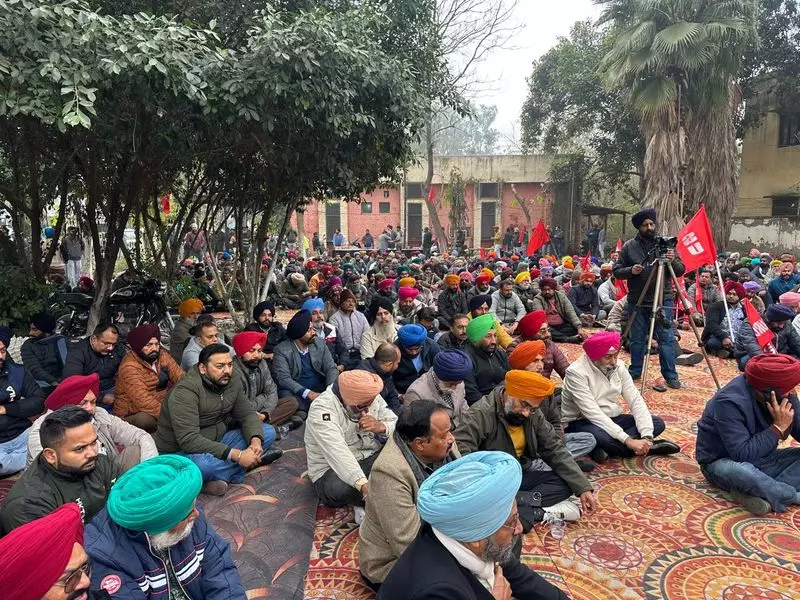
The simmering discontent over proposed changes to Punjab's power sector has erupted into a full-blown statewide agitation. The Joint Action Committee (JAC), a formidable coalition representing various power sector employees and engineers, has officially launched a series of protests demanding the state government roll back its proposed power reforms.
What Sparked the Statewide Agitation?
The core of the conflict is the Punjab Electricity (Amendment) Bill, 2024. The JAC, which includes members from the Punjab State Power Corporation Limited (PSPCL) and the Punjab State Transmission Corporation Limited (PSTCL), vehemently opposes this legislation. They argue that the bill paves the way for the privatization of the state's power distribution, a move they believe will have severe repercussions for both employees and consumers.
Leading the charge from the front is JAC president Punjab Singh and press secretary Amrik Singh. They have made it clear that the agitation will escalate if the government does not heed their demands. The protest was formally inaugurated with a demonstration at the Amritsar office of the Chief Engineer, North Zone, PSPCL, signaling the start of a coordinated campaign across Punjab.
The Key Demands of the Protestors
The Joint Action Committee has presented a clear list of non-negotiable demands to the state administration. Their primary objective is the complete withdrawal of the controversial Electricity Amendment Bill. However, their grievances extend beyond this single piece of legislation.
The protestors are also demanding the regularisation of all contractual workers within the power utilities. They seek the filling of thousands of vacant positions to reduce the immense workload on existing staff. Furthermore, the JAC insists on the implementation of the old pension scheme for all power sector employees, a benefit that provides greater financial security upon retirement.
The committee has warned of more intense forms of protest, including potential pen-down and work boycott strikes, if the government continues to ignore their concerns. They accuse the state of attempting to dismantle the publicly-owned power sector, which they have served for decades.
Implications and the Road Ahead
This large-scale mobilization by power sector employees poses a significant challenge for the Punjab government. The power sector is critical infrastructure, and any sustained industrial action could disrupt electricity supply and services across the state, affecting homes, businesses, and industries.
The protest highlights the deep-seated anxiety among public sector employees regarding privatization and policy reforms. The JAC's stance is that the proposed changes will ultimately lead to higher tariffs for consumers and job insecurity for workers, while benefiting private corporations. The state government, yet to issue a detailed public response to the escalating protests, now faces the difficult task of balancing reform agendas with the welfare of its workforce and public interest.
As the Joint Action Committee rallies its members across all districts, the coming days will be crucial. The scale and determination of the protest indicate that the power sector employees are prepared for a prolonged struggle, setting the stage for a major confrontation over the future of electricity governance in Punjab.