Punjab's Political Landscape Erupts Over Union Budget Exclusion
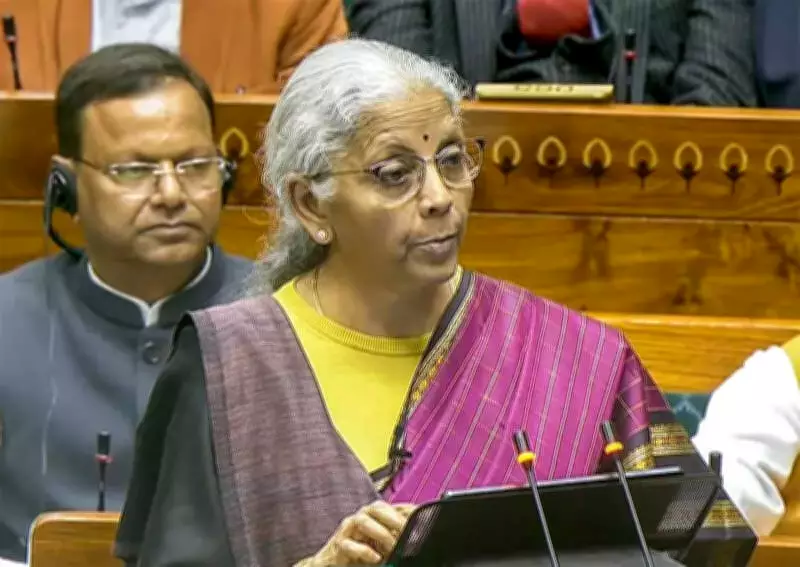
The Union Budget 2026-27 has sparked significant political controversy in Punjab, with leaders across the spectrum expressing outrage over what they perceive as the state's complete omission from Finance Minister Nirmala Sitharaman's budget speech. This development comes at a crucial time, with Punjab approximately one year away from its 2027 assembly elections, making the budgetary allocation particularly sensitive.
Chief Minister's Accusation of Step-Motherly Treatment
Punjab Chief Minister Bhagwant Mann launched a sharp critique against the central government, accusing it of persistent "step-motherly treatment" toward the state. In a detailed post on social media platform X, Mann highlighted several key areas where the budget failed to meet Punjab's expectations. "Once again, the Union government's budget failed to live up to Punjab's expectations," Mann stated, emphasizing the absence of:
- Assurance of Minimum Support Price (MSP) for farmers
- Concrete employment plans for youth
- Relief measures for industry and taxation
- Solid steps to strengthen Punjab's economy
Despite this perceived neglect, Mann expressed confidence in Punjab's resilience, stating that united efforts would rebuild the state.

Finance Minister's Critique of Regional Disparity
Punjab Finance Minister Harpal Singh Cheema echoed these sentiments, pointing out specific shortcomings in the budget. While the budget mentioned high-value crops like sandalwood and cashew, Cheema noted it offered "nothing for north Indian farmers." Punjab had formally requested a special package citing multiple challenges:
- Significant losses due to recent floods
- Economic impact from heightened India-Pakistan tensions
- Need for ₹1,000 crore for police modernization
Cheema's comments highlighted the growing perception of regional disparity in budgetary allocations.
Opposition Parties Unite in Criticism
The Congress and Shiromani Akali Dal (SAD) joined the chorus of disapproval, with Leader of Opposition Partap Singh Bajwa declaring that Punjab had been "completely forgotten" after twelve years of BJP rule at the center. Bajwa criticized what he called empty reforms that never materialize, questioning the government's vision and will to address Punjab's needs.
Punjab Congress president Amrinder Singh Raja Warring added another dimension to the criticism, noting that while Prime Minister Narendra Modi visited Jalandhar's Dera Sachkhand Ballan to celebrate Guru Ravidas's birth anniversary, the budget failed to allocate funds for an international university in the saint's name.
SAD's Focus on Ecological and Economic Concerns
Harsimrat Kaur Badal of SAD highlighted the ecological damage Punjab has sustained while ensuring national food security. She emphasized that the Union Budget failed to compensate for depleting water resources or the economic losses caused by the closure of the Attari trade post. "Punjabis expected that a financial provision would be made to make MSP a legal guarantee in Union Budget but their hopes have been belied," Badal posted on X.
SAD president Sukhbir Singh Badal directed criticism toward the state government, arguing that the "zero gains" resulted from Chief Minister Bhagwant Mann's inability to effectively advocate for Punjab's rights at the central level.
BJP's Defense of Budgetary Allocations
In contrast to the widespread criticism, Punjab BJP president Sunil Jakhar defended the Union Budget as "a milestone towards realising the resolve of making India a developed nation." Jakhar pointed to specific announcements that would benefit Punjab:
- Developments in the sports industry
- Support for MSMEs (Micro, Small and Medium Enterprises)
- Allocation of ₹1.4 lakh crore for states under cooperative federalism
Punjab BJP working president Ashwani Sharma termed the budget "visionary, pro-people and growth-oriented," emphasizing enhanced allocations for agriculture, MSP assurance, rural infrastructure, and agri-startups that would directly benefit Punjab's farming community.

Political Implications Ahead of 2027 Elections
The budgetary omission has significant political ramifications as Punjab approaches its 2027 assembly elections. The unified criticism from multiple political parties suggests this issue may become a central theme in upcoming electoral campaigns. The perception of neglect could influence voter sentiment, particularly among agricultural communities and youth seeking employment opportunities.
Prime Minister Narendra Modi's visit to Jalandhar during the budget period, while emphasizing potential benefits for Punjab's textiles and food processing sectors, appears to have done little to assuage concerns about specific budgetary allocations. The disconnect between central government assurances and state-level expectations has created a challenging political environment in this crucial border state.
As political tensions escalate, the budgetary debate reflects deeper issues of federal relations, regional development priorities, and the complex dynamics between center and state governments in India's political landscape. The coming months will likely see continued debate over resource allocation and Punjab's place in national development agendas.