A political storm is brewing in Punjab over the future of the Mahatma Gandhi National Rural Employment Guarantee Act (MGNREGA), with rural workers expressing fear and anger, and the state government locking horns with the Centre. The controversy has escalated with protests across villages and a special session of the Punjab Vidhan Sabha convened on Tuesday, December 30, 2025, to oppose the proposed Viksit Bharat Guarantee for Rozgar and Ajeevika Mission (Gramin) Act, or VB-G-RAM-G Act, which aims to replace MGNREGA.
Workers' Fears Encapsulated in Letters to PM
At the heart of the dispute are hundreds of signed letters addressed to Prime Minister Narendra Modi, collected from MGNREGA workers constituency-wise across Punjab. The letters, bearing job card numbers and thumb impressions, voice deep apprehension about recent changes. "I am a worker whose daily living depends on MGNREGA wages. We are scared," one such letter reads. Workers highlighted practical hurdles like mandatory online attendance for those without smartphones and a new rule where work would commence only after official notifications for specific villages, leaving others in the lurch.
"We are not asking for any favour, only our right to demand work. Please do not make MGNREGA too difficult for poor labourers," the letter pleads. These very letters became a visual spectacle in the Assembly when MLA Manvinder Singh Giaspura carried them in two sealed bags on his head.

Political Blame Game and Data Collection Concerns
While the content of the letters appears to support workers' causes, labour union leaders have raised alarms about the method of their collection and the timing. They allege the ruling Aam Aadmi Party (AAP) used 'MGNREGA Mates'—village-level officers—to get these typed letters signed. Lachman Singh Sewewala, general secretary of the Punjab Khet Mazdoor Union, stated workers signed believing they were supporting their own cause, but the exercise seemed more about compiling data for "vote politics."
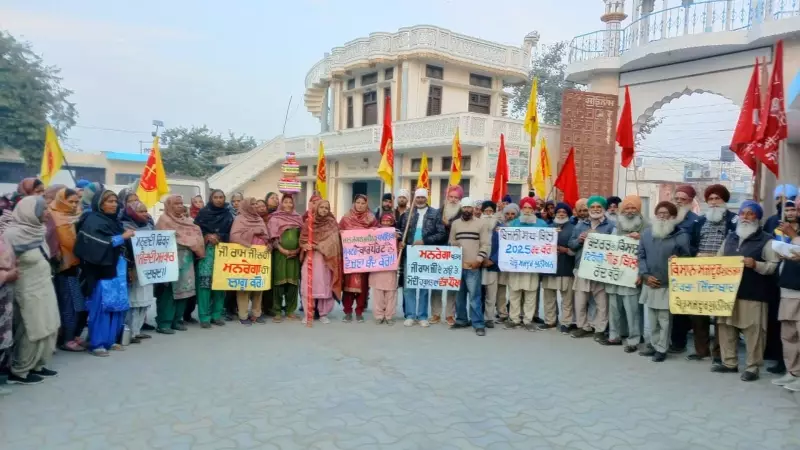
Opposition from within the labour movement is sharp. Leaders like Nirbhai Singh Dhudike and Tarsem Peter have questioned the AAP government's sudden activism after the VB-G-RAM-G Bill was passed by Parliament. "Where were they earlier?" Peter asked, calling the government's noise more about political posturing than substantive work. He revealed that unions organised a traditional 'Jago' procession in Jagraon on Monday and protests in hundreds of villages on Tuesday to symbolically "wake people up" against the new law.
Assembly Session and Cross-Party Accusations
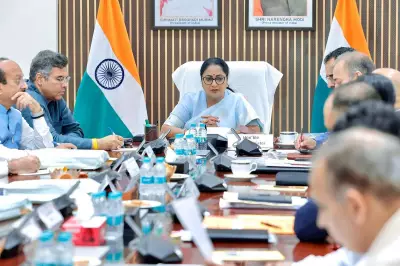
The special Assembly session aimed to pass a resolution against the central bill. AAP MLA Kuldeep Singh Dhaliwal argued that the Centre's demand for a 40% state share makes the scheme unviable for debt-ridden Punjab, calling it an "indirect way of ending a scheme meant for labourers."
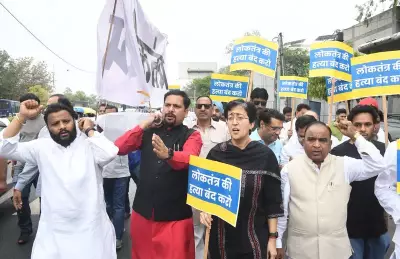
The opposition, however, slammed the session as an "eyewash." BJP state president Sunil Jakhar questioned its utility, suggesting the government focus on law and order or corruption within MGNREGA instead. He challenged the CM to prove concern for the poor by providing 125 days of work as per the new bill, instead of the current 100. The Congress, led by Punjab president Amarinder Singh Raja Warring, announced a mass movement from January 8, terming the new scheme a "black law" akin to the repealed farm laws and accusing both the BJP and AAP of failing rural workers.
As workers' anxieties about their livelihood rights mount, the political tussle in Punjab over MGNREGA's replacement is set to intensify, marking a significant flashpoint in state-centre relations and rural welfare politics.