Punjab Assembly Committee Calls for Firm Opposition to Haryana's Ghaggar River Dams
The Vidhan Sabha Committee on the Buddha Dariya and Ghaggar has issued a strong recommendation for the Punjab Government to formally object to the construction of three new dams proposed by Haryana on the Ghaggar river. This move highlights ongoing inter-state tensions over water resources in the region.
Water Share Concerns and Committee Recommendations
Chaired by AAP MLA Daljeet Singh Bhola, the committee emphasized that Haryana is already utilizing its allocated water share through existing infrastructure like the Kaushalya Dam and other reservoirs on the Ghaggar. In response, the panel advised Punjab to present its stance firmly at the upcoming meeting of the Ghaggar Standing Committee under the Central Water Commission.
The committee stated, "Punjab should firmly present its position and no consent should be given to Haryana for constructing any new dam. Along with this, the state should record in the next meeting that it proposes a water reservoir on the lines of Haryana." This recommendation underscores Punjab's intent to safeguard its water interests and potentially develop its own storage facilities.

Addressing Pollution and Infrastructure Gaps
On the issue of pollution, the committee noted that contaminated water from Chandigarh and Haryana is entering the Ghaggar. To mitigate this, sewage treatment plants with capacities of 10 MLD and 6 MLD are being installed on the Haryana side. The panel urged Punjab to regularly take water samples and send reminders to Haryana to ensure timely completion of these STPs.
Furthermore, the committee highlighted that within Punjab, only 34 out of 49 required STPs in cities and towns discharging untreated water into the Ghaggar are operational. It called for the swift completion of the remaining 15 STPs to prevent further river contamination.
Strict Actions Against Industrial Pollution and Flood Prevention
The committee came down heavily on industries, recommending a thorough investigation of all factories whose effluent enters the Ghaggar. It advocated for strict legal action and penalties against defaulters to enforce environmental compliance.
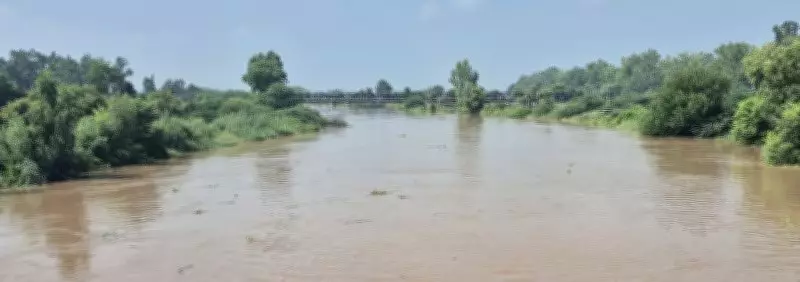
For flood management, the panel suggested constructing 'dhussi' embankments in areas prone to breaches, along with channelization using stones and wire mesh gabion structures. It also directed the Water Resources and Revenue Departments to demarcate and take possession of the river's old course to better manage water flow.
Utilizing Treated Water for Agriculture
In a bid to promote sustainable water use, the Department of Soil and Water Conservation has been instructed to provide treated water from some STPs to farmers for irrigation. Additionally, a survey should identify fields with installed canal water pipes to preemptively address leakage risks during floods, ensuring timely resolution of potential issues.
This comprehensive approach by the committee aims to balance water resource management, pollution control, and agricultural needs, reflecting broader concerns over inter-state water disputes and environmental sustainability in Punjab.