

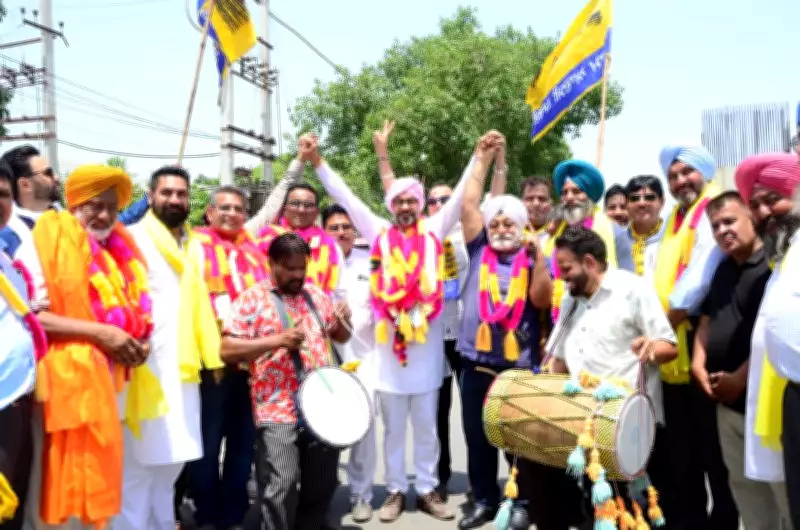
As Punjab gears up for the upcoming assembly elections, the political landscape is witnessing a significant surge in activity. The pre-poll noise, characterized by heated exchanges, strategic alliances, and populist promises, has reached a crescendo. Political parties are leaving no stone unturned to woo voters, with each camp trying to outdo the other in terms of rhetoric and outreach.
Key Players and Their Strategies
The ruling Congress party, led by Chief Minister Charanjit Singh Channi, is banking on its recent welfare schemes and the promise of continued development. The party has been highlighting its achievements in the education and health sectors, while also addressing agrarian issues. On the other hand, the opposition Shiromani Akali Dal (SAD), in alliance with the Bahujan Samaj Party (BSP), is focusing on the alleged failures of the Congress government, particularly in law and order and the handling of the farmers' protests.
Aam Aadmi Party's Growing Influence
The Aam Aadmi Party (AAP), which has been steadily gaining ground in the state, is projecting itself as a viable alternative. Led by its national convener Arvind Kejriwal, AAP has been promising a corruption-free government and has released a detailed manifesto focusing on education, healthcare, and employment. The party's grassroots campaigns and door-to-door visits have resonated with many voters, especially the youth.

Meanwhile, the Bharatiya Janata Party (BJP), in alliance with the Punjab Lok Congress and the Sanyukt Samaj Morcha, is trying to make inroads into the state. The BJP's campaign has been centered around national security and development, with Prime Minister Narendra Modi's rallies drawing large crowds. However, the party faces an uphill task in a state where it has traditionally been a marginal player.
Issues Dominating the Discourse
Several key issues are dominating the pre-poll discourse. The agrarian crisis, including debt relief and fair pricing for crops, remains a top concern for farmers. Unemployment, especially among the youth, is another critical issue, with each party promising job creation and skill development. The law and order situation, particularly the recent spate of gang violence, has also become a major talking point.
Additionally, the issue of sacrilege and the subsequent police firing incident in 2015 continue to haunt the political narrative. The SAD has been particularly vocal about this, accusing the Congress of failing to deliver justice. The Congress, in turn, has accused the SAD of politicizing the issue.
Campaign Tactics and Public Engagement
Political parties are employing a mix of traditional and modern campaign tactics. While rallies and public meetings remain the staple, there is a noticeable shift towards digital campaigns, with parties using social media platforms to reach out to the tech-savvy electorate. Virtual rallies and online interactions have become common, especially in the wake of the COVID-19 pandemic.
Door-to-door canvassing is also in full swing, with party workers and leaders making personal appeals to voters. The use of catchy slogans and songs has added to the festive atmosphere of the election season. However, the Election Commission has issued strict guidelines to ensure that the campaigns remain within the bounds of the model code of conduct.
Challenges Ahead
Despite the high decibel levels, there are several challenges that could impact the election outcome. Voter apathy, especially in urban areas, is a concern for all parties. The COVID-19 pandemic has also led to uncertainty regarding the timing and conduct of the elections. Additionally, the presence of strong regional parties and a fragmented vote bank makes the contest highly unpredictable.
As the election date draws closer, the political temperature is expected to rise further. The coming weeks will be crucial in determining which party can effectively connect with the electorate and emerge victorious in what promises to be a closely contested battle.






