Punjab Emerges as Top Revenue Performer Under AAP Government
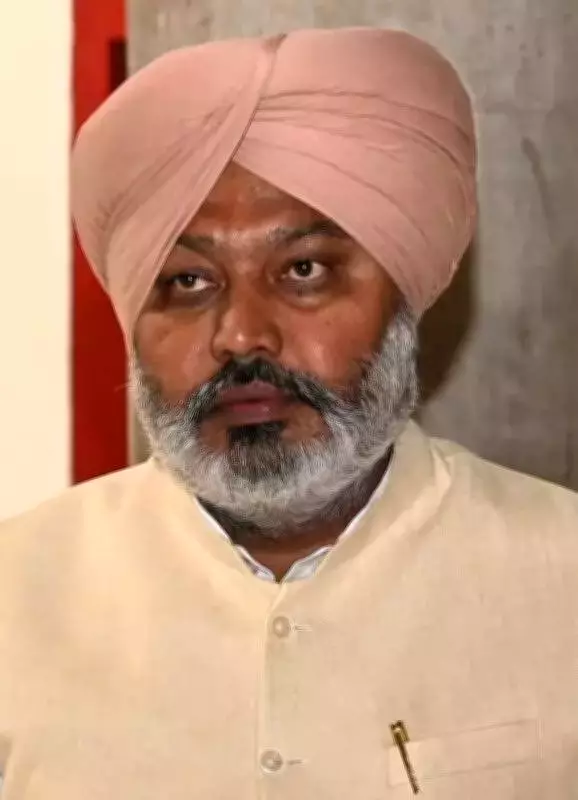
In a significant economic update, Punjab Finance Minister Harpal Singh Cheema revealed on Tuesday that the state has achieved remarkable revenue growth during the four-year tenure of the Aam Aadmi Party (AAP) government. According to Cheema, Punjab has climbed to become one of the top three states in the country in terms of revenue expansion, marking a substantial improvement in its fiscal health.
Tax Revenue Sees Dramatic Increase
Cheema highlighted that Punjab's own tax revenue has experienced a sharp rise, escalating from Rs 37,327 crore in the 2021-22 financial year to an impressive Rs 57,919 crore in 2024-25. This growth represents an increase from 6.39% to 7.15% of the gross state domestic product (GSDP), underscoring the state's enhanced economic productivity and tax collection efficiency under the current administration.
Excise Revenue Surges by 86.77%
The finance minister provided detailed comparisons to illustrate the excise revenue boom. During the five-year rule of the SAD-BJP coalition, total excise collection amounted to Rs 20,545 crore, with an annual average of Rs 4,109 crore. The subsequent Congress government collected Rs 27,395 crore over five years, averaging Rs 5,479 crore per year.
In contrast, the AAP government has already amassed Rs 37,975 crore up to January 2026, achieving an annual average of Rs 9,907 crore. Excise revenue, which stood at Rs 6,157 crore in 2021-22 under the Congress regime, is projected to reach Rs 11,500 crore in the 2025-26 financial year. As a percentage of GSDP, excise revenue grew from 1.05% in 2021-22 to 1.28% in 2024-25.
GST Collections Show Robust Growth
Cheema also emphasized the state's performance under the Goods and Services Tax (GST) regime. He criticized the previous Congress administration for relying heavily on GST compensation and failing to broaden the tax base, with their five-year total at Rs 61,286 crore and an annual average of Rs 12,257 crore.
The AAP government, however, collected Rs 83,739 crore up to January 2026, pushing the annual average to Rs 21,845 crore. State GST revenue, which was Rs 15,542 crore in 2021-22, is expected to surpass Rs 26,500 crore in 2025-26. Despite rationalization under GST 2.0, Punjab recorded a 70.50% growth in its GST revenue.
Stamp Duty Revenue Hits Historic Highs
Revenue from stamp duty witnessed a historic rise under the AAP government. During the Congress tenure from 2017 to 2022, stamp duty collections saw an increase of less than 1% compared to the preceding Akali Dal government from 2012 to 2017. The SAD-BJP government collected a total of Rs 12,387 crore, averaging Rs 2,477 crore annually, while the Congress managed only Rs 12,469 crore, averaging Rs 2,494 crore annually.
Conversely, the AAP administration generated Rs 19,515 crore by January 2026, with an annual average of Rs 5,091 crore. This indicates that in just four years, the AAP government collected 60% more stamp duty than the five-year terms of previous governments. At this accelerated pace, the revenue is expected to double the Congress era's total by the 2026-27 financial year.
Capital Expenditure and Debt Management
Cheema noted that Punjab recorded a historic boost in capital expenditure. Over five years, the SAD-BJP government spent Rs 14,641 crore, and the Congress government spent Rs 19,356 crore on capital expenditure. The AAP government is set to spend Rs 31,630 crore, reflecting a significant investment in state infrastructure and development.
Highlighting the inherited debt burden, Cheema asserted that the AAP government received a legacy debt of approximately Rs 3,00,000 crore. Due to this massive historical burden, 35% of all new loans are used to clear liabilities left by previous governments, and another 50% goes towards paying interest on older loans. Consequently, less than 15% of borrowed funds are available for the AAP government to use for the state.
Despite these constraints, the government reduced the Debt-to-Gross State Domestic Product ratio from 48.25% to 44.47%. Additionally, the AAP government allocated Rs 7,000 to Rs 8,000 crore for implementing the Pay Commission and clearing Rs 14,191 crore in Pay Commission arrears pending from 2016 to 2021. Furthermore, Rs 2,566 crore was spent to bail out financially distressed state entities like PUNSUP, Land Mortgage Bank, PSIDC, and the Mandi Board.