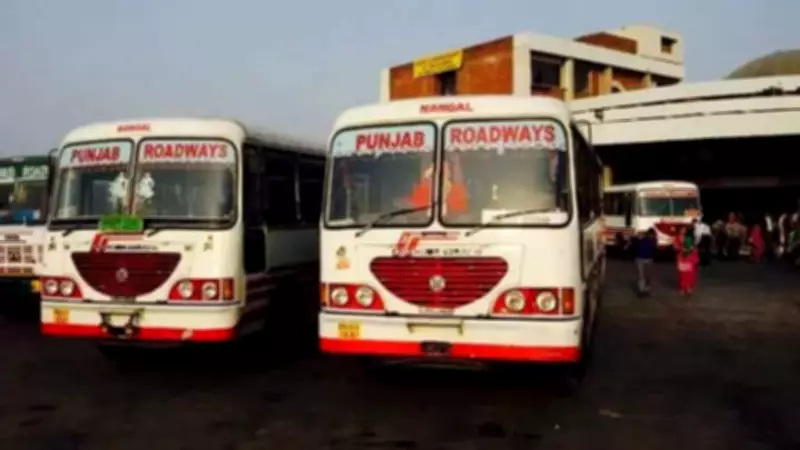
Punjab Braces for Major Transport Disruption as Union Calls for Total Chakka Jam
Public transportation across Punjab is poised for significant disruption as the Punjab Roadways, PUNBUS, and PRTC Contract Workers Union has declared a comprehensive "Chakka Jam" beginning Wednesday afternoon, February 11. This decisive action follows escalating tensions between the union and the state government over key policy disagreements and the treatment of union activists.
Escalation Following State-Wide Protests
The union's decision to intensify their protest comes after a series of gate rallies were conducted statewide on Monday. These demonstrations were organized to voice opposition against two primary issues: the continued detention of union members and the government's perceived shift towards privatizing public transport services.
Union leader Harkesh Kumar Vicky has publicly criticized the Aam Aadmi Party (AAP) government, accusing it of adopting a "pro-corporate" agenda. The central point of conflict is the Kilometer Scheme, a government initiative that involves hiring private buses to operate on routes traditionally served by state-owned transport.

Broken Promises and Policy Reversals
The union leader highlighted what he described as a reversal of pre-election commitments. "Before assuming power, the AAP had explicitly opposed privatization," Vicky stated. "The chief minister had promised that government buses would be frequent and reliable. However, since forming the government, their actions have contradicted these assurances."
Vicky further elaborated on the union's grievances, noting a conspicuous lack of investment in new state-owned buses alongside what he termed a "desperate push" to favor private contractors through the Kilometer Scheme.
Arrests and Allegations of Government Pressure
The protest movement gained substantial momentum following the arrest of several union activists nearly two months ago. Union officials report that these members face severe charges, including attempt to murder, stemming from their participation in earlier demonstrations.
The union has alleged that the government is utilizing these legal cases as leverage to suppress dissent. They claim that administration representatives have suggested that their detained colleagues would only be released if the union ceased its criticism of government policies.
"Many of our colleagues arrested during previous protests remain in jail," Harkesh Kumar Vicky added, emphasizing the personal toll of the ongoing conflict.
Strike Timeline and Expected Impact
The union has outlined a clear timeline for their industrial action:
- February 11 (Afternoon): Systematic suspension of bus services will commence across all major transport depots in Punjab.
- February 12: A complete strike will be observed, accompanied by a massive protest rally planned at the residence of Chief Minister Bhagwant Mann.
If the strike proceeds as announced, thousands of daily commuters who rely on state-run bus services are expected to face severe inconvenience and disruption to their travel plans.
Concerns Over Fleet Strength and Public Finances
The union has raised additional concerns regarding the operational capacity and financial implications of current transport policies. They point out that Punjab's state-owned bus fleet is operating significantly below its sanctioned strength.
Union representatives argue that the failure to invest in new buses, coupled with the implementation of the Kilometer Scheme, will adversely affect the public exchequer. They contend that this approach represents poor fiscal management and a move away from sustainable public service provision.
As the deadline for the Chakka Jam approaches, the standoff between the transport workers' union and the Punjab government highlights deepening tensions over the future of public infrastructure, workers' rights, and the direction of state policy under the current administration.