

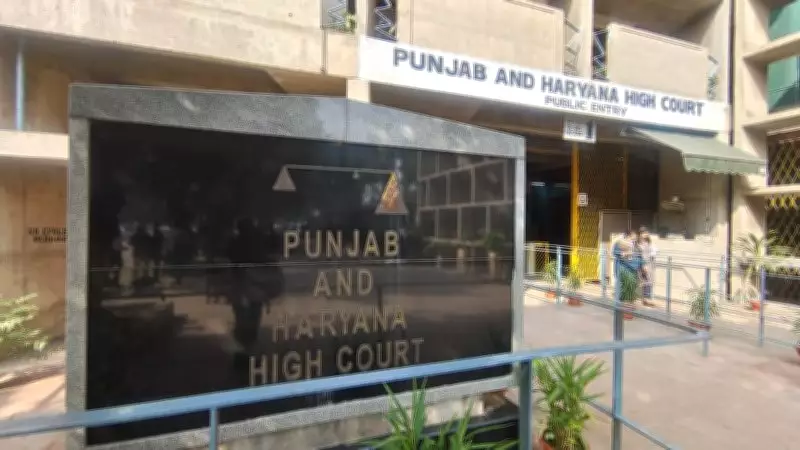
Punjab Government Withdraws Ward Delimitation Notifications Amid High Court Scrutiny
The state of Punjab has officially withdrawn notifications issued for the delimitation of wards in municipal councils and corporations after December 31, 2025. This decision was announced before the Punjab and Haryana High Court, marking a significant development in an ongoing legal battle over the legality of the delimitation process.
Legal Proceedings and Government Response
During a hearing before a bench comprising Justice Harsimran Singh Sethi and Justice Vikas Suri, Punjab Additional Advocate-General Jastej Singh informed the court of the government's decision to withdraw the notifications. The bench was addressing a series of petitions filed by Anita Rani and other petitioners, who had challenged the legality of the ongoing delimitation of wards.
Senior advocates DV Sharma and Anu Chatrath represented the Local Bodies department, while senior advocates Pawan Kumar, Vikas Chatrath, and Navdeep Singh, along with other lawyers, appeared on behalf of the petitioners. The petitioners had raised concerns about the procedural aspects and compliance with central government directives.

High Court's Previous Directives and State's Actions
In an order dated January 16, the High Court had directed the Chief Secretary of Punjab to clarify whether the state was fully accepting the Central Government's notification from August 13, 2025. This notification specifically addressed the freezing of ward boundaries after January 1. The court had noted that if the state did not accept this notification, the issue would be decided judicially.
Previously, Punjab had informed the High Court that it had sought clarification from the Registrar-General and Census Commissioner of India regarding the freezing of municipal ward boundaries in light of the upcoming 2027 Census. This move was prompted by apparent contradictions in communications from the central authorities.
Contradictions in Census Rules and Notifications
In an affidavit submitted to the court, Punjab Chief Secretary KAP Sinha detailed the state's position. He explained that under Rule 8(iv) of the Census Rules, 1990, administrative boundaries cannot be frozen earlier than one year before the "Census Reference Date." A notification from June 16, 2025, by the Office of the Registrar-General, India, had set March 1, 2027, as the Census Reference Date for the 2027 Census, implying that boundaries could not be frozen before February 28, 2026.
However, a subsequent DO letter dated June 27, 2025, stated that boundaries for Census 2027 would be frozen as of December 31, 2025, and requested states not to alter boundaries from January 1, 2026, to March 31, 2027. Acting on this, Punjab issued a notification on July 10, 2025, freezing boundaries accordingly. The Chief Secretary highlighted that this appeared to contradict the provisions of Rule 8(iv), leading to confusion and legal challenges.
Technical Delays and Exceptional Requests
The affidavit also noted that in some Urban Local Bodies, draft delimitation notifications were approved on December 22, 2025, but published between December 26 and 29, 2025. This timeline allowed for a seven-day objection period, resulting in final notifications being issued on January 8, 2026. The Chief Secretary described this eight-day delay as "technical" and unintentional.
Punjab has since written to the central authorities seeking clarification and requesting that the January 8 notifications be considered an exceptional case, given that draft notifications were issued before December 31, 2025. The withdrawal of the post-December 31 notifications is seen as a step to address these legal and procedural complexities.
Implications for Municipal Elections and Governance
This development has significant implications for upcoming municipal elections and local governance in Punjab. The withdrawal of the delimitation notifications may delay electoral processes and require revised planning for ward boundaries. It underscores the importance of alignment between state and central government directives, particularly in matters related to census and administrative boundaries.

The High Court's scrutiny and the state's responsive actions highlight ongoing efforts to ensure legal compliance and transparency in the delimitation process. Further hearings are expected to resolve the remaining issues and provide clarity on the way forward for municipal councils and corporations in Punjab.





