The Aam Aadmi Party (AAP) government in Punjab has encountered a significant financial obstacle in its ambitious plan to expand the state's flagship 'atta-dal' food security scheme. The proposal to add several new free commodities, including sugar and mustard oil, for millions of beneficiaries has been stalled after the cash-strapped finance department raised serious reservations about the additional fiscal burden.
Expansion Plan Meets Fiscal Reality
According to sources within the government, the state's food department had prepared a detailed proposal to enhance the existing scheme. The plan was to start distributing additional food items from April 2026. This expansion would have provided each of the 40 lakh beneficiary families with more than just wheat.
The proposed new basket of goods included 2 kg of dal, 2 kg of sugar, 1 kg of tea leaves, 1 litre of mustard oil, and 200 grams of turmeric per family. However, this proposal hit a wall when it reached the finance department for approval. Officials there expressed clear concerns, advising that public funds should be directed towards creating long-term assets rather than on what they termed as 'freebies'.
The Staggering Cost of Welfare
A senior government functionary revealed that the expanded scheme would have cost the state exchequer between Rs 800 crore to Rs 1,000 crore annually. This comes on top of the existing massive expenditure on welfare schemes. The Punjab government already spends over Rs 22,000 crore every year on various subsidies, including free power and free travel for women.
"Food Minister Lal Chand Kataruchak has asked for at least sugar to be added to wheat. Let us see what happens. The decision is pending. Freebies do not mean much," the functionary stated, highlighting the internal debate. Punjab's Finance Minister, Harpal Cheema, confirmed that a meeting scheduled for November 27 to discuss the issue was postponed due to ministerial preoccupations and would be held soon.
A Scheme's Political Legacy and Current Challenges
The 'atta-dal' scheme itself has a long political history. It was originally launched in 2007 by the then SAD-BJP government, led by former Chief Minister Parkash Singh Badal, as a pre-poll promise. Initially, it provided wheat at Rs 4 per kg and chana dal at Rs 20 per kg.
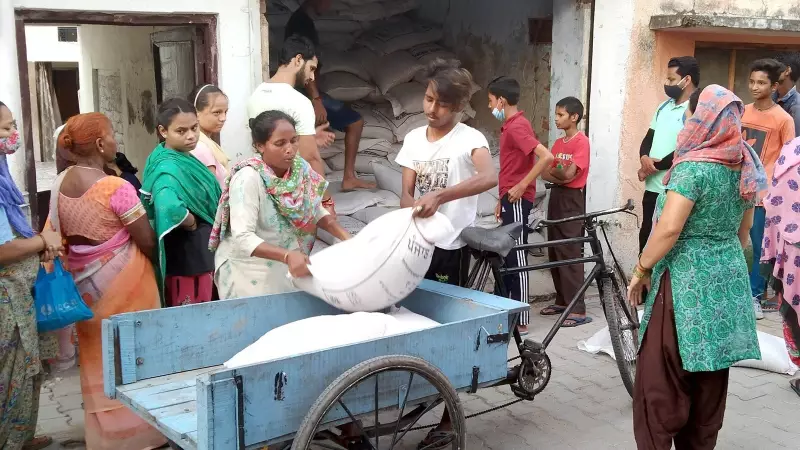
The scheme was later revamped in 2013 under the National Food Security Act (NFSA). Currently, eligible families receive 5 kg of free wheat per family member each month. The Punjab government bears the cost of transportation, amounting to Rs 50 to 60 crore yearly. Eligibility is determined by an annual income ceiling and a survey, with identified households receiving ration cards.
Interestingly, the promise of free dal and tea leaves was also part of the Congress party's manifesto before the 2017 elections, but it remained unfulfilled due to a lack of funds. Furthermore, a legacy financial burden persists from before the NFSA. The state still has an outstanding bill of Rs 900 crore from the earlier procurement model, with the Punjab State Civil Supplies Corporation Limited paying a monthly interest of Rs 5.25 crore on this amount.
The current impasse underscores the perennial tension between populist welfare promises and the harsh realities of fiscal management, leaving the proposed expansion of Punjab's key food security scheme in a state of uncertainty.