Rajasthan Assembly Witnesses Heated Clash Over RSS and Education System
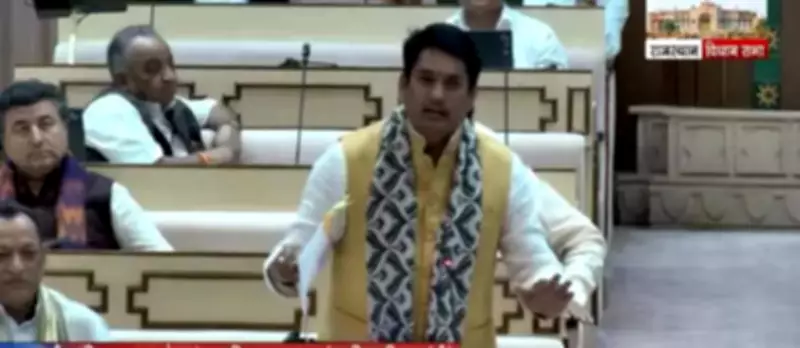
The Rajasthan State Assembly descended into chaos and noisy scenes on Monday following controversial remarks made by the deputy Leader of the Opposition, Congress MLA Ramkesh Meena, regarding the Rashtriya Swayamsevak Sangh (RSS). The session, held in Jaipur, quickly turned tumultuous as Meena alleged that the RSS is actively creating obstacles within the government education system, leading to immediate uproar and strong objections from the ruling side.
Allegations of RSS Interference in Government Education
During the assembly proceedings, Ramkesh Meena explicitly stated, "We have a medium of government education in the country, and the RSS is creating obstacles in that medium." This assertion sparked an intense reaction, with members from the ruling party vehemently protesting the comments. The presiding officer, Phool Singh Meena, was forced to intervene to restore order as the atmosphere grew increasingly charged.
Meena elaborated on his claims, alleging a broader conspiracy aimed at weakening government schools and depriving students, particularly from marginalized communities, of quality education. He emphasized, "Sir, there is a conspiracy to deprive students of education, and today there is a ploy to weaken and eliminate government schools." In a pointed question directed at the state's education minister, Madan Dilawar, Meena highlighted concerns about Mahatma Gandhi English medium schools, noting that these institutions primarily serve children from poor, Dalit, and Adivasi backgrounds.

Heated Exchange Between Opposition and Treasury Benches
The remarks prompted a fiery response from ministers Avinash Gehlot and Jogaram Kumawat, who countered Meena's statements with strong rebuttals. The exchange escalated into a heated debate between the Opposition and treasury benches, with Gehlot delivering a sharp retort. He asserted that the RSS would prove to be the "final nail in the coffin" of the Congress party, intensifying the political confrontation within the assembly.
Further fueling the controversy, Ramkesh Meena challenged the historical role of the RSS, questioning its participation in India's freedom struggle. He stated that while the RSS was founded in 1925, he dared the ruling party to name even four RSS leaders who actively participated in the country's independence movement. This added a historical dimension to the debate, shifting the focus from educational policies to broader ideological critiques.
Broader Implications for Education and Political Discourse
The incident underscores the deep-seated political tensions surrounding education policy in Rajasthan, with allegations of systemic interference and marginalization at the forefront. The assembly session highlighted the ongoing conflict between the Congress and the ruling party over the role of organizations like the RSS in shaping public institutions. As both sides traded accusations, the debate revealed underlying concerns about access to quality education for underprivileged communities and the influence of ideological groups on government systems.
This episode not only disrupted legislative proceedings but also set the stage for continued political wrangling over education reforms and historical narratives. The strong reactions from both sides suggest that these issues will remain contentious in future assembly discussions, potentially impacting policy decisions and public discourse in the state.