Rajasthan Government to Hold Crucial Meeting on Rehabilitation of Twice-Displaced Families
The Rajasthan state government is poised to make a critical decision regarding the long-pending rehabilitation of more than 1,700 families who were initially displaced by the Mahi Bajaj Sagar Dam and now face a second round of displacement due to a proposed nuclear power project in Mahi Banswara. A key state-level committee meeting is scheduled for Thursday to deliberate on the rehabilitation framework.
Families Reject Cash Compensation, Demand Land-for-Land
Officials confirmed that the committee will engage with stakeholders to discuss the rehabilitation plan. However, affected families have firmly rejected the government's offer of cash compensation. They are demanding land-for-land rehabilitation in nearby areas to preserve their livelihoods and community cohesion.
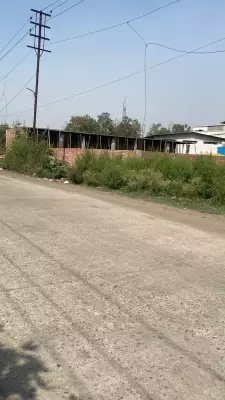
These families, predominantly from Bhil and other tribal communities, were first displaced between 1970 and 1985 during the construction of the dam. They claim they were never adequately resettled, losing their ancestral fertile land without proper compensation or support. With the new nuclear power project emerging near Napla village, they now fear being uprooted again, exacerbating their historical grievances.

Voices from the Affected Communities
Representatives of the displaced families expressed their concerns emphatically. "Cash compensation is completely unacceptable. We lost our ancestral fertile land once and were never properly rehabilitated. We need agricultural land nearby so we can continue farming and stay together as a community," they stated.
Backing their demand, Banswara MP Rajkumar Roat highlighted the urgency of the situation. "This is a long-pending issue. These families are being displaced for the second time. The government must ensure land-for-land rehabilitation in the same region to address their plight justly," he asserted.
Nuclear Project Adds Urgency to Rehabilitation Question
The proposed nuclear power project, being developed by the Nuclear Power Corporation of India Limited (NPCIL), is advancing with initial works, intensifying the need for a swift and fair rehabilitation solution. This development has heightened anxieties among residents, who worry about further marginalization without proper resettlement measures.
Roat added, "If people who have already sacrificed their land once are again displaced without proper resettlement, it raises serious questions of justice and equity." Tribal groups have reiterated their demands, which include land-for-land compensation, priority employment in the project, and strict implementation of rehabilitation provisions under the land acquisition law.
Parallel Development Plans and Overlapping Concerns
In a related development, a separate committee chaired by the Udaipur divisional commissioner is expected to review plans for the development of the dam area. These plans encompass tourism initiatives, water sports activities, and regulated land use strategies.
The overlap of these large-scale development projects with the nuclear power initiative has amplified concerns among local residents. They fear that without adequate rehabilitation, they may be left behind as progress marches forward, deepening their socio-economic vulnerabilities.
Stakeholder Engagement and Future Implications
With the government now stepping in to engage stakeholders directly, the outcome of Thursday's meeting is anticipated to be pivotal. It will likely determine the future of thousands of families in the tribal belt of southern Rajasthan, setting a precedent for how displacement and rehabilitation are handled in similar scenarios across the region.
The meeting represents a crucial opportunity to address historical injustices and ensure that development does not come at the cost of community well-being. All eyes are on Jaipur as decisions unfold that could reshape lives in Mahi Banswara for generations to come.