

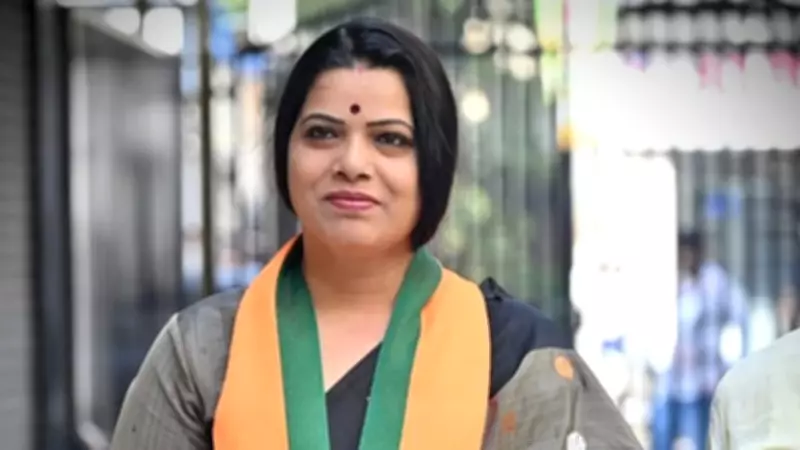
Ritu Tawde Secures Historic Victory as Mumbai's New Mayor
In a landmark political shift, BJP corporator Ritu Tawde has been elected unopposed as Mumbai's next mayor, marking the end of Shiv Sena's uninterrupted 25-year dominance in the Brihanmumbai Municipal Corporation's (BMC) mayoral office. The formal election, scheduled for Wednesday at noon, will see Tawde become the city's eighth woman mayor, nearly three years after the previous woman mayor served between 2019 and 2022.
Breaking Decades of Political Tradition
Tawde's elevation represents the BJP's first mayoral victory in Mumbai since Prabhakar Pai's tenure in 1982–83, a significant milestone for the party. Her deputy mayor will be Sanjay Ghadi of the Eknath Shinde-led Shiv Sena, who will serve a 15-month term before rotation, while the mayoral post carries a 2.5-year term.
The path to her unopposed victory was cleared after the Uddhav Thackeray-led Shiv Sena (UBT) decided not to field a candidate against Tawde, following a meeting at Thackeray's residence. Former mayor and Sena (UBT) leader Kishori Pednekar explained that the decision was made out of respect for Marathi identity, acknowledging the arithmetic of the Mahayuti alliance in the 227-member civic body.

Tawde's Political Journey and Vision
Tawde, 53, a two-time corporator from Ghatkopar East, filed her nomination at the municipal secretary's office in the presence of senior Mahayuti leaders, including minister Mangal Prabhat Lodha and BJP Mumbai chief Ameet Satam. Speaking to reporters, she emphasized that she would function as a "sevak" of Mumbai rather than merely as mayor, promising to prioritize citizens' safety, development, and overall quality of life.
A second-time corporator, Tawde first won in 2012, chaired the BMC's Education Committee, and raised civic concerns ranging from infrastructure improvements to public safety. She lost the 2017 civic elections but returned to office in the latest polls, securing 19,810 votes from her Ghatkopar ward.
Symbolic Importance and Alliance Dynamics
BJP leaders highlighted the symbolic importance of Tawde's election, underscoring the alliance's commitment to a corruption-free administration. Satam stated, "Ritu Tawde will lead the city and work to free the BMC from the clutches of corruption which the previous UBT-led administration had allowed to flourish. Our priority is to ensure Mumbai's continued progress." The Mahayuti had also pledged that the mayor would represent Marathi and Hindu identity, reflecting the alliance's promise during the BMC election campaign.
The BJP emerged as the single largest party in the civic polls, winning 89 seats with 11,79,273 votes, accounting for 21.58% of the total votes cast. Its alliance partner, the Shinde-led Shiv Sena, secured 29 seats with 2,73,326 votes. The UBT faction of Shiv Sena, in alliance with the Maharashtra Navnirman Sena (MNS), won 65 seats, while the Indian National Congress managed 24 seats. The MNS contributed six seats to the alliance tally.
Opposition Criticism and Deputy Mayor Selection
The opposition NCP (SP) sharply criticized the BJP's choice of Tawde, a former Congress leader, arguing that it demoralized loyal BJP corporators who had worked extensively for the party. NCP (SP) spokesperson Clyde Crasto remarked, "By selecting a former Congresswoman as mayor, the BJP has insulted its own loyal corporators who have given their blood, sweat and tears for the party."
On the deputy mayoral front, Sanjay Ghadi, a corporator from Ward No. 5 who defected from Sena (UBT) to the Eknath Shinde-led Shiv Sena, was nominated by the Mahayuti for the post. Party secretary Sanjay More confirmed that the tenure would be split, allowing multiple corporators to hold the deputy mayor's post during the term.
Political and Symbolic Weight of the Mayoral Post
The mayoral post in Mumbai, while largely ceremonial, carries significant political and symbolic weight, particularly in a city where identity-driven politics often intersect with civic administration. The BMC itself, India's richest municipal body, has been under a state-appointed administrator since March 2022. Its budget for 2025–26 is pegged at Rs 74,450 crore, larger than the annual budgets of several Indian states.

The Urban Development Department had last month reserved the mayor's post for a woman from the open category after a lottery draw, setting the stage for Tawde and Sion corporator Rajeshree Shirwadkar as potential candidates. However, the Mahayuti kept its nominations under wraps until the final day, ensuring a smooth, uncontested outcome. Opposition parties did not file any nominations, completing the process before the withdrawal deadline on February 11.
A New Chapter in Mumbai's Governance
Tawde's victory represents not only the BJP's return to the mayoral office after four decades but also a consolidation of the Mahayuti alliance's dominance in Mumbai's civic politics. Speaking to ANI, she reiterated her commitment to working as a servant of the city, saying, "I am very happy that the people of Mumbai have given a good mandate to Mahayuti. After assuming office, I will work as a sevak of Mumbai, not as its mayor."
With the unopposed elections now set, Mumbai prepares for a historic transition in the BMC leadership, signaling a new chapter in the city's governance after nearly three decades of Shiv Sena control. This development underscores the evolving political landscape in India's financial capital, with implications for urban policy and administration moving forward.





