Assam Chief Minister Alleges Rahul Gandhi Blocked His 2014 Elevation to Top Post
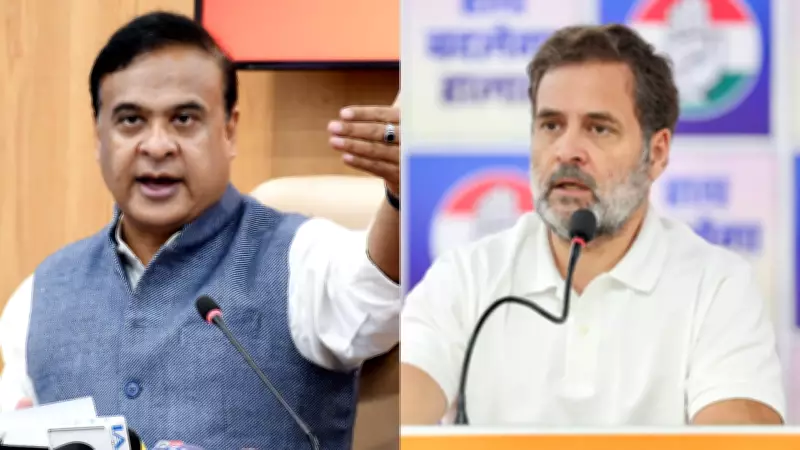
Assam Chief Minister Himanta Biswa Sarma has made a significant political revelation, alleging that Congress leader Rahul Gandhi was directly responsible for blocking his elevation to the chief minister's position when the Congress party was in power in the northeastern state. This claim sheds new light on the internal dynamics that ultimately led to Sarma's dramatic exit from the Congress and subsequent rise within the Bharatiya Janata Party.
The 2014 Swearing-In That Never Happened
According to Sarma's detailed account, in 2014, then Congress president Sonia Gandhi had personally asked him to decide the date for his swearing-in ceremony as chief minister. "Madam (Sonia Gandhi), whom I still refer to as such, had asked me to decide on the date and I had told her that I would take oath after the Ambubachi Mela at Kamakhya Temple in June (2014)," Sarma told news agency PTI.
However, this carefully planned transition was abruptly halted. Sarma claims the move was later stalled due to direct intervention by Rahul Gandhi, creating what he describes as a deeply hurtful political moment. The timing is particularly significant as it occurred during the third consecutive term of senior Congress leader Tarun Gogoi as Assam's chief minister.

Internal Party Challenge and Subsequent Departure
During this period, Sarma was widely regarded as one of Gogoi's closest political associates within the Congress party. Despite this relationship, he spearheaded a major internal challenge against Gogoi's leadership, citing dissatisfaction with the veteran politician's governance approach and advocating for what he called a "generational change" within the party structure.
Sarma had reportedly claimed the support of a majority of Congress MLAs during this internal power struggle, positioning himself as a viable alternative to lead the state government. Ultimately, the Congress high command chose to maintain continuity by sticking with Gogoi's leadership, a decision that proved pivotal in Sarma's political trajectory.
Following this rejection, Sarma resigned from the state cabinet in July 2014 and made the complete break from Congress official in 2015 when he joined the BJP. His subsequent rise within the BJP has been remarkable, culminating in his current position as Assam's chief minister.
Reflections on Political Journey and Current Context
Reflecting on these events, Sarma expressed philosophical acceptance of how his political career unfolded. "I was hurt then, but now I believe that whatever happens in one's life is for the best and God has given me much more than what I would have got, had I remained in the Congress," he stated.
He further elaborated on his current position, saying, "As the BJP CM, I got a chance to serve both Assam and Sanatan dharma wholeheartedly, which would not have been possible had I been in the Congress." This statement underscores the ideological alignment that has characterized his political shift and subsequent governance approach.
Current Political Landscape in Assam
These revelations come at a politically sensitive time as Assam prepares for its upcoming assembly elections. The state is set to go to the polls for its 126 assembly seats in March–April, with the Congress likely to contest as part of a broader opposition alliance against the ruling BJP-led coalition.
The current assembly composition reveals:
- BJP: 64 MLAs
- Allies: AGP (9 seats), UPPL (7 seats), BPF (3 seats)
- Opposition: Congress (26 members), AIUDF (15), CPI(M) (1), Independent (1)
Sarma's allegations about Rahul Gandhi's intervention in 2014 add a new dimension to the ongoing political narrative in Assam, potentially influencing voter perceptions as the election season approaches. The claims highlight the complex internal dynamics that have shaped Assam's political landscape over the past decade and continue to reverberate in current political discourse.