

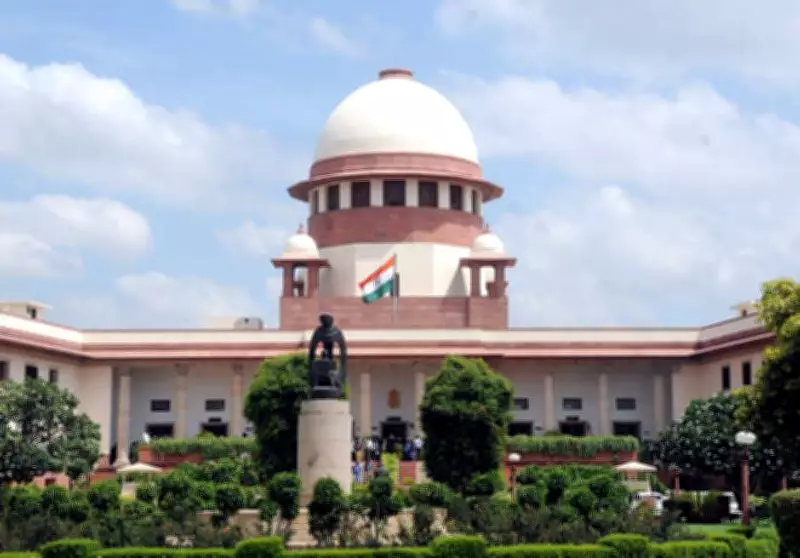
A Public Interest Litigation (PIL) has been filed in the Supreme Court challenging the reappointment of Deepak Prakash as a minister in the Bihar government. The petition argues that Prakash, who is not a member of either House of the State Legislature, cannot constitutionally hold the ministerial office.
Background of the Case
Deepak Prakash, the son of former Union Minister and Rashtriya Lok Morcha leader Upendra Kushwaha, took oath as a minister on November 20, 2025, in the government led by then Chief Minister Nitish Kumar. At the time of his appointment, Prakash was neither a member of the Bihar Legislative Assembly nor the Legislative Council.
However, when Nitish Kumar resigned as Chief Minister on April 15, 2026, Prakash ceased to be a minister. He was reappointed as the Panchayati Raj Minister in the Samrat Choudhary-led government on May 7, 2026, after a gap of 222 days. Crucially, he still did not hold membership in either house of the state legislature.

Legal Arguments in the PIL
The petitioner, Rakesh Kumar Singh, an activist, has invoked Article 164(4) of the Constitution. This provision allows a non-legislator to serve as a minister for a maximum of six consecutive months, during which they must secure membership of the state legislature. Singh argues that the six-month period from Prakash's first appointment on November 20, 2025, expired on May 20, 2026. Therefore, Prakash is ineligible to continue as a minister beyond that date.
Singh contends that the exception under Article 164(4) is a one-time opportunity that cannot be revived with a change of government. He asserts that Prakash's reappointment is a colourable exercise of constitutional power, designed to indirectly extend the grace period available to a non-legislator. The petition urges the court to call upon Prakash to disclose the constitutional authority under which he continues to hold office and to declare his reappointment unconstitutional and void.
Broader Implications
The PIL warns that allowing repeated appointments of unelected individuals to ministerial office would undermine the principles of parliamentary democracy, representative government, collective responsibility, and electoral accountability. Singh argues that Prakash's continuation in the Bihar Council of Ministers goes against constitutional morality and the rule of law.
The petition also cites the Supreme Court's ruling in SR Chaudhury versus State of Punjab (2001), which held that an individual cannot bypass the democratic process by resigning just before the six-month period under Article 164(4) ends and then getting reappointed to the cabinet repeatedly. This precedent directly supports the petitioner's case.
Conclusion
The Supreme Court is yet to hear the PIL. If the court rules in favor of the petitioner, it could set a significant precedent regarding the appointment of non-legislators as ministers. The case highlights the tension between constitutional flexibility and the core principles of democratic representation.






